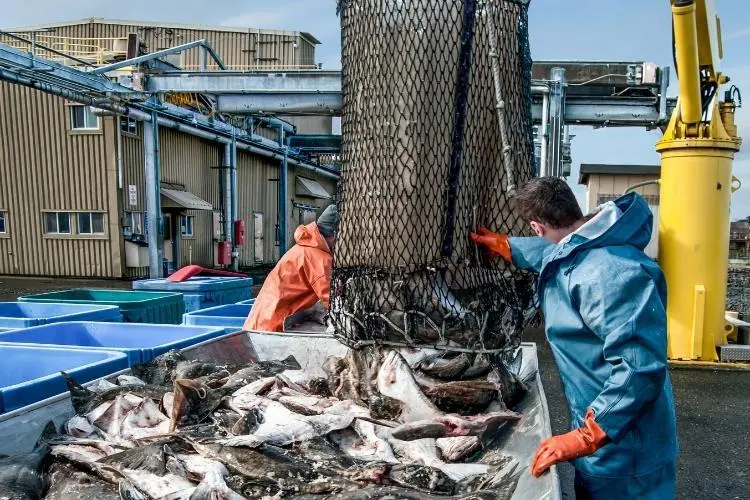




Alaska’s seafood industry suffers $1.8bn losses
A new economic snapshot focused on the Alaska seafood industry has been released by NOAA Fisheries, with the estimate from economists that it suffered a US$ 1.8 billion loss in 2022-2023, and also that Alaska’s fishing industry experienced a 50% decline in profitability in 2021-2023.
“The Alaska seafood industry is a major contributor to the US seafood sector,” Alaska Fisheries Science Center Director Robert Foy said. “The social and economic ramifications of Alaska’s losses have reverberated down the west coast and across the country.”
This, NOAA Fisheries says, has resulted in more than 38,000 job losses nationwide and a $4.3 billion loss in total US output (the total dollar value of all goods and services produced). The most affected states (including Alaska, Washington, Oregon and California) saw a combined loss of $191 million in state and local tax revenues.
Seafood is the top private sector employer in Alaska, and for many Alaska coastal communities, fisheries are the primary contributor to their local economy.
“Commercial fisheries have flourished in Alaska for generations, shaping social structures, cultural identity, and robust local economies. Beyond the economic impacts, the decline of fisheries in the region threatens a way of life, sense of place, community, and identity,” said Steve Kasperski, lead author of the snapshot and an economist with the Alaska Fisheries Science Center.
Shifting sourcing strategies
The 2023 downturn led concerned seafood industry members to request that NOAA Fisheries undertake an independent analysis. They wanted to see the data behind the pinch that fishermen, seafood workers, and communities were feeling.
NOAA’s economists subsequently found that, starting in 2022, the industry experienced higher costs associated with increased wages, higher energy prices and higher interest rates. They also found that revenue decreased in 2023 due to declining prices for every major species group.
Additionally, it was determined that in the post-pandemic years, retail operational strategies and consumer seafood purchases have changed. For example, retailers have changed how they handle the seasonal influx of seafood products. Historically, the would lower prices to clear inventory. However, strong retail demand for seafood during the pandemic as individuals ate at home was followed by a dramatic decline in that demand as restaurants and schools opened up. This meant that retailers were saddled with high-priced inventory and lower demand.
Retailers transitioned to keeping supply lower by slowly moving inventory out of cold storage. This practice lowered the seafood supply in the market and kept prices higher, allowing retailers to stay afloat. But it also meant seafood producers, processors and wholesalers in Alaska demanded a lower quantity of seafood.
The report advises retail seafood prices have softened somewhat in 2024, but not by enough to entice consumers to purchase the volumes they bought in 2020–2021.
Increased competition
An additional challenge for Alaska fishermen is increased competition from abroad, highlights the report. Several Russian fisheries have earned Marine Stewardship Council (MSC) certification and use the trade name “Alaska pollock” in marketing. This results in sustainable domestic fisheries having less of an edge in the global marketplace.
Lower labour and operating costs in production and processing abroad, as a result of lower environmental and labour standards, also hurt Alaska’s competitive standing.
NOAA notes other factors that have affected its competitive edge include international trade barriers, a strengthening US dollar, inflation (which affects consumer demand for higher priced seafood products), declines in seafood processing jobs and plant closures, and a lack of revenue insurance for harvesters and processors such as farmers have under the US Department of Agriculture
All of this contributed to a 32% decline in vessel revenues from 2022 to 2023, totalling $617 million. First wholesale values dropped $1.2 billion, or 26%. As such, the total direct loss equated to $1.8 billion.
Regional trends across Alaska were also looked at, Kasperski said, with the finding that the Gulf of Alaska has experienced a decade of ecological and economic challenges.
These, the report says, have led to declining participation and undermined the economic status and social well-being of fishing communities. The Bering Sea has experienced different but similarly scaled ecological changes over the last decade.
For instance, the total number of active commercial fishing vessels declined by 29% in the Bering Sea and Aleutian Islands from 2003–2023. The number of active seafood processors declined by 32%. In the Gulf of Alaska, these numbers declined by 20% and 7%, respectively.
Climate change
The report also found that climatic impacts are profoundly affecting local communities. For instance, a marine heatwave in 2017–2018 led to a crash in the highly lucrative snow crab fishery in 2022. It also coincided with Bristol Bay red king crab fishery closures from 2021 to 2023. This was devastating to the Bering Sea crab fleet and, in particular, the community of St Paul.
This island community in the middle of the Bering Sea depends on a large on-island seafood processing facility. The closures led to a 60% loss in its community budget. This deeply impacted this small community, from its leadership down to its citizens and families.
NOAA Fisheries said the future of the seafood industry in Alaska is clouded by these warming ocean conditions associated with climate change. When coupled with economic downturns like those reported in 2023, this undermines the capacity for the Alaska seafood industry and associated communities to remain resilient.
It recently released the National Seafood Strategy Implementation Plan, in which it identifies specific actions intended to help address challenges in the seafood sector.
“This snapshot is an example of the type of research we intend to advance through this national effort,” said Dr Michael Rubino, NOAA Fisheries’ Senior Advisor for Seafood Strategy. “With climate change, resource managers, fishermen, and other interest groups need timely social and economic data so they can understand and respond to challenges like we are now facing in the Alaska seafood industry.”
The State of Alaska also recently set up a Joint Legislative Seafood Industry Task Force to respond to the Alaska seafood crisis. Its report is expected in January 2025.