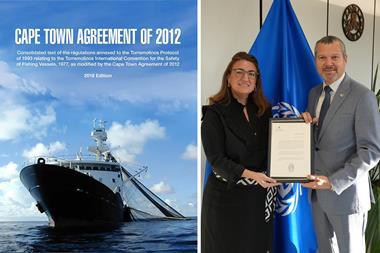



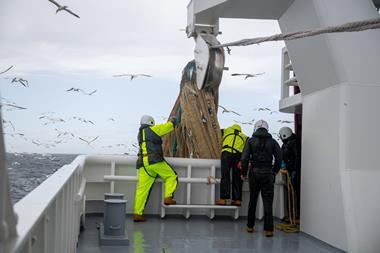
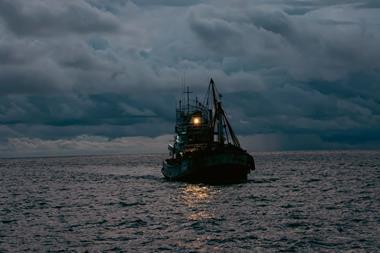
The IMO Cape Town Agreement for the Safety of Fishing Vessels aims to make large commercial fishing vessels over 24 metres in length safer by setting minimum requirements for vessel construction and seaworthiness, fire safety regulations, life-saving appliances, emergency procedures and radio communications. According to the UN, vessel safety and IUU fishing are closely linked, as operators who engage in IUU are less likely to provide their crew with adequate working conditions, training or safety equipment.
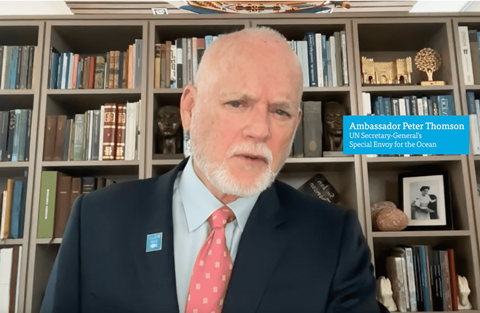
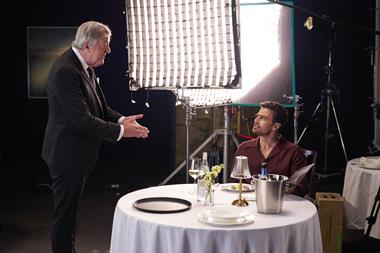
In his appeal, delivered in a video message, Ambassador Thomson joins a call made by the Coalition for Fisheries Transparency, The Nautical Institute and the FISH Platform released on the UN World Day for Safety & Health at Work on 28 April 2025.
According to the Coalition for Fisheries Transparency, a global network of 50-plus civil society organisations that work together to improve transparency and accountability in fisheries governance and management, Thomson’s stance is of particular importance ahead of the UN Ocean Conference, with his role’s mission entailing tracking implementation of UN Ocean Conference commitments and maintaining the momentum for action to conserve and sustainably use the oceans.
Expressing support to the campaign led by the coalition, which advocates for Cape Town Agreement ratification under Principle 8 of the Global Charter for Fisheries Transparency, Thomson recalled that “the purpose of the IMO Cape Town Agreement is to improve fishing vessel safety standards globally, to ensure fishers’ lives are not at risk when operating at sea, and to deter illegal, unreported and unregulated fishing.”
While fisheries provide a fundamental source of food and livelihood for people worldwide, fishing remains “one of the most dangerous occupations in the world, with thousands of fishers exposed to human rights, labour abuses and death every year”, he stated.
According to the FAO, up to 26 million tonnes of fish are estimated to be harvested illegally every year, representing a fraudulent economic value of as much as US$23 billion.
Thomson highlighted how the FAO Port State Measures Agreement, the ILO C188 Work in Fishing Convention and the IMO Cape Town Agreement provide a comprehensive framework for collective action against IUU fishing. “But until the Cape Town Agreement is brought into force through ratification, the full framework cannot be said to be operating,” he added.
To enter into force, at least 22 states must ratify and conjointly declare a fleet of 3,600 large commercial fishing vessels of 24 metres and over, capable of operating on the high seas. To date, 23 states have already ratified, declaring altogether 2,935 fishing vessels. Meaning that the success of the Cape Town Agreement only hinges now on further ratifications covering a fleet of 665 fishing vessels.
Thomson said states which ratify all three topical WTO Fisheries Subsidies Agreement, High Seas Treaty (BBNJ Agreement), and IMO Cape Town Agreement, will place themselves “in the high achiever bracket of ocean action countries” and that states which ratify the IMO Cape Town Agreement “will be on the side of those of us dedicated to safe, legal and sustainable fishing; they will be joining in our efforts to increase the transparency of the fishing sector, strengthen control and sanction measures, and overcome the scourge of IUU fishing.”
He concluded by stating that ratifying states will “demonstrate their fidelity to SDG 14, the Sustainable Development Goal we all agreed to back in 2015, to conserve and sustainably use the ocean’s resources. And so, in the cause of SDG 14 and the welfare of fishers, I urge all countries who have yet to do so, to ratify the IMO Cape Town Agreement without further delay.”