


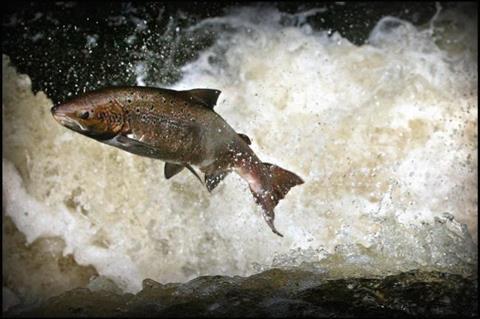
The Scottish government has developed a new framework to better protect wild salmon populations.
The Scottish Environment Protection Agency’s Wild Salmon Strategy and Implementation Plan sets out a range of actions to increase the number of healthy fish leaving Scotland’s rivers including improving the environment and better aquaculture sector management.
Cabinet Secretary for Rural Affairs, Land Reform and Islands Mairi Gougeon said that salmon was one of Scotland’s most iconic species. “Our vision for sustainable aquaculture values the role of aquaculture in producing world-renowned healthy and quality seafood, whilst recognising that its delivery and development must be sustainable,” she said.
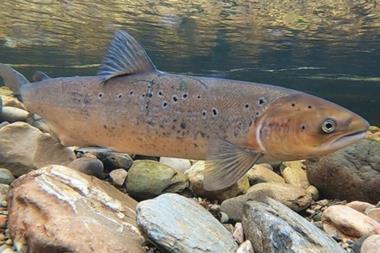
Wild salmon are under a range of pressures such as climate change, invasive species and aquaculture. Once abundant in rivers and coastal areas, stocks in the North Atlantic have fallen from up to 10 million in the 1970s to just three million today.
Sea lice from fish farms poses a particular threat to wild populations and SEPA was tasked by the government in 2021 to help tackle the risk.
“We know wild salmon populations are in crisis, and safeguarding their future requires co-ordinated action and a broad range of interests working together,” said Peter Pollard, head of ecology at SEPA.
“We’re one of the first countries to take action to manage the risk posed by sea lice from fish farms to wild salmon,” he added.
The Sea Lice Framework is an evidence-based regulatory approach which proposes creating protection zones in migration bottlenecks on the west coast and Western Isles. Farms in these areas will be subject to tighter levels of sea lice control with opportunities for additional monitoring, engagement and adaption if required, says SEPA.
The framework will be implemented in phases from the beginning of February 2024.