
New outdoor exhibition showcases kelp restoration in Norway
From its role as a breeding ground for biodiversity to its role in carbon sequestration or serving as a foundation to vital fish stocks such as cod, Norway’s kelp forests deliver a multitude of ecosystem services. On 9 January 2026 a new outdoor exhibition opened in Tromsø to showcase kelp restoration efforts in the city.
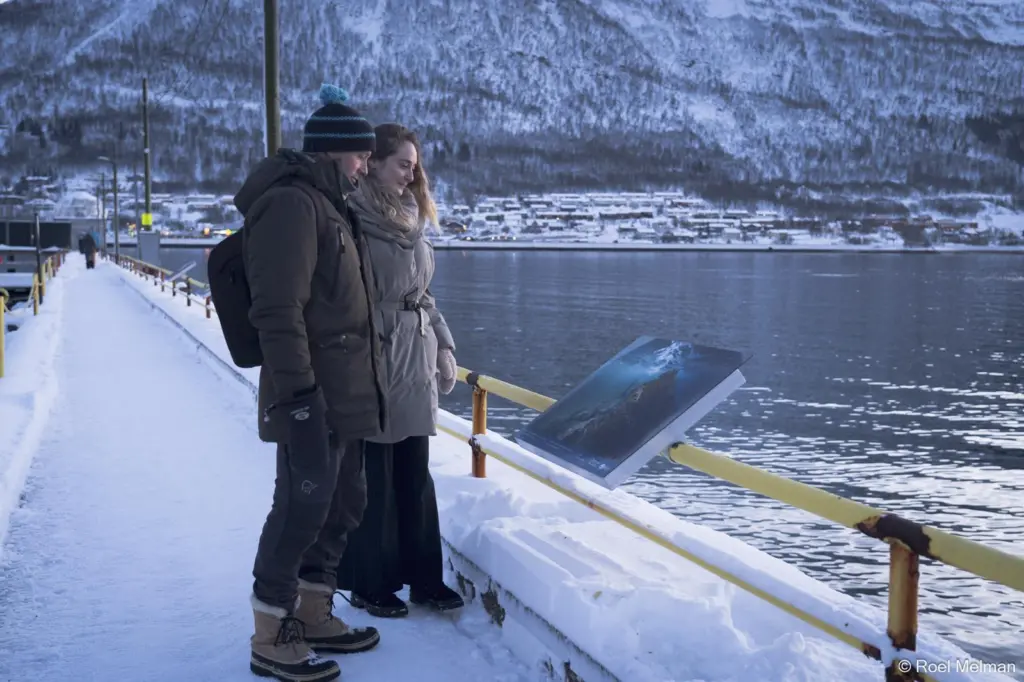
From an urchin-covered seascape to a view into the world of brightly coloured shrimp, fish and sea slugs the exhibition illustrates the dramatic change that community citizen scientists have delivered.
The exhibition is part of the Ocean Green project, a consortium bringing together science, engineering, technology and local volunteer groups.
“Kelp loss is a global problem,” said Dagny-Elise Anastassiou, Chief Impact Officer at Ava Ocean and Ocean Green project lead. “And around northern Norway, as much as 80% of our region’s kelp has been lost over the last 50 years – largely replaced by urchin barrens as overfishing reduced urchin predators.
“At Ocean Green, we are working on a large-scale, sustainable solution to this problem, while also researching new products that can be made from the urchins we harvest. Our goal is zero-waste kelp restoration that is sustainable for the long-term.”
Located at the Sørsjetéen jetty in Tromsø, the exhibition showcases the work of volunteers who have been going into the water to remove urchins by hand – an activity spearheaded by Rissa Citizen Science, Ocean Green’s citizen science partner. With one side of the jetty left untouched and the other side restored to life, their work points to just how quickly and effectively kelp – with all the additional ecosystem services it brings – can bounce back.
“This exhibition is a thank you to the volunteers who have gone into the water and supported this work from the shore,” said Delphin Ruché, Founder and Director of Rissa Citizen Science. “The return of this wonderful ecosystem would not have been possible without their participation. By reducing the density of these native sea urchins, space has been made for kelp to come back, bringing with it the abundance of sea life you see in the exhibition.
“Our work is about biodiversity but it is also about community engagement and capacity building that goes far beyond the issue of kelp restoration,” continued Ruché. “We look forward to welcoming more volunteers into our community of ‘Kelpers’. If you want to learn about these underwater environments and be part of the solution to this problem, come along to one of our events.”
The Ocean Green exhibition has been made possible thanks to Ocean Green (Ava Ocean, NIBIO, NIVA, Akvaplan-Niva, Hofseth Bio Care, Across Nature and Rissa Citizen Science) and CEWE. Tromsø Municipality and the Port of Tromsø are facilitating both the exhibition and the restoration initiative.
Funded by Norway’s Green Platform, and endorsed by the UN Ocean Decade, Ocean Green brings together top research institutions and industry players in fisheries, biotechnology and citizen science to deliver kelp restoration at scale.
While working on its unique harvester – based on the patented technology employed by Ava Ocean to gently collect scallops from the Barents Sea – the consortium is also exploring commercially viable products that can be created from the urchin harvest, with the goal of establishing a zero-water, circular economy that will deliver diversified sources of income to tourism-dependent cities like Tromsø.