The International Day for the Fight Against Illegal, Unreported and Unregulated Fishing – every year on 5 June – is not merely a note on the calendar, it is a global call to protect the oceans and the communities who depend on them, insists the General Fisheries Commission for the Mediterranean (GFCM).

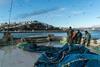
Fishers in Turkey

Fishers in Turkey

Source: FAO-GFCM/Claudia Amico

The International Day for the Fight Against Illegal, Unreported and Unregulated Fishing is a global call to protect the oceans and the communities who depend on them, says GFCM

According to the Food and Agriculture Organization of the United Nations (FAO) body, in the Mediterranean and Black Sea, the tide is turning on illegal, unreported and unregulated (IUU) fishing. It explained that over the past year, it has significantly stepped up its cooperation with countries against IUU fishing, translating commitments into concrete action – at sea, at port and in policy. 

Ahead of the 2025 United Nations Ocean Conference taking place in Nice, France, the message is clear: IUU fishing has no place in the region’s future, it said.

Backed by the European Union and its member states, alongside Turkey, Morocco and other countries, GFCM said it is making “significant strides” in the fight against IUU fishing. It highlights that a key advance in this campaign is the recently amended European Union Control Regulation, which, at the end of 2023, contributed to significantly strengthening the use of digital technologies and modern data management systems to monitor fishing activities among European Union countries. 

This includes promoting the use of intuitive mobile applications to streamline reporting procedures for both professional and recreational fishers and for all fishing vessels, regardless of their size, making it easier to record their catches in electronic logbooks or other online platforms. 

“Over the years, the fishing sector’s responsibilities on resource conservation and inspections have increased. Following through has been made possible thanks to the implementation of advanced technologies for real-time control and monitoring. This translates into a sustainable future for our fishery resources,” commented a fisheries inspector at the Maritime Fisheries Service in Malaga, Spain.

A cornerstone of these efforts lies in the development and implementation of national plans of action to prevent, deter and eliminate IUU fishing (NPOA-IUU). So far, 2025 has recorded important improvements in this area, with Albania, Montenegro, Turkey and Ukraine all working closely with the GFCM to draft, revise and operationalize their national frameworks.

“The role of fisheries inspectors has evolved significantly, with technology and tighter regulations enhancing our capacity to detect and deter IUU fishing. These changes not only support fairer fisheries governance but also strengthen the protection of fragile marine ecosystems. Our work today is more than enforcement – it’s a commitment to sustainability,” said Sadettin Doğu, Head of the Fisheries and Aquaculture Department at the Ministry of Agriculture and Forestry in Turkey. 

These plans are backed by a regional toolbox — legal templates, best practices and hands-on support — designed to aid countries in the development of their NPOA-IUU. They also align with international best practices, the GFCM 2030 Strategy, and the GFCM Regional Plan of Action to Combat IUU Fishing.

Meanwhile, Morocco is among the first countries to have developed electronic solutions for reporting catches and tracking small-scale fisheries, using technologies such as radio frequency identification to enhance product traceability and combat IUU fishing. GFCM has supported this process by adopting binding recommendations and offering dedicated legal reviews and legislative drafting support to several countries.

These actions are complemented by training to equip national authorities and inspectors with the skills and tools needed to strengthen fisheries controls. Across the region, joint inspection procedures are being tested, and new technologies are being rolled out into vessel monitoring systems (VMS), creating a more modern, unified and transparent enforcement system.

Elsewhere, Montenegro recently participated in a pilot VMS programme that tested transponders on voluntary small-scale fishing vessels. According to GFCM, this initiative marked a turning point in the cooperation between fishers and authorities, demonstrating the feasibility of integrating small-scale fisheries into digital monitoring frameworks.

In 2015, the GFCM proposed 5 June as the International Day for the Fight Against IUU Fishing – a date marking the entry into force of the Port State Measures Agreement. The commission said that 10 years on, the fight against IUU fishing is far from over, but something fundamental is changing: Countries are no longer working in isolation. They are sharing knowledge, coordinating actions and shifting from policy commitments to concrete actions.