


Newbuild ordered for Petrel
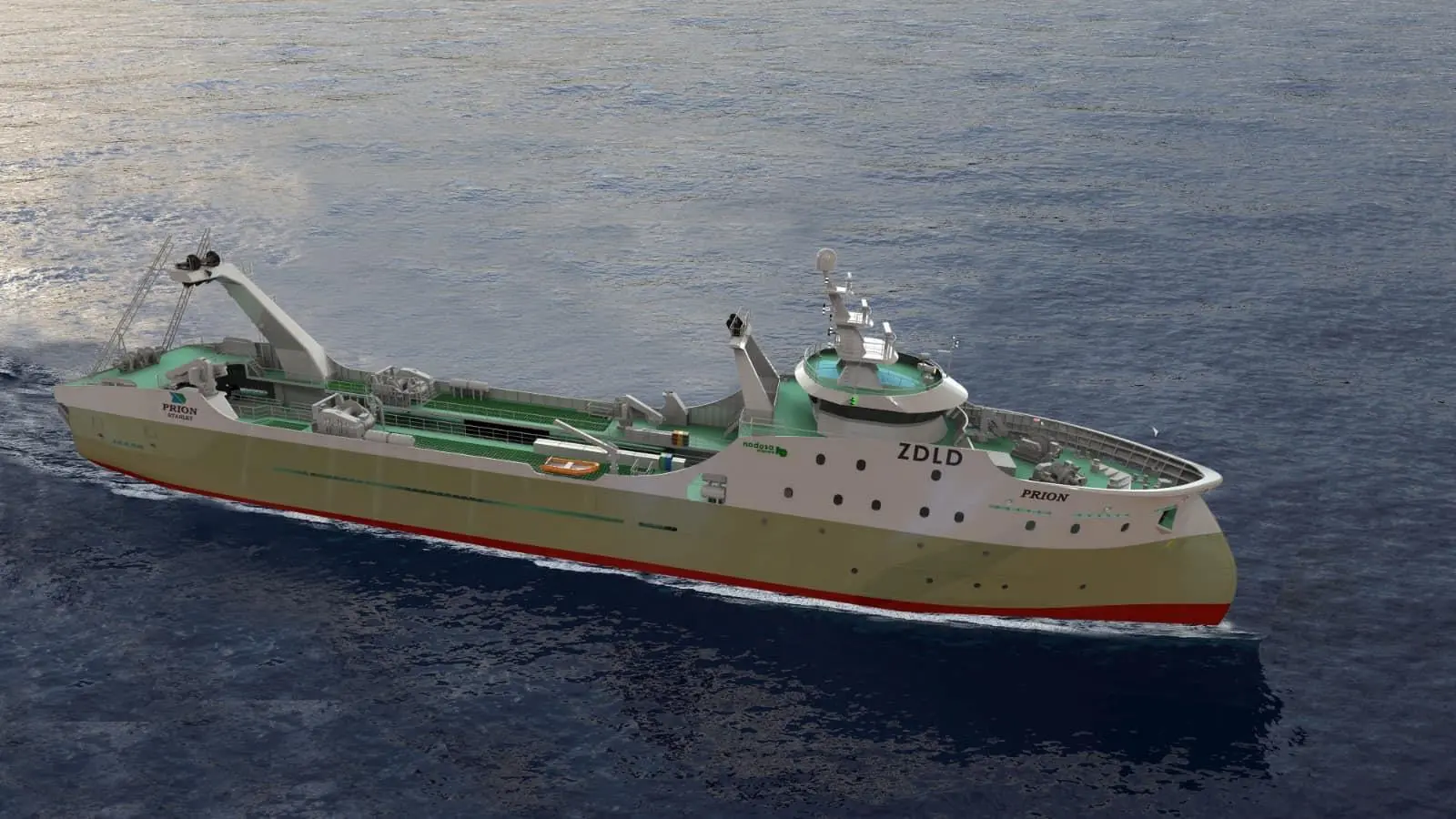
Spain’s Nodosa Shipyard has secured a contract to construct a new 85-metre factory trawler for the Petrel Fishing Company, part of Falklands-based Fortuna Ltd.
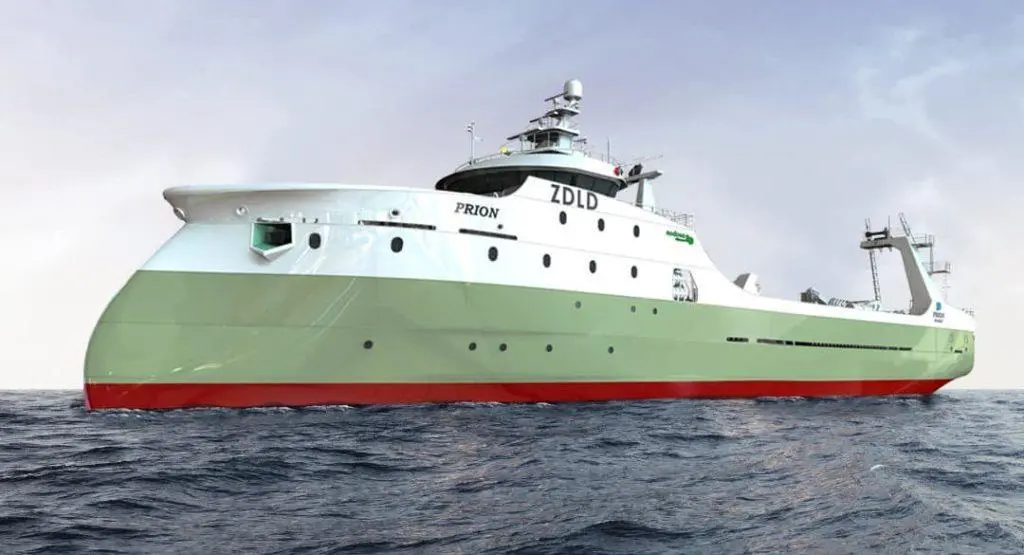
To be named F/V Prion, the 2,500 GT vessel will be the largest newbuild to feature in the Spanish distant water fleet’s renewal programme in recent years. The build will be funded by a combination of financial reserves and bank loans.
The new vessel, which is scheduled for delivery at the end of 2024 and which will replace FV Capricorn in early 2025 and feature in the first Falkland Calimari season, was designed and developed in conjunction with the shipowner’s technical team. It draws on technical innovations incorporated in Falcon, a vessel that Nodosa delivered to the same shipowner a year and a half ago.
Falcon’s initial fishing trips, conducted in the South Atlantic, have gone very well. Nevertheless, improvements are being made with Prion that are aimed at increased respect for the environment, as well as the safety, comfort and wellbeing of the 78 crew onboard, and the quality of the final product.
A cabin is also to be incorporated to provide greater comfort and safety to fishery observers.
According to Nodosa, both the main engine and the auxiliary engines on Prion will comply with the demanding regulations of the fishing grounds in terms of emissions control. They have been designed to work with optimised efficiency at all times, thus ensuring lower polluting emissions and greater savings in fuel consumption.
Ammonia has again been selected as the refrigerant as it is not only deemed greener as it exists in nature, but also because it provides greater cooling capacity than other solutions.
The shipyard also highlighted that another relevant aspect in the search for greater efficiency in navigation and at work is the design of a completely optimised hull. This, it said, directly results in savings in energy consumption and greater environmental benefits.
The hull will feature an inverted bow, which itself is the result of previous experiences with such an arrangement, Nodosa advised.
Other notable elements will include the choice of silicone paints for the hull. These have proven to be more ecological and efficient in consumption for these fishing grounds.
Additionally, a tank will be installed to store biodegradable waste during the hoisting and launching of the rigging, while an approved incinerator will be incorporated to reduce waste coming ashore.
Nodosa explained that thanks to the vessel’s design, it will be possible to reduce the number of people needed in deck manoeuvres. Furthermore, the crew’s work will be more protected from inclement weather, while certain loading and unloading processes have been automated.
To keep fishery products in ideal condition, the extraction processes will be improved, alongside the provision of a temporary storage system for containment until processing as well as a quick-freezing solution.
Prion represents the fifth contract Nodosa has won in recent years for large offshore freezer vessels specialised in the complicated South Atlantic fisheries. Monteferro began the fleet’s renewal, followed by Argos Cíes, Montelourido and Falcon. Longliner CFL Hunter was delivered in 2017 specifically for the Patagonian toothfish fishery.