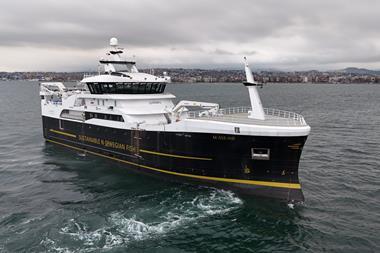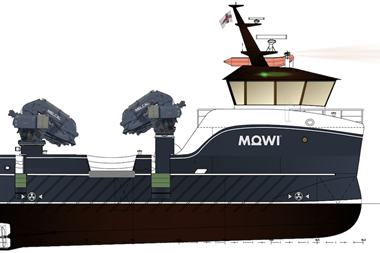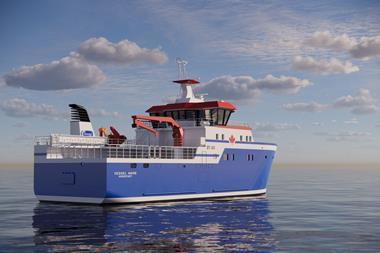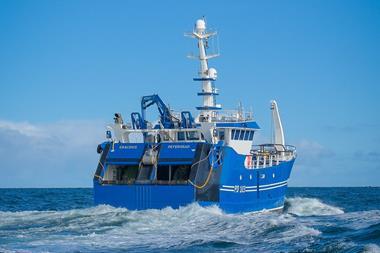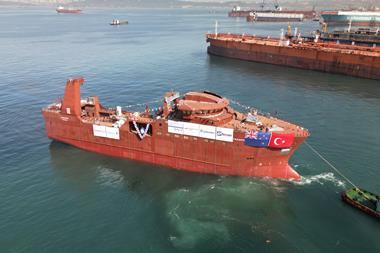




Turkey’s Tersan Shipyard has confirmed the start of extensive reconstruction operations for a next-generation krill fishing vessel.
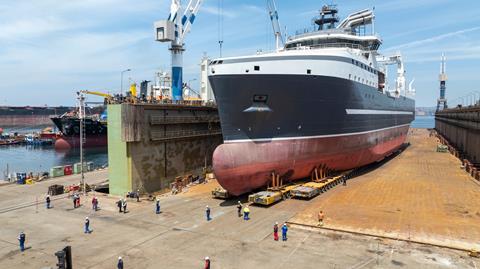
Initially contracted with Westcon Shipyard, the new vessel was originally planned for delivery to end-user Rimfrost AS. However, contractual disputes between Westcon and Rimfrost in 2023 led to the cancellation of the agreement.
Subsequently, Tersan entered into a new agreement with Aker QRILL Company (formerly Aker BioMarine Antarctic AS), ensuring the conversion of the vessel under a new vision.
The vessel is undergoing extensive modifications to align with Aker QRILL’s specialised operational requirements, including a 25-metre extension, advanced technological integrations, and sustainability-driven customisations.
According to Tersan, these enhancements will redefine efficiency in krill harvesting operations, ensuring compliance with Norwegian fishing regulations while reinforcing sustainable feed production and marine-based nutrition.
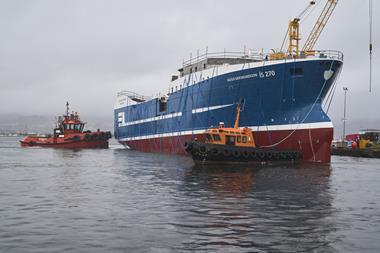
As part of the vessel extension process, it has been successfully hauled ashore via a floating dock and self-propelled modular transporters. The cutting phase for the extension has already been completed.
“This large-scale reconstruction project is a testament to Tersan Shipyard’s expertise in delivering complex and high-tech vessel solutions,” said Mehmet Gazioğlu, General Manager of Tersan Shipyard. “Bringing this vessel into its next phase of development highlights our dedication to maritime innovation and strengthens our position as a leading force in sustainable shipbuilding.”
“This partnership represents an ideal solution for both parties,” said Webjørn Barstad, CEO of Aker QRILL Company. “Adding a fourth vessel to our fleet is crucial for our success as we enter the next phase of growth and development. Equipped with the latest and most advanced technologies, this vessel will bolster our ambition to maintain our leadership position in the krill industry and ensure access to renewable and sustainable marine raw materials – vital to meet the growing global demand for sustainable marine feed ingredients with excellent nutritional qualities.”