





United States holds off issuing Mexico trade ban
US President Joe Biden has elected not to issue an embargo on Mexican wildlife products despite the country being found in breach of a US law requiring federal action against countries found to be violating the Convention on International Trade in Endangered Species of Wild Fauna and Flora (CITES).
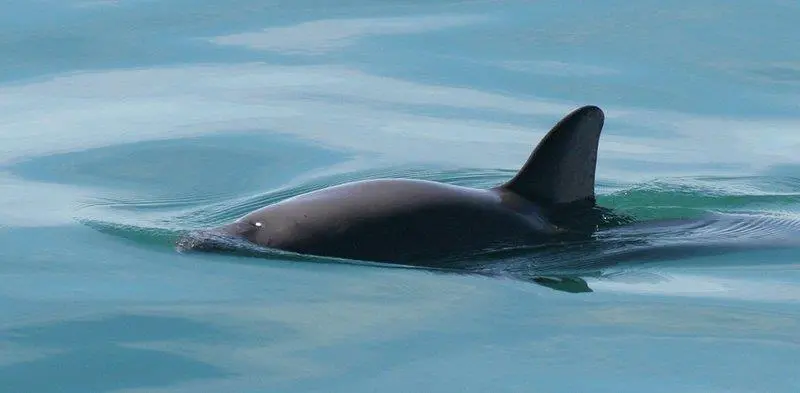
As previously reported by WF, the US Fish and Wildlife Service (USFWS) advised in May that Mexico has failed to halt the illegal wildlife trade of the critically-endangered totoaba, which was also resulting in the deaths of the also critically-endangered vaquita porpoise. As such, Biden had until mid-August to decide whether to take action against Mexico, including imposing a trade embargo.
In letters to the Speaker of the House and the President of the Senate dated 17 July 2023, Biden acknowledged that “illegal fishing for totoaba has continued” but advised that he wouldn’t be directing the Secretary of the Treasury to impose trade measures on Mexican products.
Instead, to “ensure that this issue continues to receive the highest level of attention”, the president confirmed he has directed relevant executive departments and agencies to convene a high-level dialogue with the Government of Mexico to discuss the steps it will take to reduce illegal trafficking of totoaba and enhance conservation of the vaquita. Through this dialogue, the US will encourage Mexico to strengthen and implement its CITES compliance action plan and comply with all relevant CITES decisions regarding totoaba and vaquita, including the expansion of enforcement efforts.
The US will also establish a schedule of at least quarterly meetings with the Government of Mexico to review its CITES Compliance Action Plan implementation, with a focus on enhanced monitoring and enforcement actions to prevent and deter totoaba fishing and trafficking, including seizures, arrests, and prosecutions.
The States will also include totoaba and vaquita enforcement matters on the agenda for the next High Level Security Dialogue with Mexico.
Additionally, Biden has tasked relevant agencies with coordinating efforts to assist and support Mexico’s compliance, anti‑trafficking, anti-corruption, and other measures as appropriate.
If requested by the Government of Mexico, the United States will assist Mexico with relevant training and capacity building, he said.
Biden said these actions were the appropriate means to address the issue, but added that to ensure it continues to receive the “highest level of attention”, the Secretary of the Interior, in coordination with the Secretary of Commerce, Secretary of State, and the United States Trade Representative and other agencies will monitor Mexico’s enforcement actions and progress and provide him with a report not later than 17 July 2024 on whether the actions have reduced the illegal harvest and trafficking of totoaba and enhanced the conservation of vaquita.
The report will be used as the basis for assessing whether additional steps, including potential trade restrictions, will be necessary, Biden said.
“I believe that continued focus is required to curtail the illegal taking of and commercial trade in totoaba and to support conservation efforts. These actions hold the most promise of reducing illegal trade in totoaba and instituting effective conservation of the vaquita.”
In his letters, the president explained that despite international protections and Mexico’s domestic ban on totoaba fishing, the illegal harvest and international trade in totoaba has continued in response to the ongoing demand in the People’s Republic of China (PRC).
“With the price of a single totoaba swim bladder estimated at thousands of dollars, the incentive for illegal harvest and trade is high,” he said. “Many of these illegally-harvested swim bladders are trafficked from Mexico through the United States to the PRC.
“As the illegal harvest of totoaba has continued, the vaquita population has plummeted. Recent estimates suggest there are fewer than 15 individual vaquitas remaining in the wild. Despite these low numbers, scientists believe that the vaquita can survive and recover if the threats to its survival are reduced or eliminated.”
In April 2023, Mexico submitted a CITES Compliance Action Plan to the CITES Secretariat outlining a set of steps it will take to improve enforcement and monitoring of illegal fishing in the Gulf of California.
The Mexican government has also entered into a partnership with NGO Sea Shepherd to remove gillnets from a small priority region (Zero Tolerance Area – ZTA). On 26 June 2023, Sea Shepherd reported that the ZTA of the Gulf of California is “functionally gillnet free”.
Related Articles
 FISHERIES
 SEAFOOD
 SUSTAINABILITY