

India’s shrimp industry loses $500m to US ban
The US ban on importing wild-caught shrimp from India has badly affected the livelihood of a large number of fishers, with a new status report on conservation and trade policies estimating a US$ 500 million loss in earnings since the ban’s introduction in 2019.
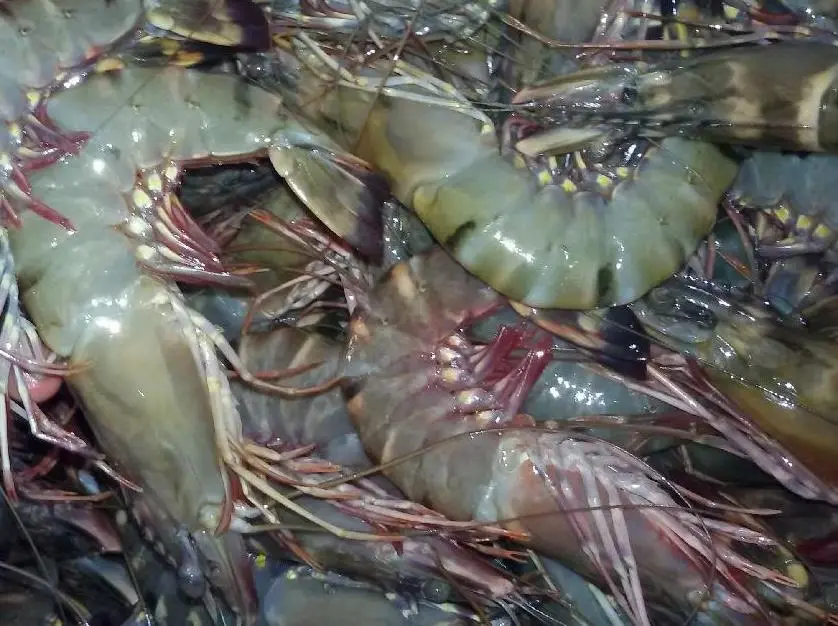
America’s ban on Indian shrimp is based on its law that prohibits the import of wild-caught shrimp from commercial fisheries that negatively impact sea turtles. In India, sea turtles are incidentally caught along with fishes in fishing gears like the trawls.
The report was presented at a global forum held in Chennai on the conservation of marine mammals and sea turtles. It was attended by representatives from 11 countries in the Bay of Bengal region.
According to the report, the country has finalised two designs of Turtle Excluder Device (TED) to be fitted in the trawl net as per the technical requirements of the US’s National Oceanic and Atmospheric Administration (NOAA). One of the designs has been approved for implementation in India by NOAA as it facilitates escapement of incidentally caught sea turtles. The next step is to popularise the use of TED by the fisheries in the country.
It is expected that the use of TED by the fishers in the trawls will substantially reduce mortality of sea turtles.
Field demonstrations are underway in all maritime states to create awareness among stakeholders on the importance of usage of TED, the report said.
Marine scientists who presented the report highlighted that another emerging challenge is the need to develop an appropriate regulatory programme for conservation on marine mammals such as whales, dolphins, porpoises and dugong – to comply with the Marine Mammal Protection Act (MMPA) in the US.
The report was presented by Marine Products Export Development Authority (MPEDA) under the Department of Commerce, Government of India, Central Marine Fisheries Research Institute and Central Institute of Fisheries Technology, both institutions under the Indian Council of Agricultural Research (ICAR).
At the meeting, Indian marine scientists explained the country’s fishermen are using indigenous methods to reduce marine mammal-fisheries interaction. The meeting was hosted by Bay of Bengal Programme Inter-Governmental Organisation (BOBP-IGO) with the support of ICAR-CMFRI and MPEDA, aimed at addressing the challenges of meeting US trade obligations under the MMPA and similar regulations for sea turtles.
The US enacted the MMPA, stipulating that fish exported to the country should be captured in a manner that does not result in greater incidental mortality or serious injury to marine mammals.