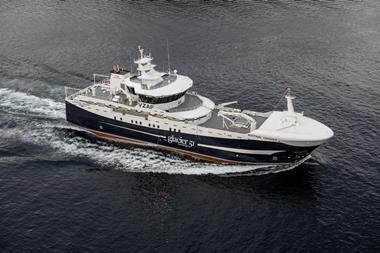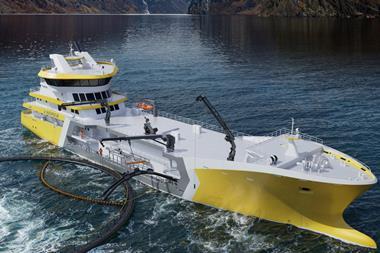



Intership has taken delivery of its second newbuild from Zamakona with the handover of the hybrid-powered, Salt-designed Inter Scotia.

Inter Scotia has a 2,500-cubic-metre load capacity and is largely similar to sister vessel Inter Atlantic, as both are based around the design philosophy of promoting fish welfare, optimising fish handling and ensuring biosecurity. The new vessel features a substantial battery package that, when in combination with its heat-recovery system and other measures, significantly reduces fuel consumption and climate emissions.
The fish handling system is delivered by MMC First Process and the vessel is equipped with a high-capacity freshwater production system capable of producing 5,000 cubic metres of fresh water per day.
Since 2016, Intership has been a leader in developing freshwater treatment for lice and AGD using a reverse osmosis system. In the past seven years, the company has gained extensive operational experience in freshwater production and freshwater treatments.
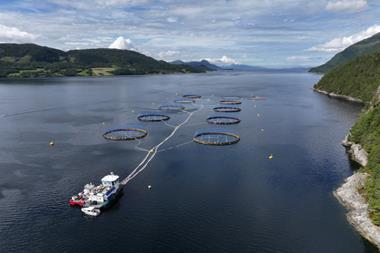
Inter Scotia will initially work for a salmon farmer in Scotland. After a few months, it will be temporarily taken out of operation for the installation of the FLS Caligus R600 delousing system. The combination of a freshwater bath and flushing the fish through the FLS system is a very efficient and gentle way to remove sea lice and gill infections in the same operation.
“We are delighted to take delivery of our third vessel equipped with Intership’s industry-leading freshwater production and treatment setup,” CEO Ole Peter Brandal said.
“Freshwater treatment is arguably the gentlest method used for treating salmon, and it offers both environmental and economical benefits, in addition to increased efficiency through facilitating a high-capacity fresh water production system. We have two more well boats under construction with even higher production capacities.”
One of the largest wellboat operators, Intership is active in Norway, Chile, Scotland and Canada. With the delivery of Inter Scotia and two more vessels currently under construction at Sefine in Turkey, the company’s capacity will extend to 26,200 cubic metres across 11 vessels.