





Championing small-scale
“I can’t seem to lose the passion for all this,” said Arthur Bogason, back as Chairman of the Icelandic National Association of Small Boat Owners (NASBO) after a seven-year break.
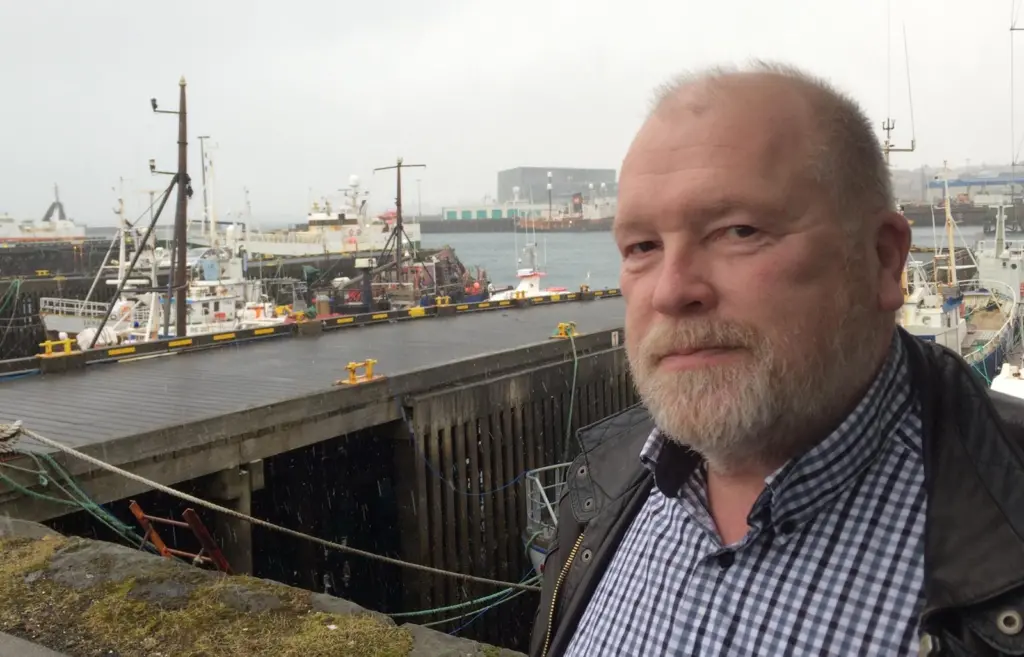
A lot has changed in the almost 40 years since he was instrumental in establishing NASBO to represent the interests of Iceland’s inshore fleet in the years immediately following the introduction of the quota system in the early 1980s. Back then, this fleet rapidly mushroomed in size as the inshore boats fishing mostly with jigging gear didn’t come under the new regulations. That didn’t last long, and he has argued with practically every Minister of Fisheries for four decades over successive measures designed to curtail the activities of the small boat fleet, until stepping down as NASBO’s chairman.
“I stood for re-election late in 2020 in the middle of Covid,” he said.
“All meetings were over Zoom – which is cheaper as nobody has to travel, but for some reason the meetings were longer. We were finally able to hold a normal AGM last October, and the guys decided to elect me again as chairman.”
Much has changed for the small-scale fleet over recent decades, not least the lifting of the sector’s threshold to 30gt/15 metres LOA, ushering in a new generation of larger, more sophisticated, high-capacity fishing vessels designed to slip in just under the limitations to take part in the hook regime – which ties these vessels to fishing exclusively with hook and line gear, which in practice means longline systems.
“The future of this fleet segment is a concern. It has gone from 733 boats in 2004 when the hook and line system was introduced. Today, these boats are around 200, thanks to the change to the 30gt/15 metres. This was exactly what we had predicted and warned the authorities would happen,” he said.
“A lot of the larger fishing companies saw opportunities, and they moved into this sector, accumulating quotas onto fewer boats and operating them like factory trawlers. That’s not likely to change, and I would go so far as to say that by doing this, the authorities wrecked what had been a successful system. I have said again and again that the ITQ system is the most successful tool ever created to destroy a small-scale sector.”
Going coastal
An alternative appeared in 2009, in the wake of the 2008 financial crash when Iceland’s first centre-oriented government for a generation came to power and took the opportunity to set up a new coastal fishery regime, limited to four months each summer and a shared quota pot, and providing a way into fishing for those without access to the quota market, as well as others.
“The coastal fishery is exciting. It’s now in its 14th summer, with more participation than ever. For the most part, it has been a real success, although it’s not without glitches that we’re working to get fixed,” he said, commenting that a key issue is achieving a guarantee of 48 days’ fishing for each season, and an opportunity to extend activity beyond the present 31 August cut-off date.
“The response is always that there’s a danger of overshooting the size of the quota pot available, and we always point out that this can go down as well as up, as has happened twice when the full quota wasn’t caught – although for the last two seasons the quota has been finished before the end of the season,” he said.
“But if it does overshoot, by maybe 1,000 tonnes, it’s ridiculous to imagine that this makes any kind of a difference. It’s one thousandth of the estimated size of the cod stock. Guaranteeing days would also give fishermen the chance to choose the best fishing days over a longer period, as there are variations around the country. In waters close to Reykjavík, for example, the fishery can begin months ahead of the rest of the country, and in the north and east there can be good inshore fishing well into September.”
This year hasn’t started all too well for the boats within the coastal fishery scheme.
“One summer is never the same as another and the weather wasn’t great when the season opened on 2 May and not so many went to sea,” he said.
“But there were good prices for those who landed fish, although we can expect those to drop as the season progresses. Product prices are also very high, and that supports a high price at the quayside. We’ve seen one record after another broken across the fleet as a whole as high values result in record trips.”
Fishing gear doesn’t lie
He commented that fishing for groundfish has been extremely good recently in Icelandic waters, with one modestly-sized netter landing 1180 tonnes of cod in February alone, and its owner declaring that “there must be a million tonnes of cod in Breiðafjörður.”
“This demonstrates the complete lack of correlation between what fishermen’s catches and what the Marine Research Institute tells us are the results of its stock assessments,” he said.
“Plus, it doesn’t help that they continually tinker with the model, and always come to the same conclusion – that we’re always fishing too much and endangering the stocks. But that’s not the way it is. Fishing gear doesn’t lie. The catch results reflect the volumes of fish in the sea. Even though the researchers seem to struggle to find fish, fishermen don’t have a problem.”
He commented that one of the core fisheries for NASBO’s membership is the lumpfish roe fishery that begins during the spring, with static nets used to catch this species, but as so often, the cod by-catch is a recurring problem.
“Nobody wants this by-catch. It rolls up the nets and this cod catch eats up quota with low-value landings. One of our members has been leasing quota at ISK350 per kg, and the cod by-catch during the lumpfish fishery fetches only ISK150, so he’s losing ISK200 per kg. NASBO has been asking the Ministry and the Institute to come up with a regulatory solution, but the only response is to treat fishermen like criminals for putting their gear where there are fish,” he said.
“When the “best fishery management system in the world” was invented, this aspect of it was forgotten. The lumpfish fishery has been going since the 60s. It was a known problem then, and more than half a century on, nothing has been done and it’s still a problem today.”
Last of the Mohicans
With close to half a century of fishing experience, both at sea in his own boat and behind at desk at NASBO’s office, Bogason is still fighting many of the same battles with authority, but he’s still remarkably optimistic.
“The coastal fishery is the last bastion, the Last of the Mohicans in maintaining freedoms that have been whittled away over the years,” he said.
“It’s noticeable that among politicians it’s often the younger generation in parliament that is most conscious of the issues at stake for small-scale fishermen, much more so than the older generation, stuck in their ways and bogged down in the system. The younger ones are more sympathetic to small-scale fishing. For example, the Pirate party shares many of our viewpoints and support us,” he said.
“This is where we see hope for the future, with changes in attitude among younger politicians who have a different outlook to that of the old guard of apparatchiks.”
Related Articles
 INTERVIEWS
 PROCESSING & REFRIGERATION
 PROCESSING & REFRIGERATION