






Patent given to farmed fish automatic sex sorter
GreenFox Marine AS has had its Norwegian patent application for automatic sex sorting of farmed fish approved, with the expectation that the solution can help improve conditions for fish at hatcheries and in cages.
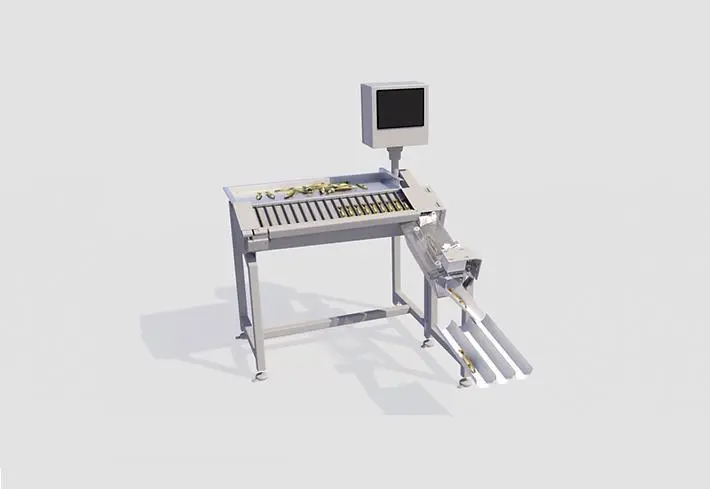
According to the Norwegian company’s CEO Erling Aspen, the automatic sex sorting of salmon smolt helps solve one of the industry’s biggest challenges – high mortality in the marine phase, whilst contributing to increased productivity.
“That the core function of our technology is now patented gives us extra security as we move forward, working towards further industrialisation and commercialisation of the solution. It’s very rewarding offering breeders a solution we know will increase both health and welfare for the fish.”
Aspen said that one of the advantages of sex sorting is that fish in sex-separated cages grow faster, have lower mortality and fewer wounds. Simultaneously, farmers can optimise production for each sex, through differentiated slaughter times, light management, localisation, and other such measures.
“You can also reduce the time the fish spends in the sea, which in turn will have positive effects with fewer lice on the fish. More uniform fish sizes also simplify production, at the hatchery, in the cage and at the harvest factory,” he said.
GreenFox’s now-patented machine is an automated solution for sex sorting fish, using ultrasound and artificial intelligence (AI).
The company currently has standalone machines that sort up to 3,500 fish per hour, but new machine solutions are being worked on where the speed can approach 40,000 fish per hour.
The sex sorting process is divided into four stages:
1. Anesthetised fish are fed into the machine, where they are automatically passed over an ultrasound probe.
2. The machine selects 16 high-resolution ultrasound images of the fish, which are sent into GreenFox’s AI model.
3. The AI model takes 0.03 seconds to analyse the images and determine whether the fish is male or female.
4. The fish is sorted into the correct container.
The solution is currently used for both broodstock and hatchery fish.
Several of the largest fish farming companies in Norway have already started using the solution. Since June, GreenFox has sorted almost 2 million salmon smolts for Aquagen, Mowi, SalMar, Benchmark Genetics and Måsøval, among others.
“This is a solid and proven solution that works. Several large businesses are already embracing the solution; for instance, we have signed a three-year contract with Mowi that includes sorting all their broodstock,” Aspen said.
GreenFox has also sold machines to Scotland and the Faroe Islands, and there has been strong interest from the Chilean market, which currently sex sorts more than 50% of all farmed salmon manually – equating to more than 100 million
fish a year.
The current alternative to GreenFox’s automatic sorting machine is manual sorting with hand-held ultrasound. This, the company said, is considerably more time-consuming and has lower accuracy.
“Our machine sorts the fish with an accuracy of 97-99%. We have run tests on manually-sorted fish and, in some cases, found the accuracy to be as low as 70%. The manual work is also an obstacle to sex sorting farmed fish on a larger scale than is done today,” Aspen said.
He added that GreenFox ix working on several projects, aiming to include additional functions by popular industry demand.
“At the same time as the fish are sex sorted, we want to give the fish a health index, which says something about the fish’s robustness and ability to survive a life in the sea. We will do this by examining abnormalities in the heart, liver, and kidneys with ultrasound.
“We are already enrolled in a project investigating the heart and have started work on detecting nephrocalcinosis (kidney disease) at an early stage. Nephrocalcinosis is one of the biggest causes of fish death in hatchery fish and in the marine phase.”
In the long term, GreenFox will adapt the machine to incorporate more fish species, with a survey carried out on behalf of the company finding a total 16 species worldwide that are suitable for farming and that would greatly benefit from being sex sorted using ultrasound.
“The industry has already requested sex sorting of several fish species, such as trout, sturgeon, and seabass. We are in the initial phase of a project with Norcod for sex sorting of cod,” Aspen said.
Related Articles
 AQUACULTURE
 AQUACULTURE
 AQUACULTURE