



Healthier salmon farming
Technological advancements are key to aquaculture’s sustainable growth. Now, two initiatives could make significant contributions towards healthier production systems for salmon
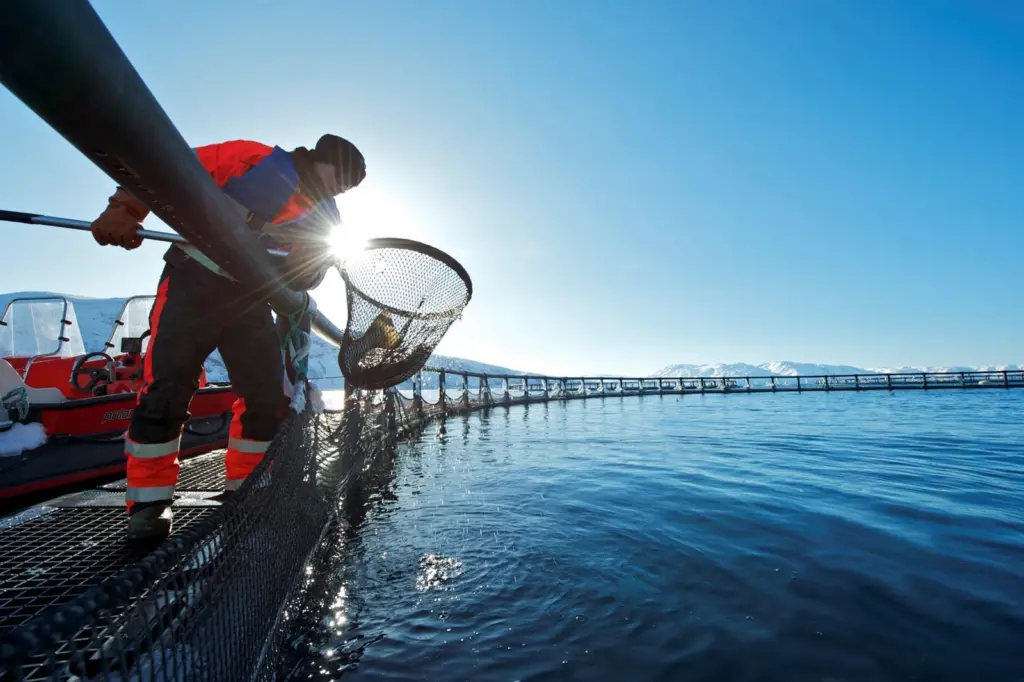
The world’s appetite for fish is expected to near double by 2050, and aquaculture is one way to meet this demand. But with many arguing against open-ocean net pens, land-based fish farms are becoming more common, and with this, an increased recognition of the importance of husbandry measures.
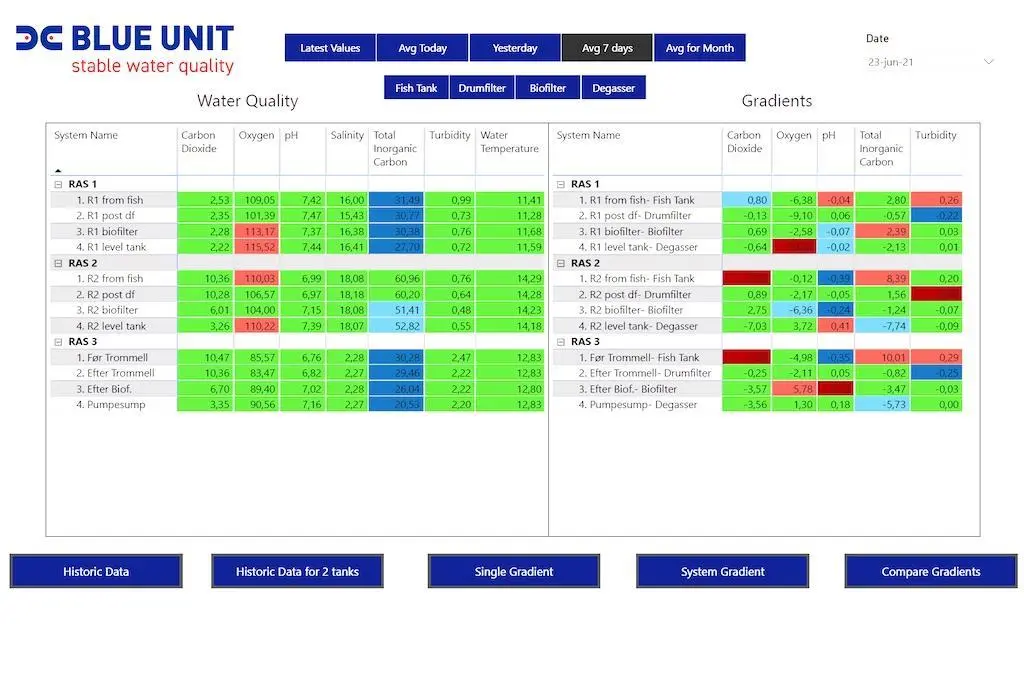
After 10 years of research and development, Danish firm Blue Unit has developed data and visualisation technology to improve water quality control on RAS salmon farms in Norway. Known as the Blue Unit Platform, the system uses sensors to collect data on 12 vital water quality parameters from up to 12 locations on a farm. There is also a built-in alarm that notifies farmers where and why a change in water quality has occurred.
“On RAS farms, a biologist usually takes a water sample once a day but that isn’t enough to understand the daily fluctuations in water quality that fish may experience, let alone how the water treatment system is performing,” said David Owen, Technical Manager at Blue Unit. “In 2012, I began to develop a centralised monitoring system to help farmers understand water quality gradients across their RAS farm.”
By centralising sensors and transporting water samples to them, water quality gradients can be determined without the risk of sensor error affecting the result. Measurements are taken with the same sensor before water enters a component and after it leaves, allowing farmers to see the difference in water quality across the given component.
In this way, Blue Unit determines what’s happening with different components such as the fish tank, drum filter, biofilter and degasser. The sensors measure carbon dioxide, total carbonate, pH, redox, salinity, conductivity, turbidity, oxygen, temperature, H2S, rH and total dissolved solids. The required computing power and algorithms are then used to analyse and visualise the results.
Optimising land-based production
Good water quality control is key for RAS farming. It enables fish to grow fast and reach the required size before they are moved to the next stage. It also prevents stress among the fish and provides a healthy rearing environment. In the long term, Blue Unit’s system means less feed waste, reduced expenses, better animal welfare and greater profit.
“Our data is modelled and calculated to provide a bigger, better picture for decision-makers and to enable them to understand what it takes to achieve good water quality control,” said Ove Heitmann Hansen, CEO at Blue Unit. “We can identify a change in a process, and analyse its root causes. In this way we can help with an early warning of an impending problem, and recommendations for how to remedy it.”
Over the last few years, some fish farms have joined together to form bigger companies, which has led to a need to compare data between different farms that are within the same company. Understanding the performance of the main components in different RAS facilities and benchmarking them has become increasingly important for certain companies, said Hansen. This is an opportunity for Blue Unit to help them decipher large amounts of data to better understand the situation on their farms.
Preparing farmers for challenges
Meanwhile, for companies farming in open-ocean pens, harmful algal blooms (HABs) – caused naturally by large phytoplankton populations – are a considerable and increasingly frequent problem, affecting fish through physical interference, de-oxygenation and even death.
Knowing the timing, location and magnitude of these events in advance would be of great value to farmers, which is why UK ocean science technology provider RS Aqua is looking to build an HAB early-warning system.
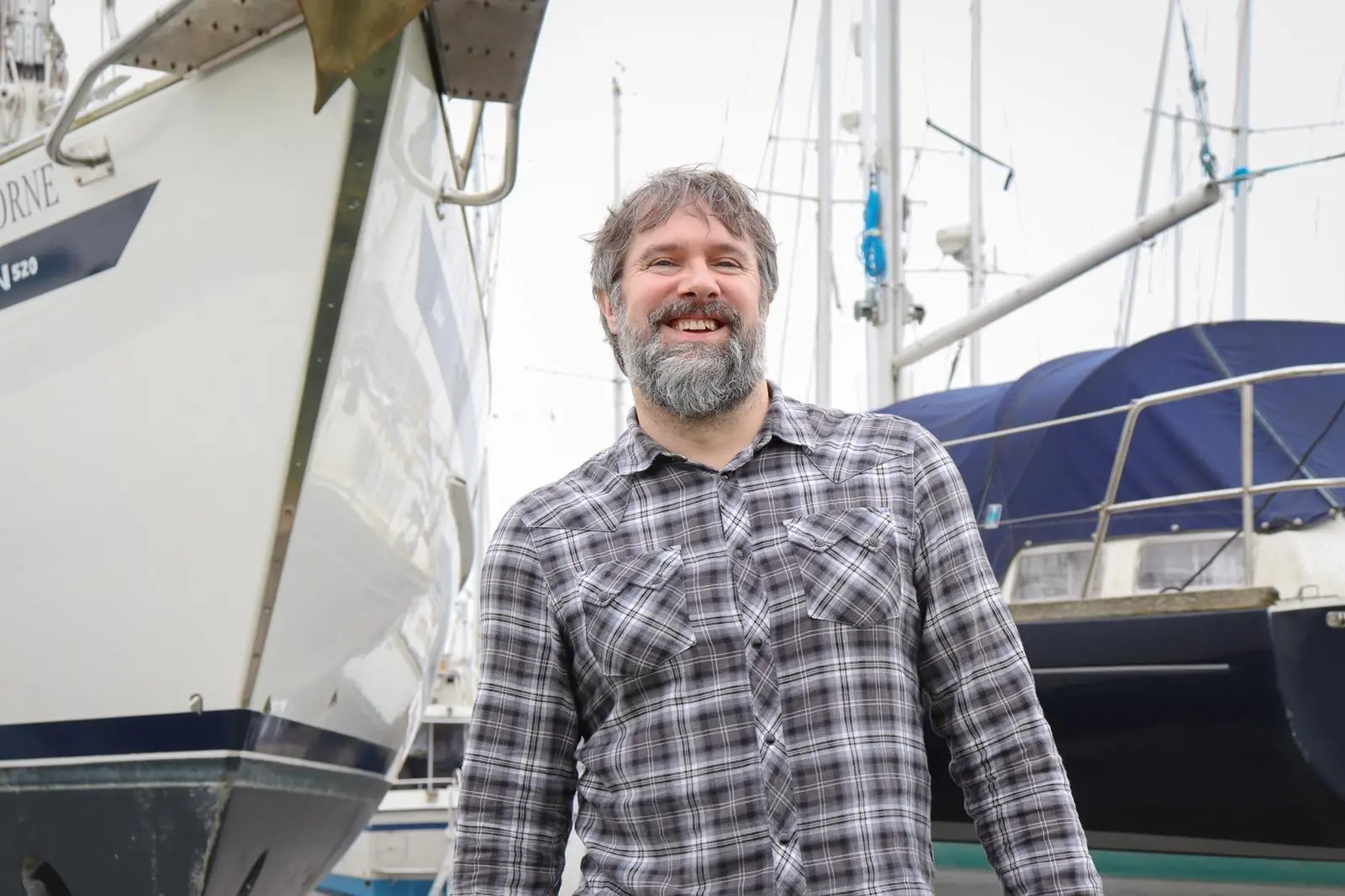
“There is no specific solution to warn farms that HABs are coming, and yet the commercial and biological damage they cause is something you hear about annually in the media,” said Dr Ryan Mowat, Director of Fisheries & Research at RS Aqua. “We found a funding stream that we thought we could tap into, that would allow us to put the necessary work into developing a solution. We felt that we had the core sensing system already through Innovasea, our Canadian partner on the project, but there was additional cause to make that system applicable to HABs, which is what the funding allowed us to do.”
RS Aqua’s system will notify farmers of potential and imminent HABs before they arrive, enabling them to respond ahead of time and take steps to protect stocks. An oceanographic buoy with water quality sensors will be positioned down-current of nearby farms, while more sensors will be deployed on the farms themselves. Data from all sensors will be sent to the cloud in real time for processing by AI algorithms to inform a risk index, which will be available on farmers’ smartphones. Parameters to be measured include DO, temperature, chlorophyll, turbidity, salinity and meteorological conditions.
The sensors will communicate their measurements acoustically through the water to a single data receiver, which is connected to the surface and sends data online via wi-fi or mobile internet.
Learning from experience
“It’s hard to quantify how severe a HAB might be at a certain site at a certain point in time, but the risk of mortality events occurring on farms is incredibly high,” said Mowat. “At some sites, for example in Shetland, HABs happen between March and October at different areas and times so the risk there is 100%. It’s really down to the measures farms can use to mitigate quickly enough to ensure against commercial and biological damage.
“Our system enables farms to learn about the conditions and how conducive they are to HABs happening, allowing them to take appropriate action ahead of time, while the lack of sensor cables makes operations much more streamlined and efficient.”
Although the system doesn’t offer advice or recommendations on the type of mitigation measure, it can advise on where such measures could be taken. Another advantage is that it will learn from a farm’s historical water quality monitoring data, and determine the types of harmful phytoplankton that might be expected on a site at any time.
But the system’s most important feature, says Mowat, is the possibility to install it at any site and make it work with the environmental conditions specific to that location.
Trials are now underway at a Scottish Sea Farms test site in Shetland. Ongoing phytoplankton monitoring data is being collated with sensor data from the site with the aim of having a working system by early 2024.
Related Articles
 AQUACULTURE
 AQUACULTURE
 AQUACULTURE