




Gear second life launch
Spanish technology company Satlink has launched a new circular economy programme that repurposes lost gear that has been developed for sustainable fishing.
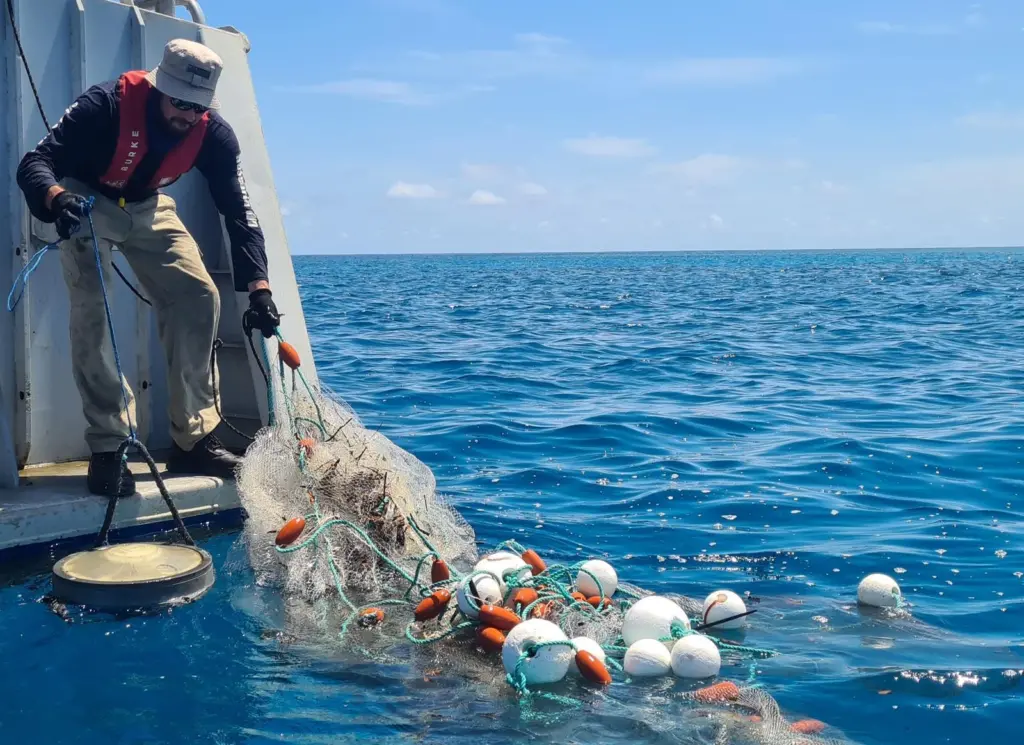
Called “Project ReCon”, the initiative aims to give a second life to devices for sustainable fishing (DSFs), and specifically to echosounder buoys, used in tropical purse-seine tuna fishing. Due to sea currents, some of the echosounder buoys used by the fleets may drift out of the fishing areas at the end of their useful life, making their recovery impossible for the fishing companies.
To prevent them from being beached and becoming technological waste, Satlink is leading a worldwide collaborative network of fishing companies and local partners to collect these devices and refurbish them for new uses – essentially giving them a second life for scientific and environmental purposes.
In addition to marking their position, these buoys have an integrated echosounder that reports the amount of biomass present under the buoy. Therefore, they can be reused for small-scale scientific studies, marking and monitoring of marine debris, or the prevention of natural disasters.
Project ReCon will initially be rolled out in Australia, where Satlink’s team has been working with Tangaroa Blue Foundation, an Australian NGO and founder of the Australian Marine Debris Initiative, which, with the support of the Australian community and government, is cleaning up its coasts and removing and preventing marine debris.
Working together, both organisations aim to re-purpose the collected ReCon buoys for protecting the Great Barrier Reef.
Related Articles
 FISHING TECHNOLOGY
 NEW VESSELS
 FISHING TECHNOLOGY