


More fishing and aquaculture equipment is being collected and recycled – driven by stronger collaboration across the value chain and growing focus on circular design.
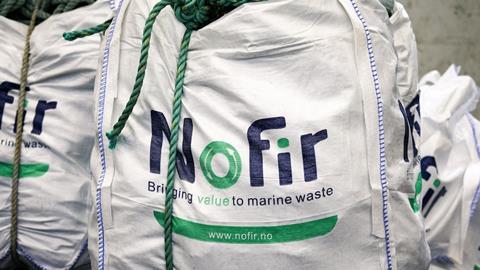
“More is being collected and recycled than ever before. We say it every year, but green work in the blue industries has really picked up speed in the last couple of years,” said Nofir’s purchasing manager Kristian Sandbakk Hansen.
The company has set successive records in recent years, collecting 8,521 tonnes of equipment for recycling in 2024, up from 8,212 tonnes in 2023.
Hansen pointed to increased awareness among manufacturers, with greater emphasis on material choices at the design stage to enable more efficient recycling. At the same time, fishing and aquaculture companies are increasingly opting for gear that is easier to recycle and can later serve as raw material for new products.
Closer collaboration across the value chain has also played a key role, ensuring that more equipment is collected and actually recycled. This is supported by an expanding range of recycling options, including technologies developed by Nofir and its partners.
Together, these developments are creating what Hansen described as a positive spiral, where higher recycling rates strengthen motivation for further recycling and, in turn, drive better product design.
“This is a feather in the industry’s cap. It proves that most things are possible, because numbers such as these were unthinkable not long ago. Hopefully it motivates us in other challenges we face as well,” Kristian Sandbakk Hansen said.
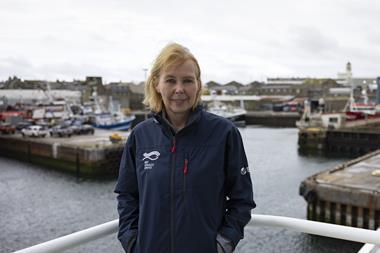
Manufacturers are also increasingly factoring end-of-life considerations into product development. According to Wenche Vigrestad Hadland, Quality and Project Manager at Egersund Trål, circular thinking is becoming integral to gear design.
“This circular thinking means that we, as manufacturers of equipment, have gained a clearer idea of what will happen to this when it’s day taken out of use. By making some structural changes, it is possible to ensure that a trawl that has been used in Norwegian fisheries can be turned into everything from mobile phone cases to fashion clothing,” she said.
Greener pathways
For Egersund Trål, sustainability is becoming a strategic priority as well as a technical challenge.
“This is the logical next step for us as a gear manufacturer. If we are successful in the fisheries sector, which is one of the largest consumers of long-life plastic, it could play a role for many other industries as well. The projects we are working on now will have a lot to say about which path we take next,” she said.
Egersund Trål AS has completed two projects and is currently running two more with support from Handelens Miljøfond. Previous initiatives include the development of environmentally improved ropes for trawl production in collaboration with suppliers, as well as an environmentally friendly wooden storage crate.
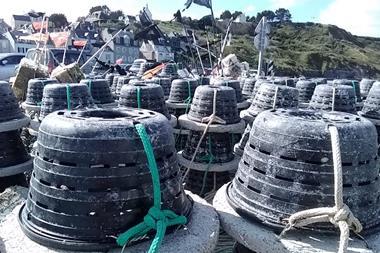
Current projects include the development of fully biodegradable crab and lobster pots for the professional market, and improved eco-designs for pelagic trawls with the aim of enabling them to be recycled into new products.
“The reason we are surrounded by so much plastic in everything from what we use in everyday life to what catches our food in the ocean is because it is extremely adaptable and can have a very long lifespan,” Hadland commented.
She added that a major shift has been the move towards gear made from cleaner nylon extractions, with fewer mixed materials.
“A big shift for us has been the transition to gear made from cleaner extractions of nylon. Through testing and development, more of the gear has become easier to recycle because we mix fewer materials. This is very much in line with our history and our industry. Ingenuity and smart solutions have been the mainstay of what Norwegian fisheries and aquaculture have achieved,” she said.
From pipedream to reality
Nofir’s general manager Øistein Aleksandersen said the goals of current projects — including increased recycling of fishing gear, easier dismantling, and greater circularity in new trawls — are ambitious but achievable.
“When we started collecting and sorting plastic waste in 2008, much of what we take for granted now seemed completely unrealistic. Like the fact that Norwegian fishing and farming equipment is now used by well-known brands all over the world, including here at home. It gives us the belief that a circular future for fishing equipment is also possible,” he said.
Aleksandersen added that much of the trawl and fishing gear currently being discarded still has high residual value.
“By collaborating at each end of the value chain, we will make it easier to map each other’s needs, and ensure that more equipment can enter the cycle. There will be major climate and environmental savings if we succeed, and be important for far more than just us and Egersund.”