




MSC tuna tops 2.4m tonnes
Close to 2.5 million tonnes of tuna is being caught annually that’s certified to the Marine Stewardship Council (MSC) standard for sustainable fishing, according to new data published by the international non-profit organisation.
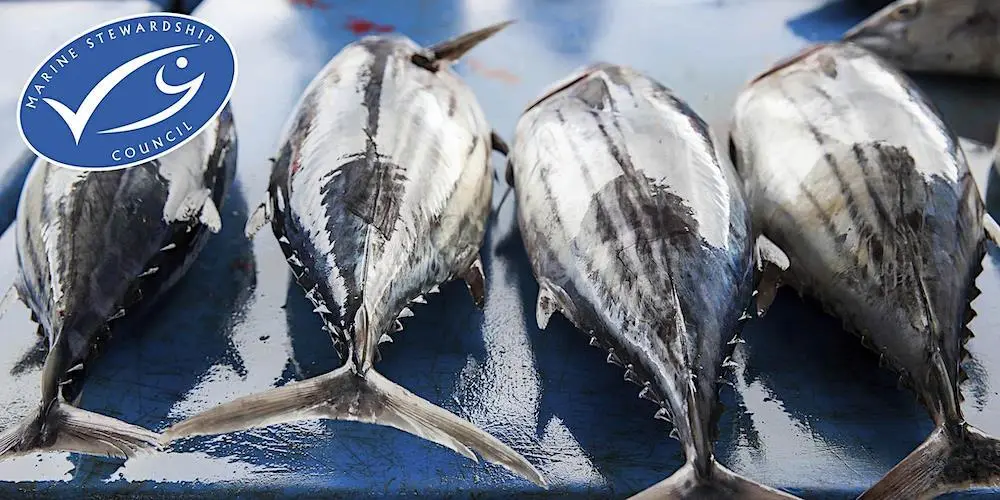
The volume represents 47% of the global wild commercial tuna harvest. As a result, the number of brands selling tuna with the MSC label now exceeds 430.
A further 11% of the global volume is currently in assessment to the standard, and 31% is in some form of fisheries improvement programme (FIP).
MSC’s new ‘Sustainable Tuna Handbook’ reports that 2021 and 2022 saw continued growth in both the number of certified tuna fisheries and the volume of certified catch.
It states that in the year to September 2022, 19 tuna fisheries achieved MSC certification, taking the total to 91. With this, the volume of MSC certified tuna catch increased 24% from 1,982,000 tonnes in September 2021 to 2,460,000 tonnes in September 2022.
According to the analysis, 72% of MSC labelled tuna was sold in the Europe and Africa, Middle East and South Asia region in 2021/22, 13% in the Americas, 9% in Asia Pacific and 6% elsewhere.
DACH (Germany, Austria and Switzerland) was the number one market for MSC labelled tuna sales, followed by Southern Europe, Benelux, Oceania, UK & Ireland and US and Canada.
Some 202 brands sold certified skipjack tuna, 122 brands sold albacore and 106 brands sold yellowfin.
Despite the growing momentum behind sustainable tuna certification and sales, MSC highlights that challenges remain in ensuring the long-term sustainability of tuna fisheries. It has therefore published a new briefing, ‘MSC Fisheries Standard version 3.0: Considerations for Tuna Fisheries’, which outlines how improvements made to the requirements of MSC certification will impact tuna fisheries.
It states that improvements of particular relevance to tuna fisheries include stronger requirements on fish aggregating devices (FADs), shark finning, endangered, threatened and protected (ETP) species and effective monitoring, control and surveillance.
A revised MSC standard, to be launched in late October, also sets new requirements for harvest strategies for fisheries managed by Regional Fisheries Management Organisations (RFMOs) including purse seine and longline tuna fisheries.
Speaking at an MSC event at the World Tuna Trade Conference & Exhibition in Bangkok, the organisation’s Chief Science & Standards Officer, Dr Rohan Currey said the new MSC Fisheries Standard will ensure that certified fisheries remain world leaders in sustainable fishing.
“Certified tuna fisheries will now be required to deliver a set of defined milestones aimed at securing agreement between multiple national governments to implement state of the art harvest strategies derived through open and fair negotiations. These requirements represent a significant increase in expectations of fisheries managed by RFMOs and will create a unified and powerful push towards ensuring vital protections are agreed that ensure sustainable management of tuna stocks in perpetuity.”
MSC advises that already certified fisheries will be given the opportunity to apply the requirements for harvest strategies early, provided there is majority agreement between fisheries targeting the same stock.
Early application is also conditional on fisheries being assessed to version 3.0 of the Standard at their next reassessment, fast-tracking application of wider requirements including those for FADs, ETP species and shark finning.
In recognition of the increased expectations, these fisheries will be given five years in which to secure robust harvest strategies which provide the best protection possible for tuna stocks.
Related Articles
 FISHERIES
 FISHERIES
 FISHERIES