



Insurer ends IUU fleet cover
Norwegian insurance company Hydor has ended its contract with a fleet of vessels that were discovered fishing illegally across the Atlantic by the Environmental Justice Foundation (EJF).
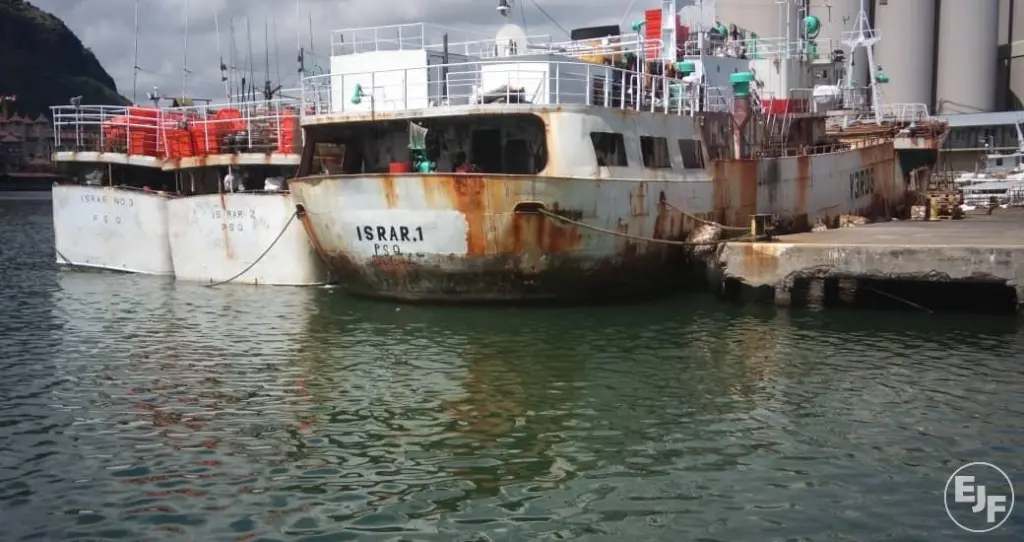
The international NGO explained that the fleet – currently named Israr 1, 2, and 3 – was blacklisted by the International Commission for the Conservation of Atlantic Tunas (ICCAT) late last year, after having been found engaging in illegal, unreported and unregulated (IUU) tuna fishing.
EJF said the operator had taken extensive actions that raised suspicions it was attempting to avoid any oversight of its suspected illegal activity. For example, the vessels appeared to switch country flags, and for a time, seemed to not be registered to any.
The investigation also uncovered evidence that the vessels appeared to change names – leaving West Africa under one identity and entering port in Mauritius with a different identity. It was also ascertained that mid-voyage, the vessels switched ID codes on the ‘automatic identification system’ used by fishing vessels to prevent collisions.
EJF’s also revealed suspected illegal transhipments.
“I would like to commend Hydor for working with us on this case. If it was commonplace for the insurance industry to require transparency, and sever all ties with illegally fishing vessels it would not only help to end the destruction of our ocean ecosystems and human rights abuse at sea, it would reduce the risk for insurers being damaged by such association,” EJF CEO and Founder, Steve Trent, said.
Non-profit ocean conservation organisation Oceana, which worked with EJF to warn Hydor about its unwitting association with an illegal fleet, wants other insurers to follow suit.
Pascale Moehrle, Executive Director of Oceana in Europe, said there are clear actions companies can take to avoid becoming embroiled with illegal fishing.
By using the freely available Combined IUU Fish Vessel List, companies like Hydor can easily identify vessels that have been found to engage in IUU fishing and ensure they are not provided with insurance coverage or other essential services that keep them afloat, he said.
“They can also help to increase transparency in the fishing sector, for instance by requiring that vessels they provide services to are actively using vessel tracking technology and are registered with a unique vessel identifier such as an International Maritime Organisation number.”
According to EJF and Oceana, Hydor’s decision to end coverage could be an effective way of making IUU fishing unworkable for operators if it becomes commonplace across the insurance industry.
EJF is continuing to monitor the whereabouts of the fleet and said it has evidence that it has shifted its operations from the Atlantic to the Indian Ocean, leaving the jurisdiction of ICCAT.
While the vessels have permission to fish in the Indian Ocean as a result of the switch to the Oman flag, early evidence raises the suspicion that they may be continuing to use illegal transhipment, in breach of the rules of the Indian Ocean Tuna Commission (IOTC), it said.
Related Articles
 FISHERIES
 FISHERIES
 FISHERIES