



India is calling for climate justice in global and regional fisheries governance, urging that countries contributing least to the climate crisis should not shoulder its greatest burdens.
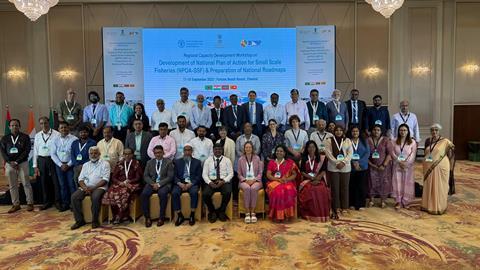
Speaking at a three-day event in Chennai organised by the Food and Agriculture Organization (FAO) and the Bay of Bengal Programme Inter-Governmental Organisation (BOBP-IGO), Union Fisheries Secretary Abhilaksh Likhi emphasised India’s responsible approach to fisheries and its commitment to sustainability.
“The principles of climate justice must apply. Those who contributed least to the problem should not be asked to pay the greatest price,” he said, highlighting that India’s fisheries are driven by small-scale fishers crucial to local economies, food security and culture.
The meeting, held from 17 – 19 September, aims to develop national plans of action for small-scale fisheries in the Bay of Bengal region. Likhi called for regional cooperation on climate adaptation, early warning systems and joint research, noting the vulnerability of coastal fishers to extreme weather and warming seas.
“India is considering NPOAs for small-scale inland and marine fisheries,” he said. “FAO and BOBP-IGO will play key roles in shaping and implementing these plans.”
India’s fish production touched 19.5 million tonnes in 2024-25, more than doubling since 2013-14. The Pradhan Mantri Matsya Sampada Yojana has supported this growth with ₹20,050 crore (around €1.9 million) in funding, modern infrastructure and wider insurance coverage.
FAO’s Dr Lena Maria Westlund noted small-scale fisheries account for nearly half of Asia’s fish production. BOBP director Dr P Krishnan reaffirmed their commitment to helping countries build resilient, country-specific action plans for sustainable fisheries.
Delegates from India, Sri Lanka, Bangladesh and Maldives are participating in the discussions.