



Call for ban on factory vessels fishing in Irish waters
If non-EU countries want to fish in Irish waters, they must face the same control and conservation regime as the Irish fleet. Otherwise all of the fish species they catch may not be recorded which would in turn affect stocks, conservation and sustainability, Irish fishing industry leaders have warned.
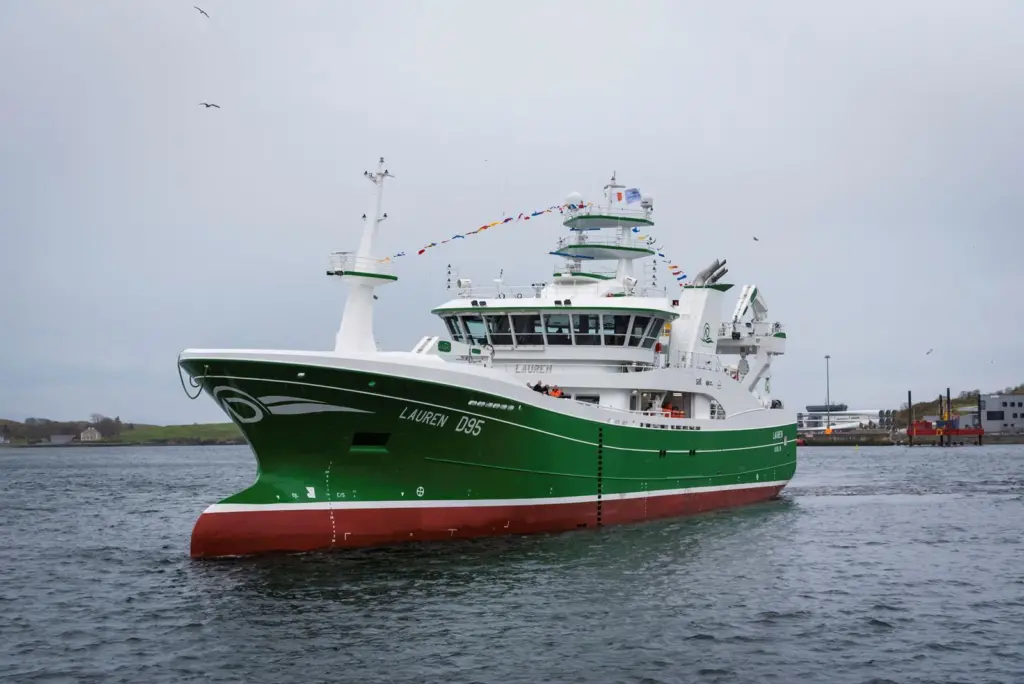
Ireland has a land-based not sea-based processing sector, highlighted Irish Fish Producers Organisation (IFPO) Chief Executive Aodh O Donnell. “We rigidly monitor, report and fully account for mixed species in our catches – not just those which a vessel sets out to catch. But we have concerns that non-EU fishing vessels currently don’t always report by-catches – species caught accidentally – which has major implications for fish conservation and sustainability.
“For example, if an Irish vessel fishing for mackerel catches whitefish species in their nets, this by-catch has to be logged, recorded and counted as part of their quota. We have concerns that this is not the case for non-EU vessels which don’t land the fish they catch in our waters in Irish ports.”
O Donnell also pointed out that “a strict conservation driven approach to control” is applied to the Irish industry, which necessitates heavy capital investment by the Irish industry in best-in-class, modern live feed monitoring technologies.
“If Norway and other non-EU countries want access to Irish waters, then part of the deal must be that they submit to the same controls for by-catches. Otherwise, we are endangering conservation and putting the Irish fleet at an operational and competitive disadvantage,” he said.
The EU is in negotiations with third-countries (non-EU) like Norway and Iceland about access to Ireland’s EU waters, and proposal is a “highly sensitive issue” for IFPO’s members, O Donnell explained.
“Any such arrangements must require strict adherence by third-country vessels to a fully harmonised level of species reporting. This is vital for long term sustainability reasons and to maintain the fish landing obligations of the Common Fisheries Policy (CFP).’’
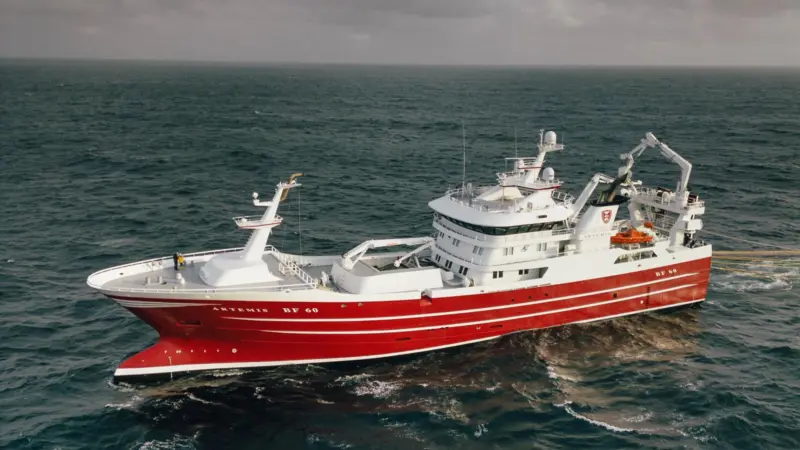
IFPO’s position is supported by the Irish Fish Processors and Exporters Association (IFPEA), with Chief Executive Brendan Byrne insisting Ireland must “stand firm” and clearly state that factory ships for processing catches at sea are not welcome in Irish EU waters.
This must be fundamental to any new arrangements made between the EU and third-countries, he said.
“Norwegian and Icelandic vessels press hard for access to the EU-Irish Exclusive Economic Zone (EEZ) to catch their enormous self-allocated quotas. These Norwegian vessels catch huge volumes of blue whiting in our waters each year. In fact, Norwegian fishing opportunities to catch their quotas are five times greater than what Ireland is permitted to catch in our own waters,” Byrne said.
“These foreign vessels cannot pretend to have ‘clean’ fisheries or avoid fully accounting for their by-catches. In the interest of sustainability and good ocean governance, we need effective measures agreed at EU level and implemented by Ireland to ensure that third country vessels comply fully with Point of Entry and EU Control and Enforcement provisions. In particular, we need strict requirements for sampling and speciation of their enormous catches in the Irish EEZ.”
The Irish South and West Fishermen’s Producer Organisation (IS&WPO) also maintains that Ireland’s valuable waters must be protected in the long-term national interest. Chief Executive Patrick Murphy said the resilience of our peripheral coastal communities “is largely dependent on this traditional sector” and that access deals for third-countries must take account of a fit for purpose control and enforcement regime by Irish authorities.
“We are at a crossroads and a radical state led change in approach is required,” Murphy said. “This is a priority as otherwise we have too much to lose. Any access deal to fish in our waters must include a suite of additional comprehensive control procedures that take account of mixed species realities.’’
O Donnell added that Ireland’s “rich maritime space is heavily exploited by other players” and that it is a sustainable resource requiring effective harmonised management and control.
“This monitoring, control and vessel inspection process is coordinated with our authorities by the European Fisheries Control Agency (EFCA) in Vigo Spain. The effective application of control procedures to third-country users is a key concern. Good ocean governance is in the EU and international community’s long-term interest and third country agreements need to reflect this.”
Clarity is needed about how controls will be applied and what resources will be deployed to effectively control third-country vessels, O Donnell said.
“We have good reason to be concerned that our vessels are reporting by-catches, but third country vessels are not always doing so. We call on the control and enforcement authorities to urgently implement new harmonised protocols in the coming year.”
Related Articles
 FISHERIES
 FISHERIES
 FISHERIES