




Baltic quota reactions
EU fisheries ministers failed to set the Baltic Sea on a path to recovery and a long-term sustainable future at the latest Fisheries Council meeting in Luxemburg, according to a group of ocean campaign organisations.
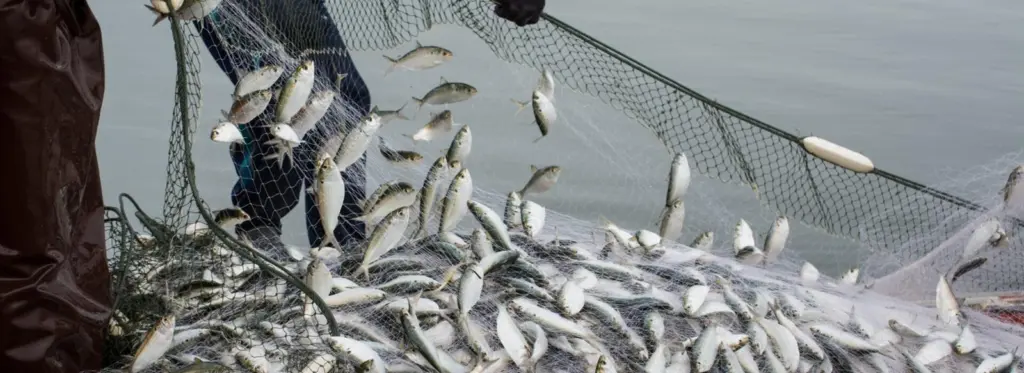
At the meeting, the EU’s Fisheries Council reached an agreement on fishing opportunities in the Baltic Sea for 2023, with member states setting some quotas at precautionary levels to safeguard depleted fish populations. However, according to the Fisheries Secretariat, Seas at Risk, Our Fish, Oceana, Coalition Clean Baltic, WWF Baltic Ecoregion Programme and the Danish Society for Nature Conservation, they didn’t proactively protect the region’s declining herring and cod stocks.
“This is the third year the Commission really made an effort to take wider ecosystem considerations and set more cautious catch levels, and once again the ministers counteract those ambitions. We are still far away from a management that understands that the ecosystem needs cannot be negotiated,” said Nils Höglund from Coalition Clean Baltic.
“While it is encouraging that the European Commission and member states have been more transparent about their positions on fishing limits ahead of the Council meeting, as they have been evasive and opaque in the past, they now need to extend this transparency to an honest and public discussion about the importance of fish as carbon engineers of the ocean,” said Our Fish’s Rebecca Hubbard. “There is an urgent need to restore fish populations so that they can continue to help sequester carbon and be more resilient to the worsening impacts of climate change.”
In the run up to the Council meeting, the European Commission proposed setting catch limits for some species lower than the scientifically calculated maximum. The group highlighted that while the member states chose to follow the progressive Commission’s proposal for plaice, a fishery with substantial cod by-catch, they opted to set quotas for sprat and Central Baltic herring higher than the Commission proposed.
“Sprat and herring are an essential food source for Eastern Baltic cod, and we know cod struggle to find food now. It was great to see the Commission acknowledge this in the proposal,” said Jan Isakson of the Fisheries Secretariat. “It is very disappointing that member states again choose short-term gains instead of helping the recovery of cod in the Baltic.”
Fisheries ministers upheld the Commission’s proposal to not permit targeted fishing of eastern and western Baltic cod as well as western Baltic herring and only allow some by-catch to be landed.
NGOs had recommended that in accordance with scientific advice zero catches should be allowed, not even as “unintentional” by-catch in other fisheries.
“Although we understand a 100% by-catch-free fishery does not exist, we had hoped that decision makers would make any by-catch allowance conditional on the implementation of adequate catch recording using remote electronic monitoring techniques,” said Cathrine Pedersen Schirmer from the Danish Society for Nature Conservation DN.
She added that Denmark had recently successfully implemented this method in the Kattegat.
“There is a great deal of evidence that the ecological state of the Baltic Sea is dire, but we should not forget that it is overfishing that is the main reason for the collapse of cod and western Baltic herring,” said fisheries campaign director at Oceana in Europe, Javier López. “To help recover Baltic Fish stocks and marine ecosystems, decision makers really need to do more to factor in interspecies relations and stressors like eutrophication and warming water when setting catch limits.”
Seas At Risk’s Christine Adams commented, “Time is running out for the Baltic Sea. While ministers today took good steps in the right direction by considering ecosystem interactions for several stocks, these steps are too small and don’t match the crisis state we are in.
“We need to rethink how we fish and how we can manage Baltic fisheries in an environmentally friendly and socially just way.”
On salmon catches, the Council also accepted the Commission’s proposal as well as additional management considerations to safeguard weak salmon stocks.
The campaigners said this was perhaps the most encouraging result of the Council’s meeting since it is in line with scientific advice and includes a shift in management, taking account of spatial and temporal measures strongly suggested by experts for more than 15 years.
“It is encouraging that every year we see a little more progress towards sustainability and taking some ecosystem elements into account when setting fishing quotas,” said Johanna Fox, WWF Baltic Ecoregion Programme Director. “But we need to accelerate the pace if the Baltic ecosystem is to recover. More protective measures are called for, including remote electronic monitoring to secure effective fisheries control, the mandatory use of selective gears and better implementation of the landing obligation, as well as to allocate fishing quotas to fisheries with the least environmental impact.”
Related Articles
 FISHERIES
 FISHERIES
 FISHERIES