


Annual monitoring confirms that Norwegian farmed fish remains a safe choice, with no harmful substances exceeding EU limit values, that’s according to the latest Institute of Marine Research (IMR) report.
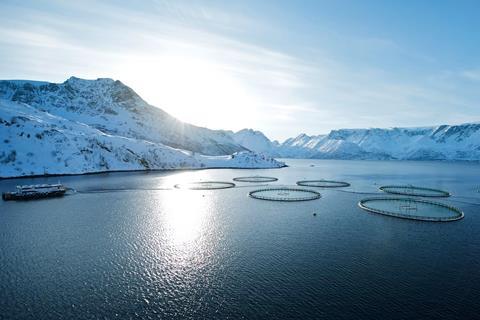
Norway’s annual monitoring programme is a cornerstone of the country’s quality assurance system, ensuring food safety for consumers worldwide. This time, tests covered 888 samples and generated over 30,000 results.
“We’re delighted to see that once again, tests done on Norwegian farmed fish show no sign of exceeding limits on harmful substances or pollutants,” said Martin Skaug, director of communications at the Norwegian Seafood Council.
“This shows that Norway’s rigorous monitoring scheme gives consumers globally the confidence to eat farmed Norwegian fish that has a clean bill of health.”
Strict testing
The monitoring, required by both Norwegian law and EU regulations, involves sample collection by the Norwegian Food Safety Authority and analysis by the IMR.
Tests focus on salmon but also cover rainbow trout, trout, halibut and cod. The programme checks for illegal substances, veterinary medicines and environmental pollutants such as mercury, lead, cadmium, PFAS and dioxins. None were found above EU safety limits.
Importantly, the monitoring has expanded to include “contaminants of emerging concern.” While some were detected, current evidence does not indicate health risks. These findings will be shared with the European Food Safety Authority for further evaluation.
Norway’s proactive monitoring underscores its commitment to food safety and quality assurance, ensuring farmed fish continues to meet global standards.
Read the full IMR report