





Nofima maps salmon colour challenges
Nofima, the Norwegian food research institute, has conducted an extensive mapping of pigmentation challenges in salmon fillets, revealing significant insights for fish farmers in Norway.
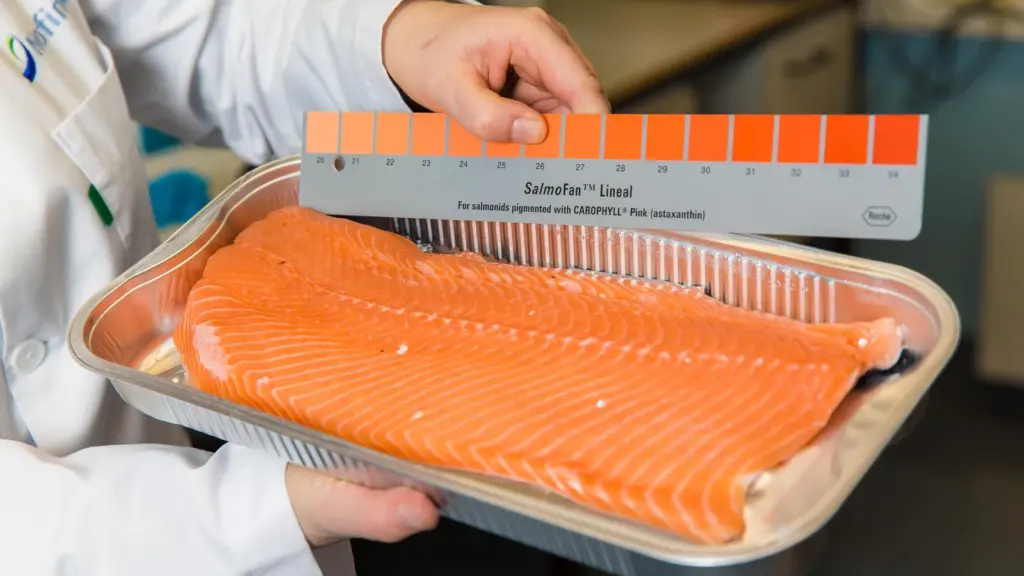
The study, led by senior scientist Trine Ytrestøyl and funded by the Norwegian Seafood Research Fund, highlights the negative impact of repeated mechanical delousing on salmon fillet colour, a phenomenon that has not been documented until now.
The research suggests that stress induced by delousing may increase the fish’s consumption of the antioxidant astaxanthin, which is crucial for pigmentation. Additionally, lower feed intake and reduced slaughter weight—strategies to avoid further delousing—are also contributing factors to diminished fillet colour.
“There is a high degree of correlation between what the fish farmers report in the questionnaire and what we observe affecting pigmentation in the data analysis, so there is reason to believe it provides a realistic picture of the situation,” said Ytrestøyl.
The findings are based on a 2023 survey of Norwegian industry actors, historical data on fillet colour from 2012 to 2023, and results from Nofima’s R&D licenses.
The study uncovered variability among fish farmers regarding the severity of pigmentation issues, with some reporting concerns in 2% of their stock, while others face problems in 20 to 40% of their fish.
Farmers have taken steps to address these challenges, including increasing astaxanthin levels in feed and adding more omega-3 fatty acids and vitamins.
However, rapid growth rates and frequent delousing remain problematic. Notably, the study also observed significant differences in pigmentation linked to hatchery fish suppliers, prompting further investigation.
Related Articles
 SEAFOOD
 AQUACULTURE
 SEAFOOD