






ASC upgrades chain of custody requirements
Farmed seafood certification scheme, the Aquaculture Stewardship Council (ASC) has confirmed its new Chain of Custody (CoC) module becomes effective and mandatory on 30 May 2023. The update includes new requirements additional to the existing Marine Stewardship Council (MSC) CoC certification to further strengthen the value and assurance of the ASC label.
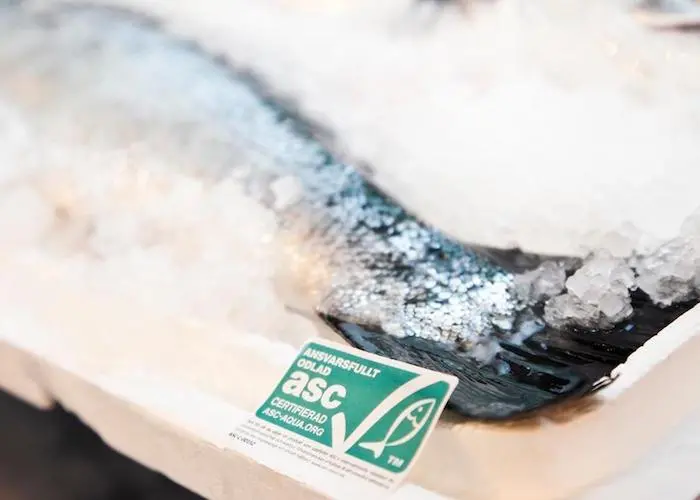
Within the ASC CoC module, companies that are involved in processing and/or packing must be certified to a Global Food Safety Initiative (GFSI) recognised scheme or ISO 22000, unless the organisation is exempt based on size either by value, volume, or number of staff.
However, ASC is providing a one-year extension to the initial implementation timing for this part of the CoC Module, the food safety eligibility requirement. This means that at the first audit after the CoC module becomes effective, it’s acceptable for companies to not yet have food safety certification in place without resulting in suspension of their CoC certificate.
Companies must meet the food safety requirement after 30 May 2024.
“ASC acknowledges the introduction of the food safety requirement may have a significant impact on companies that have not previously held food safety certification, and that obtaining such certification requires preparation, coordination with operational seasons and products, auditor availability and may require modification of existing systems or investment in new ones. The intent of the grace period is to allow companies to remain CoC-certified while they work towards achieving the new food safety certification requirement of the ASC CoC module,” ASC’s Head of Supply Chain Assurance Wendy Banta said.
ASC advised this is a one-time provision specific to the food safety requirement at the first CoC audit against the ASC CoC module after the effective date. The remainder of the module is unaffected by the provision.
The food safety requirement grace period will be formalised via the release of ASC CoC module version 1.1 on 15 May 2023, aligned with the release of MSC CoC programme document updates.
ASC’s CoC module is applicable to all ASC CoC-certified companies and applicants. According to the organisation, the new requirements are part of a suite of improvements and tools to provide greater value and a higher level of assurance to programme participants and consumers who rely on the ASC label.
They address seafood fraud, food safety, legality, antibiotic detection, as well as other aspects inherent to farmed seafood production, ASC said.
The new requirements include the need for CoC certificate holders to report specific data to ASC. Data required to be submitted may include purchase and sales volumes, species, buyers, and suppliers, and may cover consumer-facing and non-consumer facing products.
All CoC certificate holders must carry out a food fraud vulnerability assessment and intervention plan to assess and identify potential vulnerabilities affecting a food product or ingredient.
Certificate holders that buy directly from certified farms must verify CoC certification coverage is continuous from farm to first buyer and consider applicable product eligibility factors.
The module also introduces a transparent list of ineligibility criteria (including illegal or fraudulent activities) to prevent organisations from becoming or remaining certified when the specified criteria apply.
Related Articles
 AQUACULTURE
 AQUACULTURE
 AQUACULTURE