





NSC: ‘Snackification’ and innovation transforming the seafood market
Some three-quarters of seafood consumers say a wide assortment of products drives their choice of retailer, and this desire for choice, alongside consumer interest in healthy proteins and on-the-go eating is sparking greater “snackification” and innovation in the seafood industry, according to recent research from the Norwegian Seafood Council (NSC).
The council also advises that with a host of new digital channels giving retail and out-of-home (OOH) eating more opportunities to satisfy evolving consumer needs, there’s significant potential to increase the consumption of healthy, sustainably sourced seafood.
NSC’s “Oceans of Change: Seafood trends for 2024” report ascertains that health remains high on the agenda for consumers – long after the pandemic brought it into sharp focus, adding that now people are back in offices and workplaces at least a few days a week, snacking and on-the-go eating has become more prevalent.
“There’s less time to prepare healthy meals and snacks, but we’re not willing to compromise. So, we’re seeing greater innovation in the seafood market with more convenient yet nutritious on-the-go options,” NSC said.
At the same time, the number of consumers skipping meals has risen. In 2013, 30% of consumers said they had “skipped at least one main meal” yesterday. By 2021 this had climbed to 40%. NSC said this could be due to busy “on-the-go” lifestyles, but it could also be attributed to a rise in fasting for health reasons, or consumers tightening their belts due to economic pressures.
Whatever the reason, snacking seems to be picking up the slack now a high proportion of meals are off the proverbial table, it said.
NSC pointed to analysis from Mondelez International, which confirmed that while mealtimes have become less frequent, snacking is on the rise, with 88% of consumers worldwide snacking on a daily basis. These results are amplified among Gen-Z and millennials, 94% of whom eat one or more snacks per day, with 33% indulging in three or more.
Afternoon snacking has increased 22%, but morning snacking has seen most growth – a 42% increase from 2013 to 2021. Digging into the factors that drive these 6am to 10am choices: Mondelez reveals consumers want snacks to sustain and nourish, energise and fuel, indicating a window of opportunity for healthy snacks.
Meanwhile, protein’s reputation as a “fuller for longer” macronutrient with additional health benefits has led to greater demand for protein-rich foods, NSC said, adding that Euromonitor attributes this to health concerns, highlighting an opportunity for snacks and foods that highlight protein’s contribution to energy levels, weight loss, muscle repair and satiety.
NSC commented: “Fortunately, seafood has a strong reputation as a nutritious protein packed with omega-3s and other key vitamins and minerals. It’s hardly surprising, therefore, that snacks like salmon jerky and seaweed snacks are starting to populate the shop shelves, while bite-sized on-the-go options like sushi remain popular in food outlets.”
The council also noted that technology has been driving change in seafood retail for consumers, with “exciting new opportunities to satisfy food cravings”, and an increasing number of channels, with delivery apps to omnichannel services such as “click and collect” becoming mainstream. These digital options are showing huge value as a sales channel, with snacks sold worldwide through e-commerce increasing from US$18 billion in 2019 to $30.5 billion in 2021, according to Euromonitor.
When it asked consumers how they were responding to increased seafood prices, the key theme was a shift towards eating at home more often – cooking at home more, buying fewer ready meals and eating less often at restaurants.
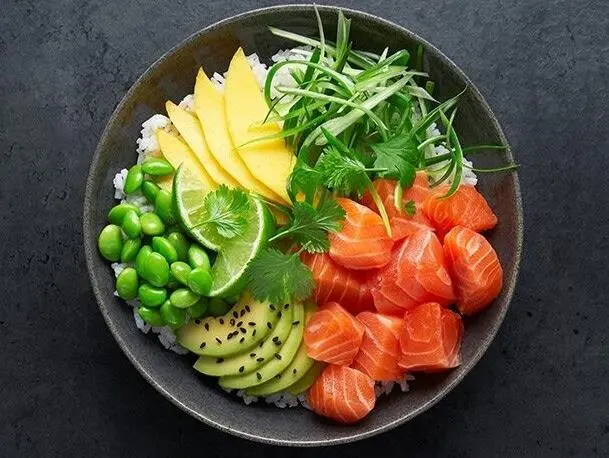
Furthermore, with the exception of bacalao on the Iberian Peninsula, the council ascertained that salmon is one of the most popular fishes enjoyed out of home, adding that when it’s eaten out, “raw rules” – with sushi, sashimi or poké. bowls most popular across most of the markets studied.
In France, Germany and Spain, consumers are more likely to opt for browned or seared salmon when they eat out, while in Saudi Arabia, the UK and the US, frying comes out top.
“What’s striking when I move around the markets where we operate and have offices, is just how global poké bowls have become. They’re in Brazil, the US, in China, in Japan, in France. You find them from Sweden to Greece. The endlessly adaptable options allow each country and each consumer to tailor their bowl to their tastes,” NSC CEO Christian Chramer said.
According to NSC, the innovations seen in the seafood market highlight a pivotal shift towards more accessible and sustainable seafood consumption.
As consumer preferences lean towards healthy, high-protein, and convenient eating options, the seafood industry is responding with snackable and premium products that cater to these, it said.
“Digital platforms in retail and out-of-home dining are boosting their ability to meet and expand consumer expectations, promising a significant increase in seafood consumption. And efforts to add value to traditional seafood with attractive packaging, luxurious meal options, and customisable dishes underscores an exciting evolution in how seafood is being marketed and enjoyed.”
NSC continued: “Catering to the growing appetite for variety and sustainability, these developments are setting the stage for continued innovation and growth in the seafood sector.”