



Kontali: Salmon production to surge over next decade
After several years of marginal decline and stagnant growth, the global salmon farming industry is poised for significant expansion over the coming decade, with production projected to increase by 27% by 2030, according to Kontali research.
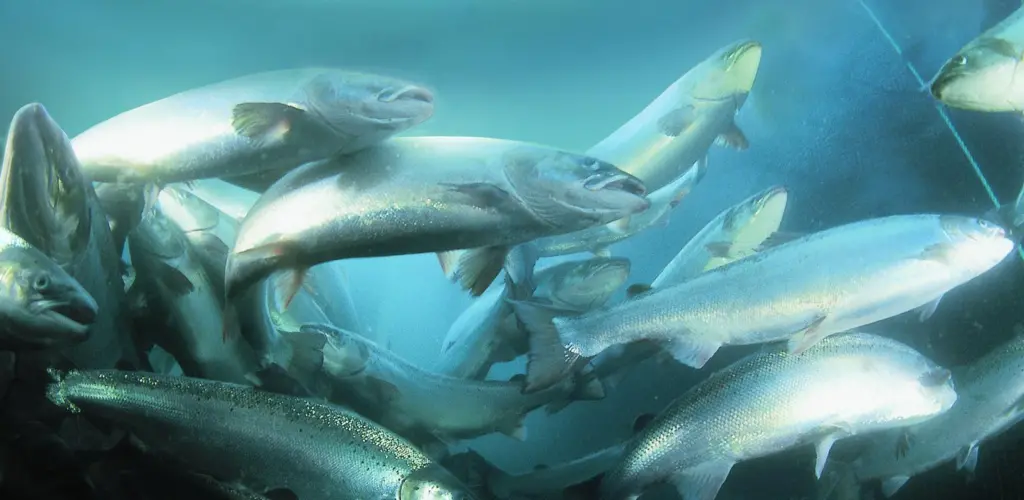
This recovery, Kontali says, will be driven by enhancements in fish health, strategic investments and a substantial rise in land-based production.
But it also advises that without these key factors, the industry’s growth may not fully materialise.
Kontali’s long-term analysis indicates that the industry’s turnaround will depend on continued innovation to address regulatory constraints and health challenges. Europe is expected to lead this growth, with production increasing by approximately 25%, while the Americas will experience more modest gains at around 11%. Contributions from Australia and New Zealand will be smaller, at about 17%, and Asia, particularly China, is poised for gradual expansion, with land-based and offshore projects driving growth, though large-scale production is yet to be fully realised.
Regulatory limits, such as maximum allowable biomass (MAB) and environmental regulations, pose the primary challenges to growth, it advises, noting that Norway, for instance, sea lice and fish health concerns are closely linked to these constraints.
Industry players are investing in solutions such as new sheltered cage technology and biosecurity measures to mitigate these risks, it highlights.
Additionally, climate change is bringing new weather patterns, temperature shifts, and pathogens to coastal regions, posing additional hurdles for salmon farming operations worldwide. Industry players must continue to invest in adapting to these challenges to ensure the industry’s long-term success.
“The projected 27% growth in global salmon production by 2030 marks a pivotal moment for the industry. Investments in fish health and land-based production are key drivers, but overcoming regulatory and environmental challenges will be crucial to realising this potential,” Kontali Senior Financial Analyst Filip Szczesny said.
In terms of regional outlooks, the analysis states:
- Norway: Recovery is expected after recent productivity challenges. Growth will be driven by improved production planning, enhanced fish health measures, and investments in submerged cage technologies. However, regulatory restrictions under Norway’s traffic-light system and tax regime could limit the growth potential
- Europe (excluding Norway): The UK, Faroe Islands and Iceland are set to benefit from investments in large smolt and shorter production cycles. Iceland, in particular, faces new regulations aimed at protecting wild stocks and improving biosecurity
- Chile: Political uncertainty remains a key risk, though recent developments have lessened the likelihood of major disruptions to aquaculture operations in key regions. Biosecurity risks continue to grow as the sector nears maximum productive capacity
- North America: In Canada, a transition towards land-based systems is underway following regulatory changes. In the US, ocean-farmed production is expected to remain stable, while land-based and offshore projects will provide growth opportunities
- Australia and New Zealand: Warmer sea temperatures have slowed growth in Australia, but a recovery is expected. In New Zealand, new coastal projects will replace existing production, contributing marginally to global growth
- Russia and Asia: In Russia, growing domestic demand for salmon is encouraging the development of new farming sites and infrastructure, though actual production may fall short of ambitious targets. In Asia, particularly China, land-based and offshore projects are planned, but large-scale production has yet to be realised
Kontali also advises that land-based salmon farming is gaining traction as a politically and environmentally sustainable alternative to traditional farming methods, with growth in this segment expected to be the single largest contributor by 2033. It highlights that Norway is developing flow-through technology, while North America and Asia are becoming increasingly attractive regions for new investments due to proximity to major markets. Meanwhile, significant investments are also being made in Iceland to support stricter biosecurity regulations.
The company also projects wild salmonid catches to remain stable, averaging between 800,000 and 900,000 tonnes per year, with seasonal fluctuations.