Önder Alabalik tells World Fishing & Aquaculture that considerable investment has lead to the company’s success.
Mugla based ÖnderAlabalik’s two main rainbow trout hatcheries and rearing plants are at Cukurcagoz in Fethiye and at Sögütlüdere – it very much has its eye on hatching and rearing juveniles for the domestic market as its niche, the processing is left to other companies, for the time being.
However, as Mr Mehmet Erdas, aquaculture engineer, told World Fishing & Aquaculture, the company has submitted plans to the government for its own processing facility, but it doesn’t expect to get a license until at least 2013 because these things can take time.
For now then, the company is concentrating on what it does best, it has eight hatcheries around Turkey and is one of the largest capacities for juveniles in the country – making it around the 18th largest supplier in Europe. It produces around 950 tonnes per year and this year juvenile capacity has increased from 60 million up to 100 million. But, the company is aiming for 150 million in the near future.
Mr Erdas says that the company is growing so quickly because it is making profit now on the back of plenty of investment over the years.
Mountain water
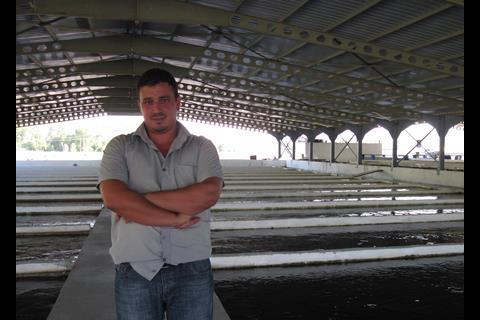
At the 120,000sq2 Fethiye facility, there are 7.5 million juveniles currently on site, 83 runways for juveniles and 205 for adults. The farm is fed by water flowing down from the mountains into the runways which is a pretty impressive feat of engineering because no machinery is used.
Throughout the farm, fish are arranged according to weight, 10g, 20g, all the way up to 150g. Fish for the whole fish market are grown up to 280-500g and some are kept for breeding at the facility. The farm uses a pretty impressive fish transfer pump to move fish between the pools which has changed the way of working because in recent years six people used to work at fish transfer, but the new technology can do the same job in just two hours.
The runways are monitored by 24 hour cameras and the company is trialling new equipment, which monitors water temperature, oxygen levels and plots results every minute – it does this by the use of underwater probes. The system can alert the workers to potentially dangerous situations before they happen.
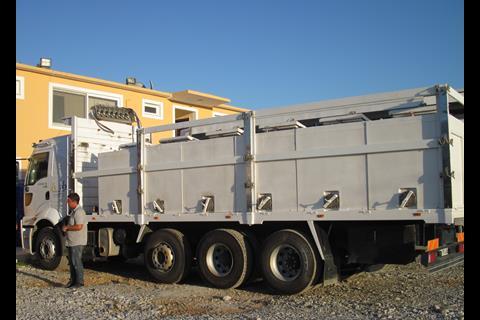
When it comes to selling the juveniles, in Turkey they are transported live to customers – Önder Alabalik’s three vessels vary in size, but can transport 300,000-1 million juveniles in just one trip.
The fish which are sold to the whole fish market are put in ice tanks during transit to the processor.
Foreign countries
Eggs and larvae are sold to the domestic market but predominantly to foreign countries such as Romania and Azerbaijan. The company’s business is roughly split into 60% juvenile and eggs sales and 40% whole round fish.
The company is also heavily involved in university research projects with regards to egg production and water quality research in order to increase its quality of production and promote better practice in the industry.
“We want to learn more about how to make fish resistant to disease and learn more about egg production and feeding ratios”, Mr Erdas told World Fishing & Aquaculture.