

The Turkish Ministry has big plans for aquaculture
FAO figures reveal that world fish production reached around 149 milliontonnes in 2011 and fish production is increasing, thanks to aquaculture whichhad a 49% share in 2011. It is the fastest growing food production sector in the world – and it’s clear that the Turkish Ministry intends to take its share in it.
According to Dr Hayri Deniz, Chair of EUROFISH and Vice-Chair of GFCM-CAQ, from the Turkish Ministry for Food, Agriculture and Livestock (MoFAL), Turkey has a great potential for aquaculture with a coastal line of 8,333km and 177,714km of rivers, the marine and inland water sources which is approximately 26 million ha.
State of play
There are currently 2,163 fish farms in Turkey with 404,634 tonnes total capacity. More than half (56%) of this capacity is held by freshwater farms and the rest by marine farms. This also reflects current production share of 43% marine and 57% freshwater.
There are 20 marine hatcheries producing 330 million fry annually and 160 licensed fish processing establishments nationwide, of which currently 101 are approved for exports to the EU. There are 23 feed plants nationwide and seven of them produce only fish feed. The majority produces extruded feed and have a total annual production capacity of 160,000 m tonnes.
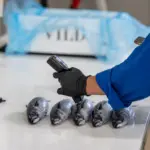
Altogether, Turkish aquaculture production was 188,790 tonnes in 2011. The major species cultivated were rainbow trout (53% of total aquaculture production) sea bass (25%), sea bream (17%), sea trout (4%) and new Mediterranean species (1%).Bluefin tuna has been gaining notoriety because it is so profitable.
In volume terms, the main export trade is directed to Italy, followed by Greece with the trade predominated by the sale of sea bass and sea bream. The most valuable market, however, is Japan due to the sales of bluefin tuna.
In 2002, the volume of fisheries (fishery and aquaculture) exports and imports were 26,000 tonnes with a value of US$96m and US$19m respectively, according to Dr Deniz. Fisheries export and import volumes were 67,000 tonnes and 66,000 tonnes in 2011 with a value of US$395 million and US$174 million respectively.
A young industry
Aquaculture in Turkey is a relatively young industry; it started with rainbow trout culture in the early 1970s and little happened in terms of sea farming until 1985 when sea bream and sea bass culture started in the Aegean Sea.
The Turkish Ministry is of course tasked with growing the potential of the aquaculture sector but also: Implementation of environmentally sustainable aquaculture practice; coastal zone management; environmental monitoring of fish farms; to increase diversity in species for aquaculture and restocking; improve market channels; develop organic aquaculture; conserve endangered species and improve international cooperation.
It does this through a variety of regulations, including the National Marine Aquaculture Development Plan (NMADP). Aquaculture Legislation was amended and aligned with EU regulations including fish welfare in 2009. Notifications related to site selection and monitoring for fish farms were put into effect in 2007 (this stipulated that fish farms should be located offshore by at least 0.6 sea miles, with a depth of at least 30m and a water current of 0.1 per second).
The Ministry has been targeting increasing production to 500,000 tonnes by 2023, with exports increasing to US$1bn. The other major focus is on increasing Turkish fish consumption to 10.3kg per year (SPO target) by 2013. Per capita fish consumption is very low compared to many European countries and currently stands at around 8kg. As the annual per capital fish consumption of EU countries is 25kg, the consumption in Turkey needs to be doubled to reach world average and tripled to reach EU consumption level. But, there are some indicators that domestic consumption is improving already.
“We are doing lots of work together with the various associations and Seafood Promotion Council to help raise the profile of seafood in Turkey, Mr Erkan Gozgozoglu, Head of Aquaculture at MoFAL, said to World Fishing & Aquaculture: “Consumption varies region to region. Obviously, more fish is consumed in coastal areas, it’s one of our missions to get better with marketing and help to better educate consumers.”
Fundamental improvements
There have been many other fundamental improvements in Turkey’s aquaculture sector over the last decade, according to Mr Gozgozoglu. From 2002-2010, the increase in aquaculture production, as a volume was 149% and Turkey now has a 25% share of the European sea bream and sea bass market.
Aquaculture was recorded as the fastest growing sector in Turkey in the past two years and it employs approximately 25,000 people. Turkey is the third fastest growing country in the world in the aquaculture sector and it occupies first place in trout production in Europe.
Mr Gozgozoglu also says that the latest developments in the aquaculture sector places Turkey in an important position both in the Mediterranean basin and among the European countries.
Dr Cevdet Akdeniz, Deputy Director General for Fisheries and Aquaculture at MoFAL said to World Fishing & Aquaculture: “In the past 10 years the aquaculture sector has made very good progress and the government supports its key role in the growth of the economy. We believe that all policies are in place for the long term sustainability of the sector and we will do all we can to encourage and promote it.”
He points out that the Ministry wants to encourage producers to enter the foreign market and will support them to make the improvements needed to compete with other countries. It wasn’t always so easy in the beginning though. Dr Akdeniz commented that there were conflictions with environmentalists and the tourism industry which were largely resolved by moving the fish farms offshore and a general consensus was reached. Initial crisis was converted into new opportunities.
“During the transition, smaller companies were given subsidies to help them move offshore and we reduced the rental price to help support them.”
State of play
The state of play now is that the Turkish aquaculture sector is getting more difficult to enter, subsidies are being reduced all the time – the government has been putting money into the sector for many years and it believes it is now strong enough to stand on its own two feet. But it points out there is still credit available for the establishment of new farms.
But licenses are now more difficult to attain for new set ups as – especially in Muğla, Bodrum, Izmir, Aydin and Mesin – demand is outweighing space, so the Ministry is encouraging acquisition across the industry. There are also higher subsidies available for fry production and the cultivation of new species, especially the more profitable ones such as bluefin tuna – but the regulatory process needed to attain the subsidies are lengthy and complex. The Ministry says that they have licensed 23 new species which all qualify for subsidies.
Incentives
According to Mr Gozgozoglu, the Ministry is currently trying to promote the benefits of turbot and sturgeon farming to private companies by giving them incentives. With regards to turbot, three private companies in Muğla, Antalya and Canakkale are being given 1,000 tonnes each of turbot fry to farm and sell to the domestic market free of charge. Wild turbot stocks in the Black Sea have dropped considerably, consequently prices have increased immeasurably, so the Ministry wants to see if farming is a viable option to meet demand.
With regards to sturgeon, this fish is an endangered species and is not allowed to be fished. The Ministry has carried out an FAO TCP project called Recovery of Sturgeon Populations in Turkey: Habitat Assessment and Restocking.The aim of which was to encourage private companies to rear the fish on farms. The aim is to develop this into a release programme in the future and increase public awareness concerning the importance and protection of sturgeon – the fish can take up to seven years to rear. It is part of a wider scale FAO long term recovery project in the Black Sea.
There is also a new Ministry programme to support companies to get certified to EU standards – including GLOBALG.A.P certification and ISO quality standards.
Dr Deniz is sure what is needed to make the industry even better is to speed up and make the licensing process a lot simpler. He says that the government is working towards making the aquaculture policy better defined – bringing all aspects of the sector together including private companies, universities and research institutes. With the breadth of growth in the Turkish aquaculture sector, if this were to happen, Turkey could quite easily find itself propelled to the top of the global aquaculture sector in the very near future.
By Anne-Marie Causer.
Related Articles
 SEAFOOD
 AQUACULTURE
 SEAFOOD