




Sustainable wrasse use controls sea lice
Loch Duart has reduced sea lice treatments significantly and recorded salmon growth on all its sites following efforts to source sustainable wrasse for use as cleaner fish.
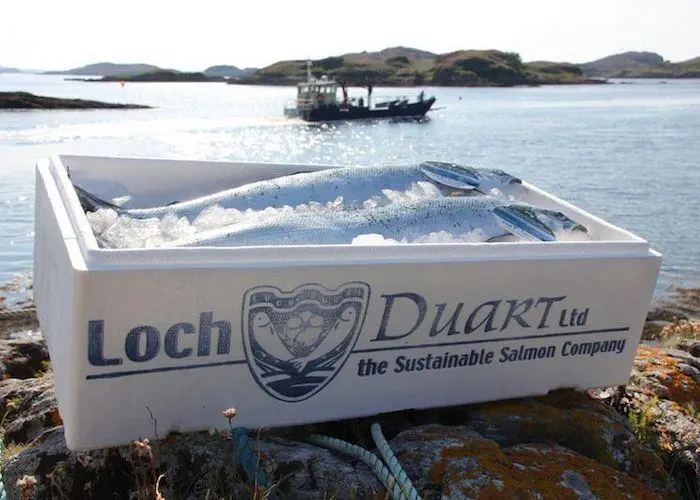
The independent salmon farming company used a prime source of high quality ballan wrasse (Labrus bergylta) from the south coast of England in 2016 and by the end of 2017 had the lowest historical lice counts on all sites, even during ‘peak lice’ periods of warmer water.
Colin Trundle, principle scientific officer of Cornwall IFCA (Inshore Fisheries and Conservation Authority), said: “Cornwall IFCA officers have been very pleased that Loch Duart appears to be using the best available scientific evidence to ensure that they are sourcing cleaner fish responsibly.”
Wrasse husbandry
Loch Duart and IFCA officials met at the end of 2017 and decided that regulation and close monitoring of the fishery is required. This will be led by Loch Duart as an example of best practice.
Loch Duart, based in Sutherland and the Hebrides, plans on having “the first medicinal free year” for the control of sea lice and will be developing wrasse husbandry skills to achieve this.
Lewis Bennett, Loch Duart cleaner fish coordinator, said: “When fishermen started catching wild wrasse for Loch Duart in 2016 the fishery was basically open to anyone. The risk of the fishery being over exploited was high even in these wrasse rich locations. Loch Duart found that the key regulatory and advisory bodies developed innovative management measures which were nothing short of outstanding.
Authority coordination
“Loch Duart and the rest of the industry is making the transition from wild caught wrasse to farmed wrasse. Meanwhile Loch Duart will continue to work closely with authorities including Southern IFCA, Cornwall IFCA, Natural England and Cefas (The Centre for Environment, Fisheries and Aquaculture Science), using their knowledge and experience to protect the fisheries and allow sustainable use of wild wrasse by aquaculture.”
Through its stocking strategy and fishing policy, Loch Duart has reduced its annual requirement for wild caught ballan wrasse, meaning the company needs less than 1% of the Scottish annual requirement.
Loch Duart is currently working with Marine Scotland officials to set in place standards and fishery guidance for wrasse fishing.
Related Articles
 AQUACULTURE
 SEAFOOD
 SEAFOOD