


EU fisheries targeting baby shark
EU fishing fleets from Spain and Portugal are consistently fishing in baby shark nursery grounds in the North Atlantic, according to a Greenpeace report revealed today on Shark Awareness Day (14 July).
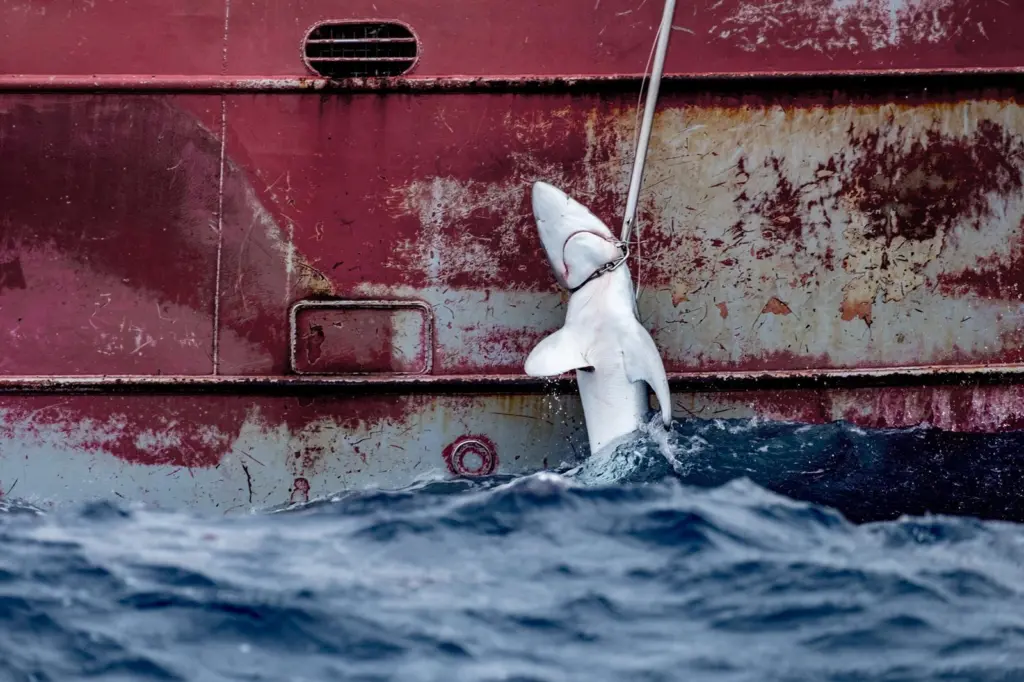
The report, Hooked on Sharks, reveals that over 745 miles of fishing line – almost the distance by road between Land’s End and John O’Groats – is in the water on an average fishing day in the North Atlantic, containing an estimated 15,000 – 28,000 fishing hooks.
The report also reveals that the Spanish and Portuguese governments have consistently resisted attempts to improve the management of this fishery.
“While the EU and its members claim to be champions of ocean protection, their fishing fleets are deliberately fishing in baby shark breeding grounds in the North Atlantic using longlines, a hugely destructive fishing technique,” said Will McCallum, head of oceans at Greenpeace UK.
‘Shocking hypocrisy’
“It’s shocking hypocrisy, which is causing environmental harm on a vast scale,” he added.
The global demand for shark products is continuing to grow, with the global industry now worth over US$1bn annually, says Greenpeace. Global populations have plummeted by 70% in the last 50 years.
The North Atlantic’s longline fishery nominally targets swordfish, but Greenpeace alleges the fishery has transitioned to rely on bycatch of shortfin mako shark to remain profitable.
Governments from around the world will meet in August to finalise a new Global Ocean Treaty. Greenpeace hopes that a strong treaty would lay the foundations for ‘30×30’ – 30% of our planet’s ocean protected by 2030.
Related Articles
 FISHERIES
 FISHERIES
 AQUACULTURE