




New carbon emissions profiling tool for UK seafood
An online tool designed to support the UK seafood sector’s response to climate change has been launched by public body Seafish. The new Seafood Carbon Emissions Profiling Tool has been designed to help businesses measure and reduce their products’ carbon footprint and contribute to meeting net-zero targets.
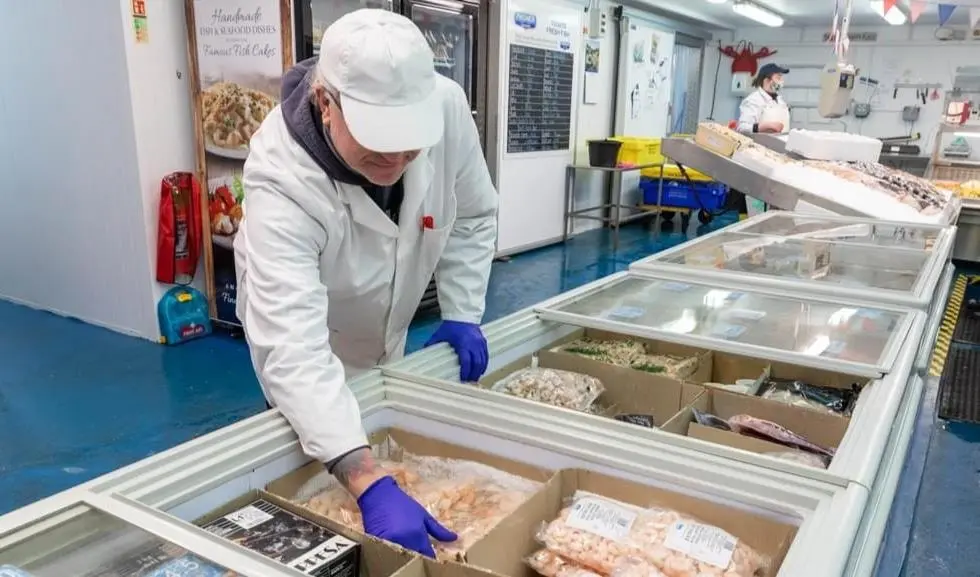
The tool, which is now available online, allows seafood businesses to sign-up and access an online platform where they can input their supply chain data, such as greenhouse gas emissions associated with processing operations. Product carbon footprints can then be generated, and potential hotspots identified, providing the data needed to allow those businesses to address carbon related issues in their supply chain.
Its development has been funded jointly by the Fisheries and Seafood Scheme (FaSS) in England and Seafish and developed by Mérieux NutriSciences | Blonk, a leading international expert in food systems sustainability.
Seafish’s Head of Responsible Sourcing Stuart McLanaghan described how the tool can support businesses working to reduce their carbon footprint.
“The Seafood Carbon Emissions Profiling Tool is an important part of our work to support the UK seafood sector transition to net-zero,” Seafish’s Head of Responsible Sourcing Stuart McLanaghan said. “It is aimed at the entire UK seafood supply chain, but we envisage that buyers within retail, food service and processing will be amongst the main users.”
According to McLanaghan, the tool provides several benefits for industry but will first and foremost enable industry to identify carbon footprints for their seafood products and understand the hotspots or risks in their supply chains.
“This is important as robust data and information are needed to help businesses plan and make informed investment decisions to drive transformation to accelerate the decarbonisation of shared seafood supply chains, including via pre-competitive collaboration,” he said.
The central aim is that the tool will provide the engine to deliver the seafood sector’s ambitions to decarbonise in line with the UK’s 2050 net-zero target (2045 in Scotland.)
lt also includes a public facing area, where visitors can access resources including the background methodology, frequently asked questions and view indicative carbon footprints for seafood products typically retailed in the UK.
UK-based seafood importer, processor and distributor, New England Seafood, is among those supporting the tool’s development, with its People and Planet Group Director Cassie Leisk praising its ability to turn complex data into easy-to-understand results for businesses.
“The tool is easy to use, it’s really intuitive,” she said. “You don’t need to have a lot of carbon knowledge or expertise to be able to access it.
“The whole point of the tool is it’s something anyone in the business can use whether you’re working on sustainability, working specifically on carbon, if you’re a CEO or working in ops. For me, it’s something that’s helpful to translate some quite detailed, technical information into something simple for anybody to access.”
The tool builds on Seafish’s two previous carbon profiling tools which enabled companies to evaluate the carbon impact of their wild capture seafood products. This update provides a more user-friendly one-stop shop platform, includes aquaculture supply chains and boasts enhanced functionality, as well as a range of other benefits.
Another organisation already familiar with how it can help businesses work towards their own carbon related targets is UK retailer Tesco.
Ben Lambden, Tesco’s Sustainable Fisheries and Aquaculture Manager, described how the tool supports the business: “The tool is super important because it enables us to baseline carbon completely through the supply base – so at primary, at wild capture and aquaculture, enabling us to really understand where we’re at and how we can best reach our targets,” he said. “The beauty of the tool is it’s continuously developing so, as you continue to use it, more data will be added and reviewed and it should get easier to use.”
Mérieux NutriSciences CEO Nicolas Cartier said the organisation was “very proud” to have played a key role in this important initiative to help advance sustainability in the UK seafood industry.
“Drawing upon our expertise in environmental footprinting, software engineering, and data analysis, we aim to provide a valuable resource that will empower the seafood industry to steer towards a greener future,” he said.
Seafish chair of the board Mike Sheldon remarked that it’s fantastic the initiative has the backing of so many important market players who are all motivated to have one tool that the whole industry uses.
“So what we should be able to do is demonstrate the credentials of the industry, where they already are, about what a good job a lot of people are doing already, how fast they’re moving to make things even better and, of course, the direction of travel to a really high-performing industry,” he said.
Related Articles
 SEAFOOD
 SEAFOOD
 PROCESSING & REFRIGERATION