



The European Union’s so-called “blue economy” generated an estimated €263 billion in gross value added in 2023, representing 1.7% of the total EU gross value added, finds the European Commission’s newly-published 2025 EU Blue Economy Report. The analysis also estimates the blue economy was responsible for a total 4.9 million jobs in that same year, constituting 2.4% of total EU employment.
Within regards to blue food, the EU is responsible for around 2.1% of global production, making it the seventh-largest producer of fishery and aquaculture products, behind China, Indonesia, India, Vietnam, Peru and the Russian Federation.
Overall, EU production has been rather stable in the last few decades. In 2022, just over 52,800 European fishing vessels landed about 3.9 million tonnes of seafood worth €6.6 billion, whiles its aquaculture produced nearly 1.2 million tonnes valued at €4.8 billion, making up nearly one quarter of total EU seafood production.
The report explains that over the past few years, several external shocks have had an impact on EU fisheries’ landings. In 2020, the Covid-19 pandemic and associated public health interventions reduced demand and disrupted supply chains for many fishing businesses, while Russia’s war of aggression against Ukraine, beginning in February 2022, triggered an increase in energy and fuel prices, as well as general inflation, throughout the year.
It notes fuel prices decreased to consistently below €1 per litre only after November 2022, allowing the primary production subsector to recover its economic performance from 2023 onwards. Meanwhile, the impacts of the shocks on the processing and distribution subsectors have been milder, as these have relied on imports to fill the gap in domestic production.
Also, the Trade and Cooperation Agreement (TCA), which came into force following Brexit, has gradually reduced the share of EU fishing opportunities in UK waters since 2021.
The analysis states that seafood imports have contributed to sustaining the consumption of seafood products in the EU, and have had positive impacts on the economic activity of the processing and distribution subsectors, as well as on the general economy, especially in the presence of limited domestic supply. As such, the EU’s self-sufficiency is estimated to have decreased to 37.5% in 2022, and therefore, for each 10kg of fish that EU citizens ate, more than 6 kg came from outside the EU.
In terms of its contribution to the EU’s blue economy, the Commission advised that the Marine Living Resources sector – encompassing the exploitation of marine biological resources, from harvesting renewable organisms (primary production), and converting them into food, feed, bio‐based products and bioenergy (processing), to their distribution along the supply chain – generated almost €37.9 billion in GVA in 2022, a 4%-increase compared with 2021. While gross profits decreased by 5%, reaching almost €13.6 billion, the turnover reported was about €209.4 billion.
Estimates for 2023 suggest that the economic performance of the sector has improved.
The sector directly employed more than 1.09 million people, a 2%-increase from 2021. The annual average wage was estimated at EUR 22.300, an 8%-increase from 2021.
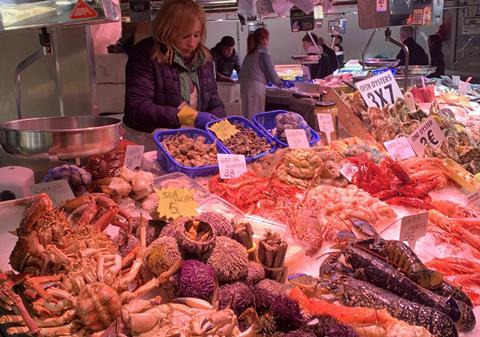
In 2023, household expenditure on fishery and aquaculture products in the EU reached €60.2 billion, a 4.5%-increase compared with 2022, continuing the upward trend observed in recent years. Fishmongers accounted for roughly 12% of sales, while the remainder took place in non-specialised shops, such as supermarkets.
The average consumption of fishery and aquaculture products per capita is estimated at 23.51 kg (measured in live weight equivalent) in 2022, down by under 1% from 2021. A significant 70% of that consumption comprises imported wild-capture fishery products.
According to the report, the EU’s self-sufficiency has continued to decrease – reaching an all-time low in 2022 – driven by increasing consumption of fishery and aquaculture products on the one hand, and a stable and limited domestic supply on the other.
In 2022, EU imports of fisheries and aquaculture products totalled €31.9 billion in value and 6.1 million tonnes in volume respectively (with average price of €5.20/kg), representing a 23%-increase in value, but a 3%-decrease in weight compared with 2021.
The value of EU exports increased by 19%, reaching €8.1 billion (with an average price of €3.50/kg), but their volume decreased by 5% to 2.3 million tonnes.
EU trade flows in 2022 were influenced by several key factors. Chief among them was a surge in inflation – partly linked to the Covid-19 recovery, which fuelled stronger demand and led to higher prices. In addition, Russia’s war of aggression against Ukraine had a profound impact, as it drove up energy and production costs, exacerbating global inflation and affecting currency exchange rates. Furthermore, supply constraints resulting from quota reductions and intensified competition for raw materials, such as fish, fishmeal and fish oil, contributed to a decline in trade volumes, which in turn, fuelled further price increases.
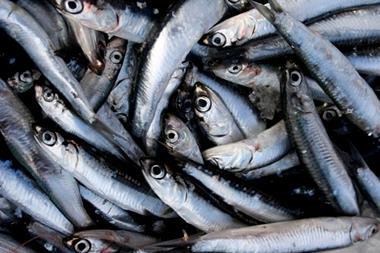
The report confirms that the EU fish processing industry strongly relies on imports from non-EU countries, such as salmon and cod from Norway and the United Kingdom, Alaska pollock from China, shrimp from South and Central America and South-East Asia, sardine from Morocco, squid, and tropical tuna.
It also explains that the strategic guidelines for a more sustainable and competitive EU aquaculture and the communication on the energy transition of the EU fisheries and aquaculture sector aim to enhance the resilience of the fishery and aquaculture sector. In this context, measures have been taken to reduce the dependence of the sector on fossil fuels and lower its greenhouse gas (GHG) emissions.
A major milestone for the energy transition in the fisheries and aquaculture sector will be the adoption of the energy transition roadmap by early 2026. The roadmap will be evidence-based and developed through consultation with stakeholders in a bottom-up approach in the framework of the Energy Transition Partnership.
Several workshops and seminars have been organised on finance, research and innovation and skills, to identify challenges and barriers, solutions and best practices for the different segments of the sector (small-scale coastal fisheries, large-scale fisheries, distant waters fleet, and offshore and inland aquaculture) in the short- and long-terms.
In early 2025, the European Commission opened a public consultation to gather evidence, insights, concerns, ideas, and feedback on the effectiveness of the common fisheries policy (CFP) regulation from a range of stakeholders. This exercise will form part of a broader evaluation of how the CFP’s performance in meeting its objectives and addressing certain challenges. The evaluation will assess the impact of the CFP Regulation on the conservation of marine biological resources and the management of fisheries and fleets that rely on them. It will also examine the policy’s effects on the supply chain, consumers, and public authorities across all EU member states over the past decade (2014-2024).
The new EU Fisheries Control Regulation entered into force in early 2024, although most provisions will only apply after two or four years, to allow time for implementation. This revised regulation updates most of the rules for fishing vessels, taking into consideration modern technology, and promotes sustainability. The key changes involve the enhanced monitoring of fishing activities, better traceability of catches and harmonised sanctions for rule violations.
Another recent Commission initiative is the study on fishers of the future, an EU-wide multi-stakeholder foresight project that explores the changes that may occur in the profession, role and identity of fishers in the coming years and decades. The study’s findings, along with discussions during and after its closing event, will inform the reflections planned throughout 2025 on the European ocean pact and the evaluation of the CFP regulation. It will also help inform a future vision for fisheries and aquaculture in 2040.