






American lobsters red listed
American lobsters (Homus americanus) caught in the United States and Canada have been added to the list of species for consumers to avoid by Monterey Bay Aquarium’s Seafood Watch programme, with the sustainable seafood advocacy group citing the risks that the fisheries pose to endangered North Atlantic right whales.
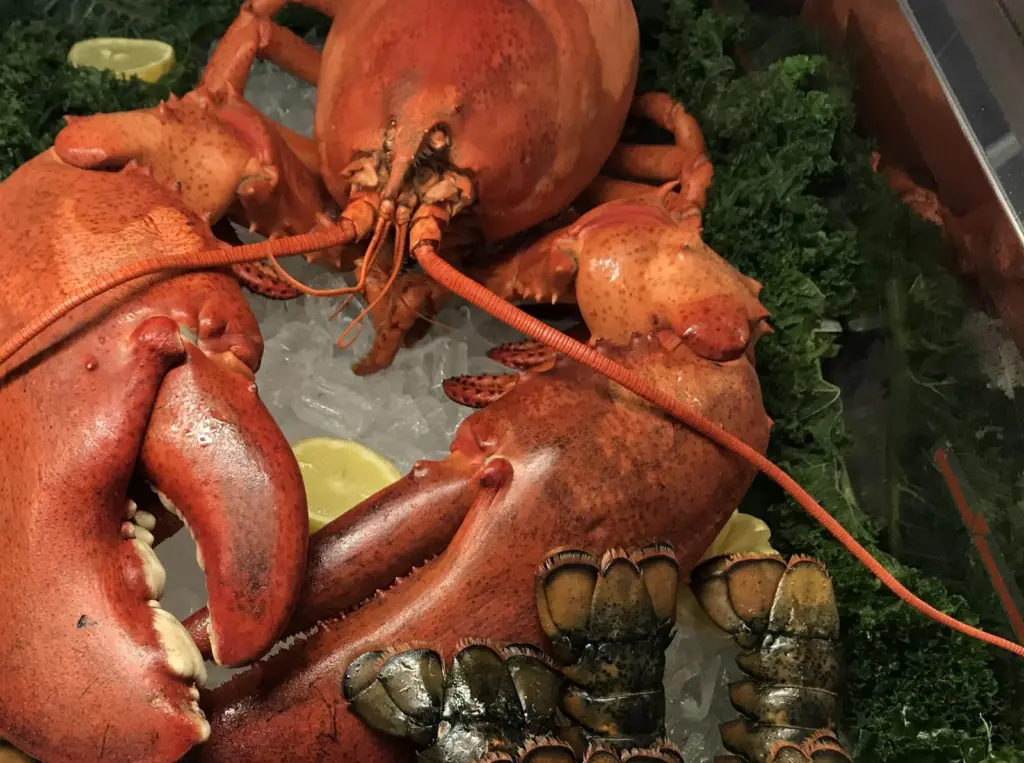
The lobsters have had their designation changed from “Good Alternative” to “Avoid” with Seafood Watch saying that entanglement in fishing gear is the leading cause of serious injury and death to North Atlantic right whales.
It highlighted that North Atlantic right whale is in danger of extinction and has experienced a 25% decline in numbers over the past decade, with fewer than 340 animals existing today.
Seafood Watch gave the same designation to 12 American lobster catching areas of the Atlantic Ocean.
Justifying the move for the Gulf of Maine and Georges Bank Fishery, it said “by-catch management is rated ineffective for all pot and set gillnet fisheries operating within the North Atlantic right whale’s range because current management measures do not go far enough to mitigate entanglement risks and promote recovery of the species”.
It added that pots typically have fewer impacts on habitat, but the cumulative effects of large-scale fishing are likely underestimated.
“Some measures to protect the ecosystem have been implemented, but stronger policies are needed to protect American lobster’s role in the food web. The Gulf of Maine and Georges Bank stock is healthy, and overfishing isn’t occurring,” it said.
However, lobster fishers are arguing that the US regulates traps to the point where they consider it unfeasible for right whales to get caught in their traps, while the Maine Lobstermen’s Association says there has not been any interaction with right whales in nearly 20 years.
It is estimated that the lobster industry contributes about $1 billion to the Maine economy and supports more than 5,500 workers.
In Maine, Senator Angus King, Governor Janet Mills, Senator Susan Collins, and Representatives Chellie Pingree and Jared Golden have called on Seafood Watch to immediately reverse the red-listing.
In a letter to the Monterey Bay Aquarium’s board led by Senator King, the Maine leaders highlight the significant factual omissions of Seafood Watch’s lobster report, criticise the organisation for holding the Maine lobster industry to an impossible “guilty until proven innocent” standard, and call for answers on several key questions.
“The recent decision by Monterey Bay Aquarium’s Seafood Watch to ‘Red List’ Maine lobster with scant evidence of impacts on right whales is a reckless piece of activism that will inflict substantial negative real-world consequences on an important and iconic industry in Maine,” wrote the Maine Congressional Delegation and Governor Mills.
“In a courtroom, we require evidence before convicting someone of a crime; but you are seeking to sentence Maine’s lobstermen with conjecture, assumptions, and guesswork instead of hard facts. If anything, the publicly available facts rebut this aggressive action that will impact the livelihoods of thousands of people in Maine and make it clear that you should immediately reverse the irresponsible designation.”
The Maine leaders also laid out three “key facts” left out of Seafood Watch’s red list assessment:
- There has not been a right whale entanglement with Maine lobster gear since 2004, and right whale deaths or serious injury have never been attributed to Maine lobster gear
- The majority of right whale deaths since 2017 have been due to vessel strikes in Canada. In fact, 23 of the 30 whales that died between 2017-2019 were found in Canadian waters or were a result of entanglement in Canadian fishing gear
- The Maine lobstering community has taken many measures, including eliminating all floating rope (the type of rope most likely to entangle whales) and removed more than 30,000 miles of line from the water
“By ignoring these clear facts, Seafood Watch isn’t encouraging safe fishing; instead, you are damaging the reputation of your certification process by misleading consumers. There’s an easy way to fix this – now that you’ve seen the facts, reverse your decision and take lobster off the ‘Red List’,” they wrote.
Related Articles
 SEAFOOD
 SEAFOOD
 FISHERIES