






Scottish salmon farm meds ‘harm marine life’
Scottish salmon farm medicine is significantly changing local marine environments and putting marine life at risk according to research carried out by the Scottish Environment Protection Agency (SEPA).
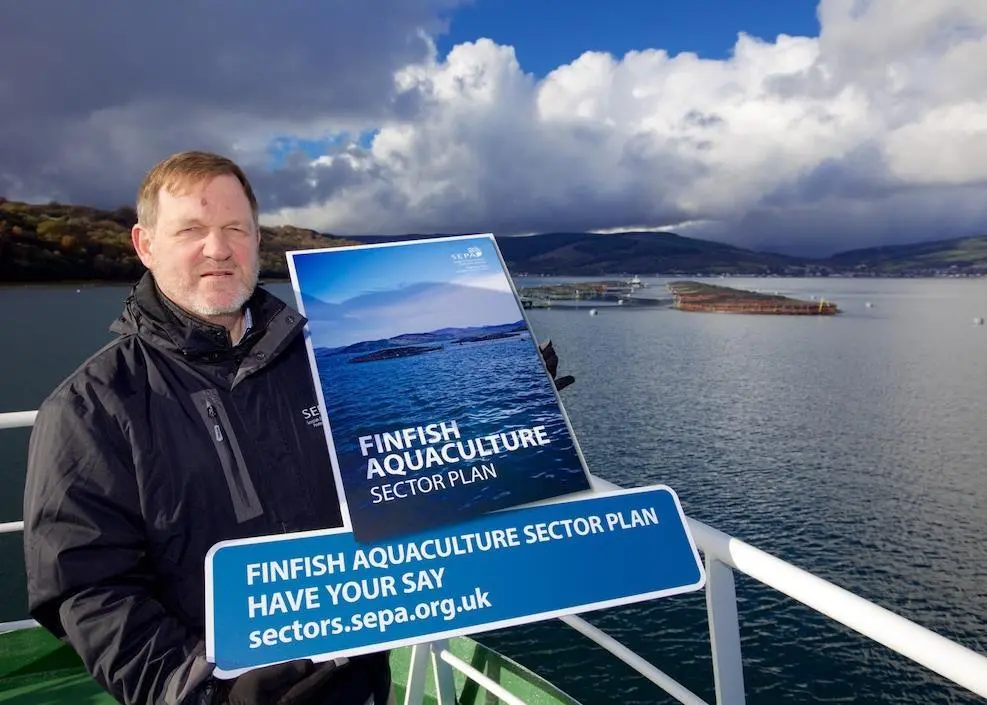
The report, undertaken by specialist marine scientists and one of Scotland’s most comprehensive aquaculture research projects, examined environmental impacts from eight Scottish fish farms and concluded that a revised regime is needed to strengthen regulation of the sector.
Terry A’Hearn, chief executive of SEPA, said: “Whilst we’re seeing innovation in the sector, we’ve concluded that the existing approaches do not adequately protect marine life.”
Recommended changes
Changes needed include a new, tighter standard for the organic waste deposited by fish farms; more powerful modelling to replace the existing 15 year old framework; enhanced environmental monitoring and the creation of a new SEPA enforcement unit to ensure compliance is non-negotiable and a new interim approach for controlling the use of emamectin benzoate. The new approach could allow for larger farms than traditionally approved, provided they are sited in sustainable locations.
The proposals follow 16 months of work, including two Scottish parliamentary committees, one of which concluded that ‘the status quo is not an option’ and that the industry’s expansion goal ‘will be unsustainable and may cause irrecoverable damage to the environment’ unless practices are improved.
“We agree that ‘the status quo is not an option’ which is why we’re announcing firm, evidence based proposals for a revised regime that will strengthen regulation of the sector,” said Terry A’Hearn.
Scotland is the largest Atlantic salmon aquaculture producer in the EU and third in the world after Norway and Chile. Key to this is a reputation for a high quality environment and abundant freshwater resources.
Related Articles
 SEAFOOD
 AQUACULTURE
 SEAFOOD