



Russia posts significant growth in oyster and mussel production
Production of delicacies including oysters and mussels has increased significantly in the last few years, largely due to the ban on imports from Western states that was imposed three years ago in response to Western sanctions, reports Eugene Gerden
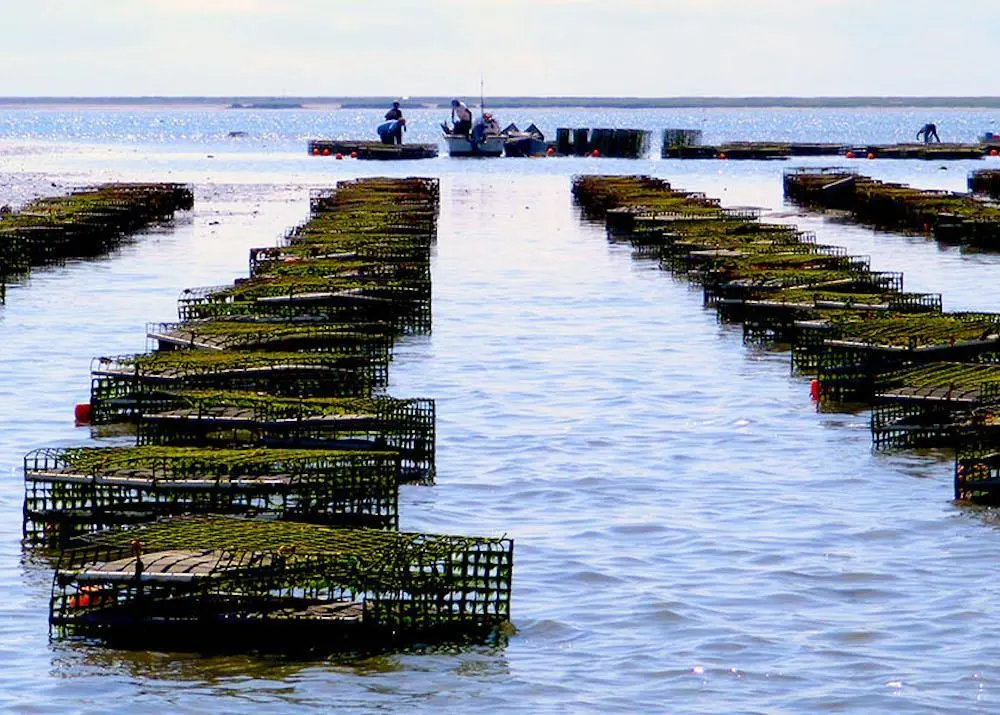
The demand for these products has not decreased as the ban hit availability, and according to the Federal Agency for Fisheries, since 2015, mussel production has increased 12-fold, while more than 250 times more oysters are now produced domestically, with the largest growth in this sector taking place in Crimea.
In 2017 the combined production of oysters and mussels hit a 2000 tonne record figure, while prior to 2014, these had been mainly imported from the European Union. In August 2014 these products were added to the lost of goods that could no longer be imported from the EU, US, Canada and other states.
Soon afterwards, the first commercial mussel farms were established in Krasnodar, Sevastopol, Crimea and Karelia regions, while a number of oyster farms were also set up in Krasnodar and other southern districts. Previously, production of oysters, mussels and other such delicacies had been minimal, and there had only been mussel production in the Primorye region of the Far East.
According to the Federal Agency for Fisheries, the embargo on imports has not been the sole impetus for increased production in Russia, as the adoption of the federal law On Aquaculture in 2015 provided the basis for this, setting out improved legal and regulatory frameworks for Russia’s aquaculture sector and prompting investors to become more active in entering into projects for rearing these specialised seafood products.
Crimea currently remains a centre for the production of mussels and oysters, and according to Andrei Dedyukhin who heads the Department of Fisheries at Crimea’s Ministry of Agriculture, there are currently eleven farms are involved in the growing of mussels, oysters and other species in Crimea and there is a possibility these figures will grow in the coming years.
Currently the Crimean Seafood Group remains the largest producer of these products in Crimea and Russia, with broodstock for oysters and mussels culture imported from France, as Russia currently does not have the facilities to produce this itself.
While oysters and mussels are in demand in Russia, the main sales channel is the hotel and restaurant sector, while analysts at the Federal Agency for Fisheries estimate that production nationwide could expand to ten times its current level.
The Russian government has promised investors all the necessary support for the implementation of projects in this field. In addition, according to a spokesman at the Ministry of Agriculture, there are plans to improve awareness hat could lead to increased domestic consumption.
According to some analysts, the culture of consumption of these products in Russia is largely underdeveloped, as Russian consumers have always considered mussels, oysters and other similar products as an ingredient for salads. This has meant that sales peak around holiday periods, with much lower levels of demand at other times. The bulk of demand for products such as mussels and oysters is primarily in the larger cities, particularly Moscow and St. Petersburg.
At the same time, according to an official spokesman of Dmitry Patrushev, the Russian Minister of Agriculture, a problem associated with prices for domestically-grown delicacies can be higher than for those imported from abroad. Russia continues to import these products, and even with increased domestic production, imports are also rising.
The Russian Federal Customs reports that in 2017, 283 tons of fresh, cooled and frozen oysters were imported, a 29% increase over the previous year, while 1100 tonnes of mussels were imported, 4% up on the 2016 figure. Oysters are imported mainly from Tunisia, New Zealand, South Korea, Morocco and Japan, while mussels are sourced from New Zealand,
Related Articles
 SEAFOOD
 SEAFOOD
 AQUACULTURE