




New pelagic sorting tech
Recognising that with proper handling, the offcuts from processing pelagic fish can be used for more valuable purposes, EU-funded project WaSeaBi has developed new sorting technology that make it possible to separate the fish into head, backbones, viscera and belly flap and tail in addition to fillets.
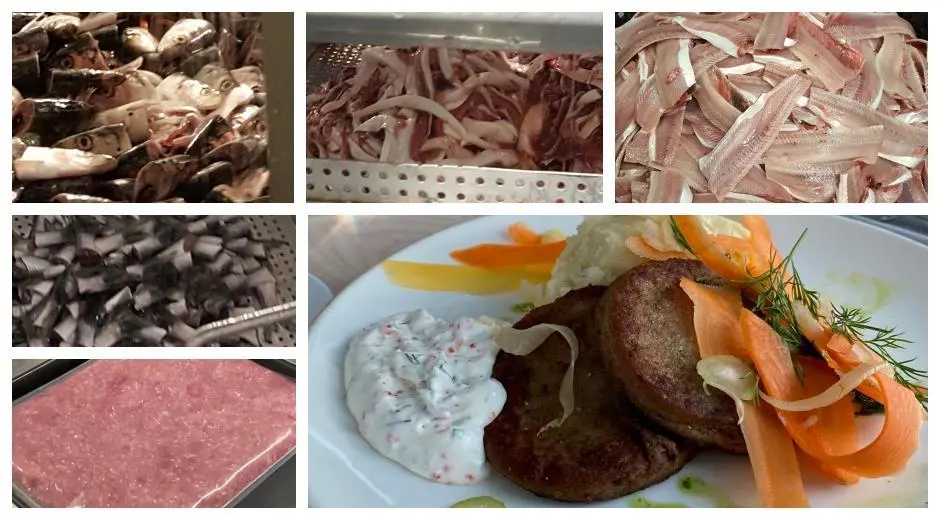
The technology has successfully been implemented at the herring processing company Sweden Pelagic AB in close cooperation with Chalmers University of Technology.
“The sorting technology gives us a lot more possibilities to develop new healthy and tasty seafood. In the long run, we hope it will give us a better revenue,” said Martin Kuhlin, CEO of Sweden Pelagic AB. “I think that it will give us great advantages in the future. The technology will make it possible to extend our product range. This year, we estimate that we will produce around 200–300 tonnes of ‘herring mince’, and the ambition is to increase that number every year.”
In addition to the possibility of developing new products, increasing the revenue and extending the product range, Kuhlin also thinks that through the technology, the company will be able to market its products towards new consumer groups.
“In the first case, we will sell the products to the industrial customers, who manufacture pan-ready or eat-ready products. But we have experienced that also school kitchens and public meal producers have a great interest in the mince,” he said.
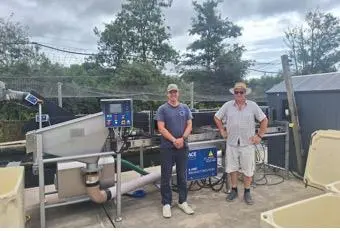
The new sorting technology was developed by rebuilding a filleting line for pelagic fish, which now separates the fish into five different clean parts. This means that Sweden Pelagic now has five cuts instead of one, which the company can sell for subsequent production of food raw materials and ingredients such as minces, protein isolates, hydrolysates and oils.
It can also be applied to other fish species.
According to Kuhlin the seafood industry is way behind the meat sector.
“They have for a long time been very good at taking care of the whole animal in a much better way than ‘our’ industry,” he said.
Ingrid Undeland, Professor of Food Science at the Department of Biology and Biological Engineering at Chalmers University of Technology, stressed the importance of handling offcuts as carefully as the fillets.
“Thus, instead of seeing the offcuts as side-streams or by-products, which indicates that they are ‘leftovers’, they should be seen as just another cut of the fish – just like in the meat industry,” she said.
Related Articles
 PROCESSING & REFRIGERATION
 SEAFOOD
 SEAFOOD