





Oyster reef project returns 20,000th oyster
Glenmorangie Distillery and scientists from Heriot-Watt University have reached a significant milestone in the Dornoch Environmental Enhancement Project (DEEP) which aims to restore a sustainable native oyster reef in the Dornoch Firth.
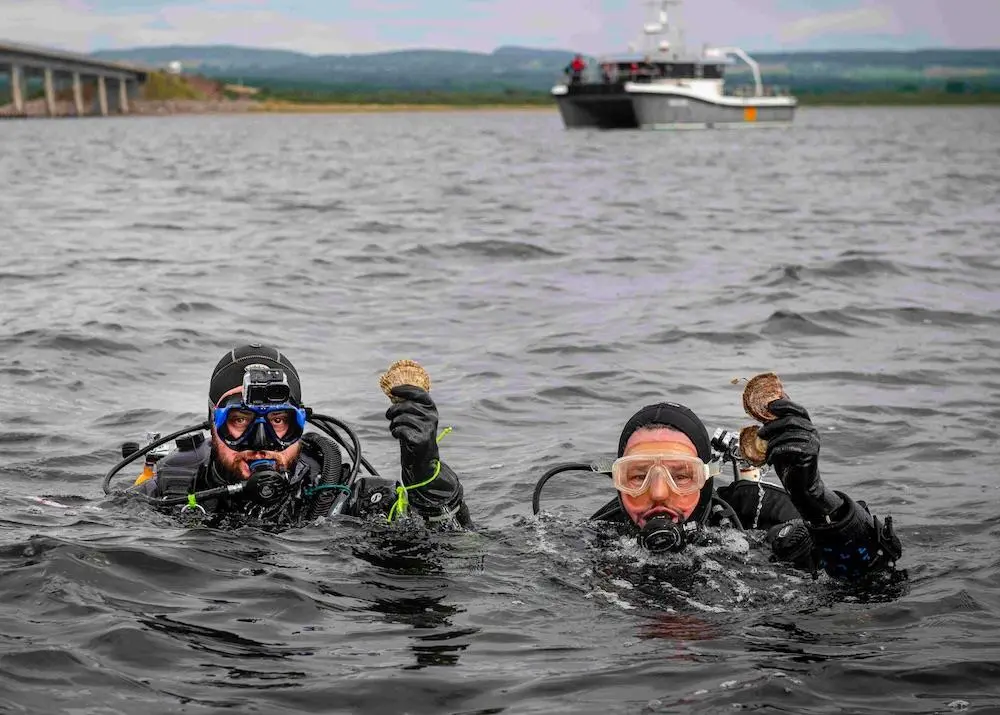
August 2021 marks the completion of 20,000 native European oysters being returned to the Dornoch Firth, a site of special scientific interest, where they became extinct more than 100 years ago as a result of overfishing.
“The DEEP research is greatly improving our understanding of the dynamics of oyster reef restoration,” said Professor John Baxter, chair of DEEP’s Independent Research Advisory Panel which comprises scientists from the IUCN, the Marine Biological Association UK and the Native Oyster Restoration Alliance.
“It is also helping to set the standard in all aspects of marine habitat restoration work such as biosecurity and monitoring,” he added.
DEEP began as part of the distillery’s wider sustainability strategy in 2014, with partners from Heriot-Watt University and supported by the Marine Conservation Society. The project aims to create a sustainable reef of four million native oysters.
The oysters will play a key role in purifying the water with one oyster able to purify up to 200 litres of water a day. The oyster reef also creates a haven for marine life and can help mitigate the effects of climate change as findings suggest that the restored oyster reef habitat may act as a long-term carbon store.
“We are still uncovering exactly how much of a game changer this can be but we’re increasingly focusing our research on delving deeper into the role of the oyster reef as a carbon store,” said Professor Bill Sanderson, at Heriot-Watt University.
Related Articles
 AQUACULTURE
 SEAFOOD
 SEAFOOD