


Opinion: How Pacific bluefin tuna’s woes were reversed
The population of this iconic fish increased from a low point of 2% spawning biomass in 2010 to 10% in 2020 and continues to move in the right direction. This turnaround owes much to science and collaboration, explains leading researcher and International Scientific Committee (ISC) member Dr Michel Dreyfus.
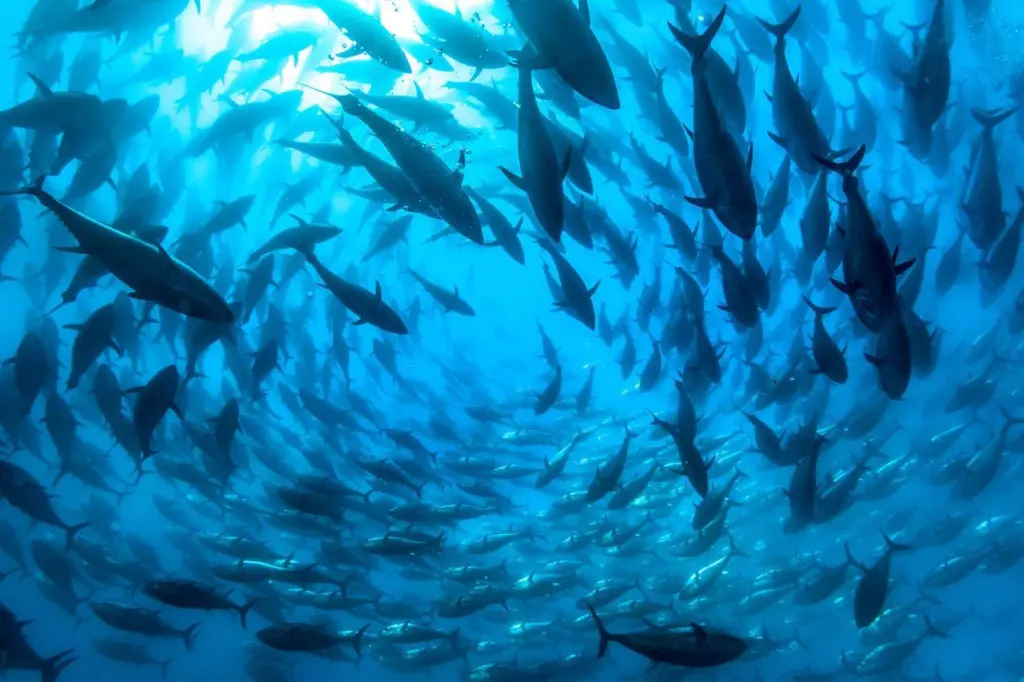
Unfortunately, we didn’t realise the amount of reduction in the Pacific bluefin population until 2013. There were some signs that there was overexploitation, especially in the Western Pacific, with Japan in particular seeing that even with higher regulatory efforts, they weren’t catching the amounts they used to. But, in the Eastern Pacific, Mexico specifically, and within the IATTC, we didn’t see any signs of overexploitation because our fisheries were catching all they wanted to. Then came the ISC meetings, where we assess Pacific bluefin. In 2013, we got the first assessment that scientists were satisfied with, and that’s when we realised the spawning biomass population was just 2%.
Basically, what caused the problem was an over-catch of small bluefin (10-15cm, weighing 2-3 kgs) by very large fleets of artisanal vessels. These were fishing for a number of species, but they caught lots of small bluefin as well, and often this was by-catch. ISC assessments show this was happening from the 1990s all the way to 2012, with 80% of the bluefin tuna caught being less than one year old juveniles. These small sizes and ages aren’t seen in the Eastern Pacific. It was the Western artisanal fisheries, catching vast quantities of small juveniles, that was the main problem for the species.

Following the initial ISC assessment in 2013 (these are now done every two years), we decided to form a group in which countries interested in Pacific bluefin could participate in discussions. These countries are represented on the east coast with the Inter-American Tropical Tuna Commission (IATTC) and on the west coast through the Western and Central Pacific Fisheries Commission (WCPFC). Pacific bluefin migrate across the entire ocean, so we wanted to cover the whole population. This is where we now make conservation decisions that are brought to both coast’s commissions.
The first challenge was to raise the 2% spawning biomass. Transpacific measures were quickly enforced, including catch limits for all of the Japanese, American and Mexican fleets, since they have a lot of bluefin fisheries, including longliners, purse seiners, etc. We started to see a really fast recovery. In 2020, the spawning biomass reached 10%, and the initial results from this year’s new assessment indicate we’ve already reached 23% spawning biomass. As such, the population no longer holds an overexploited status.
Some fisheries have already received raised catch limits based on the results of the 2020 assessment, and this year, there’s going to be a broader increase because of the population’s new “good status”. There are also a lot of measures in place so the population doesn’t go down again. We have to take care that there’s no return to overexploited juvenile bluefin of less than one year of age. Everything is in place so the population will continue to be in a safe zone.
Targeting bigger fish
All bluefin in the Northern Pacific are born between Japan and Taiwan, with reproduction taking place in those waters between May and August. The Kuroshio Current moves eggs and larvae to Japanese waters (both coasts). Some juveniles will stay for up to a year, then some of them, not all, migrate to the Eastern Pacific. Larger juveniles reach Baja Mexico and California in the US, where they stay for 2-3 years – sometimes longer – to feed. Then, they return to Japan and Taiwan to reproduce. That’s more or less the Pacific bluefin cycle.
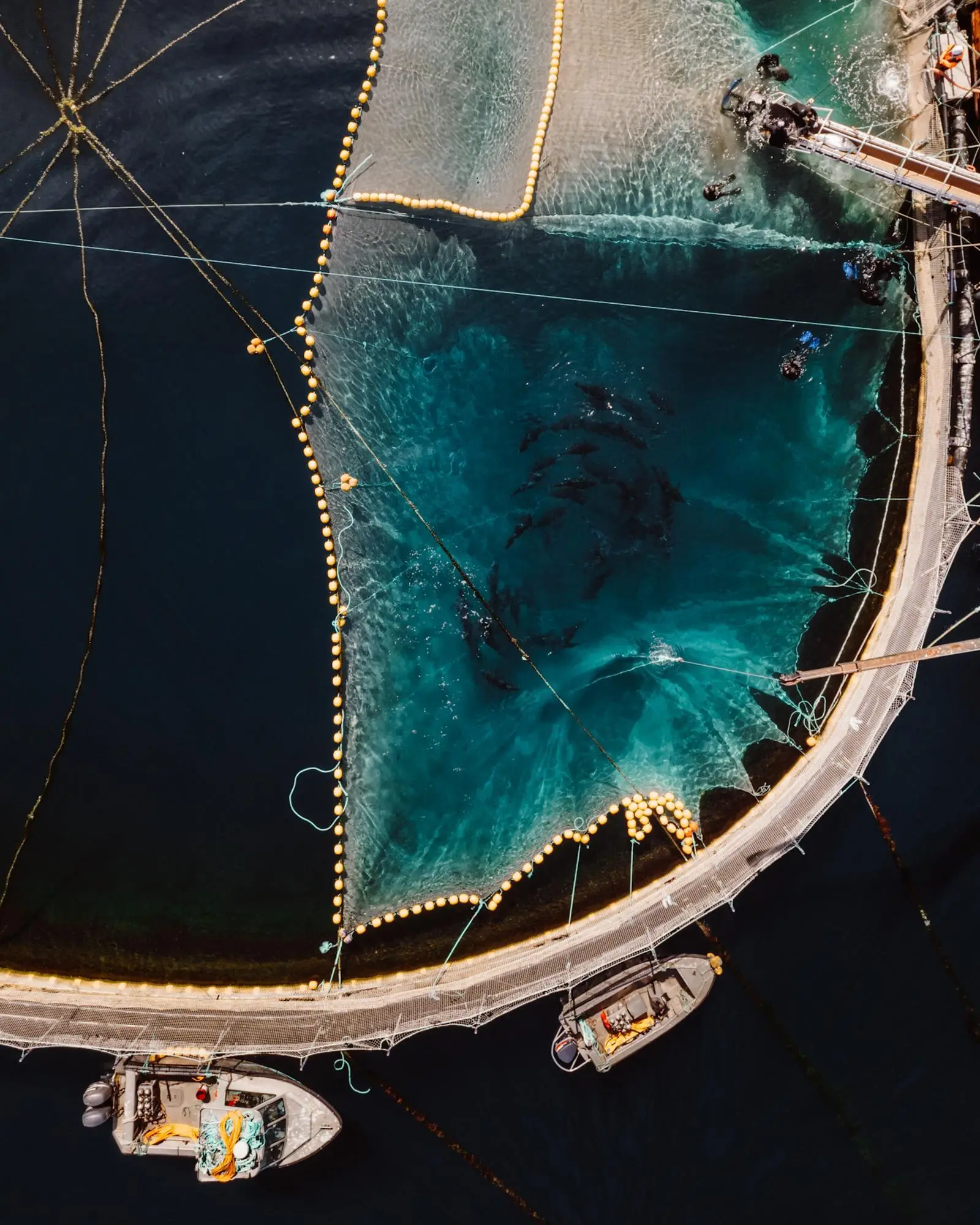
In Mexico and the US, fishers are catching the feeding juveniles for ranching. In decades past, they were catching 1–2-year-olds, but in the case of Mexico today, it’s 3-4-year-old juveniles that dominate catches. This practice sees big purse-seining vessels encircling a school of bluefin with a net that’s up to a mile in circumference. Once captured, ranchers bring in another net, into which they transfer their catch live. This is then towed to the area where the farms are located. They’re fed in an aquaculture setting for months or years, depending on the strategy of the ranchers. The goal is to achieve more weight, growth, and fat – it’s driven by consumer preferences.
Catching an amount of juvenile bluefin that’s considered – based on the assessments of the population and the projections for their future that will keep them at good levels – enables juvenile catches to be sustainable. Ranching actually decreases the impact on the population because they’re focusing on bigger juveniles. When ranchers go seining, an airplane spots schools of bluefin, and they try to locate the ones that have bigger fish. Indeed, the Eastern Pacific catch size has risen to 120-130cm. These are 3-4-year-old fish. This decreases the impact on the stock.
Bluefin farming
Meanwhile, in the background, progress continues to be made in the closed cycle production of bluefin tuna – from egg to final product. In Japan, this full-circle aquaculture has been studied and has worked upon experimentally for some time. Indeed, they have now reached the point where hundreds of tonnes of bluefin could be commercially produced. But there’s still a lot to be considered and improved upon. Their diet and feeding are still a problem, as is the time that it takes to raise bluefin from egg to harvest size – sustaining fish for over four years is difficult and expensive. However, I’m certain that in a few years, this will improve, and they will find a way to viably implement this full-circle bluefin aquaculture and in other locations too. Outside of Japan, it’s not full-circle yet. It’s a very new industry; one that’s not similar to farmed salmon, for instance, which has been established for decades.
In the meantime, bluefin ranching is being done successfully and sustainably in Mexico, in the Mediterranean and in Australian waters. That said, in the Atlantic, the regulation of the bluefin fishery is very complex. For instance, vessels fishing for bluefin from one country could be selling live tuna to another country. It’s a lot simpler in the Pacific. There are no complicated regulations for bluefin ranching. For example, Mexico is the only country ranching in the Eastern Pacific side (the US does not have bluefin ranches).
This year, I think there were 11 vessels participating in the Eastern Pacific, which is very few when compared with the Atlantic. And that’s probably why we’ve seen such a strong recovery since we’ve been monitoring this way in the Pacific. Also, the Mexican fishery is very well controlled, with observers on every boat. The country’s government also puts an inspector – not an observer – on those trips so there’s a lot of monitoring on the catch from both the IATTC and the government.
It should further be noted that nowadays, these fisheries provide a lot of good information for scientists to use. For example, Baja Aqua Farms in Mexico, uses stereoscopic cameras because it is interested in knowing the amount and the size of bluefins that it’s farming. They film when bluefin are passed from the seine net to the transporting pen, so that they know how many bluefins there are, and their sizes. That information is shared with me and the IATTC to analyse. It also feeds into the ISC assessments.
Bluer horizons
We’ve already come a long way. Back in 2012/13, I calculated that if we could protect 1,000 tonnes of small, zero-year-old bluefins, then this would lead to more than 10,000 tonnes of adult bluefin tuna – even if you take into account natural mortalities. The recovery has taken such a short amount of time because measures were taken particularly in those impactful fisheries so that they didn’t catch an excess number of small fish. Now, we are seeing increases in 5- to 8-year-old tunas. The recovery is passing slowly, yearly, to different ages. We are now seeing the recovery all the way to adults.
When we first established rebuilding targets for the entire Pacific bluefin population, we set the median adult biomass goal at 40,000 tonnes. I didn’t believe this would be achievable by today’s date, yet it was reached several years ago. So, we set a second rebuilding target, which was above 120,000 tonnes. I wasn’t sure we would get to this either. But to our surprise, we’ve already reached it.
What we can confidently say now to the public and to people interested in Pacific bluefin is the measures we are taking, based on science, are good enough to keep the stock in good condition. Also, when there are catch limit increases, these will be considered scientifically and based on our probabilities that the stock will not again fall to a red point.
Michel Dreyfus studied Oceanography in the Faculty of Marine Science in Ensenada, Baja California, and then did his master’s and PhD at CICESE. Both theses related to the yellowfin tuna fishery: One modelling bioeconomic aspects, and the second modelling fishermen decision making with artificial intelligence methods. Between 1985 and 2021, he worked at INAPESCA (now named IMIPAS), in tuna research and adviser for tuna-related issues, including yellowfin and bluefin tuna. He also participated in international meetings of the InterAmerican Tropical Tuna Commission (IATTC) and International Scientific Committee for Tuna and Tuna like Species of the North Pacific (ISC), in both he participated in scientific meetings as well as management meetings, in representation of Mexico. Currently, he continues to advice government and participate in the international meetings, working from FIDEMAR which is a foundation devoted to the tuna fishery, in charge of research.