



Reviving Japan’s seas through environmental conservation
Fishermen in Japan are safeguarding blue carbon ecosystems such as seaweed beds to restore the environment and bring back marine life.
The sea has served Japan as a cultural and economic resource for thousands of years. The Japanese have made heavy use of the ocean, harvesting a host of marine organisms from squid and octopus to tuna, salmon and abalone. However, in recent decades, the ocean has become a resource at risk with the onset of climate change, overfishing and other threats. These have resulted in declining catches, environmental changes and changes in species distribution, while an aging workforce and a shortage of successors in the fishing industry are drawing increasing concerns.
Tomokazu Kawabata, a set-net fisherman in Yamagawa, Ibusuki city, Kagoshima prefecture, and Shozo Kesamaru, who free dives for abalone offKaratsu city in Saga prefecture, are all too familiar with the problems facing Japan’s fishing industry. Based in southern Japan, both fishermen enjoy the ocean’s resources and have long been concerned by the changes they’ve seen.
“Sea temperatures have been rising gradually, and this has changed the distribution of marine species,” Kawabata told WF. “For example, over the past 10 years, fishermen in Hokkaido have been unable to catch autumn salmon, which return to the Hokkaido coast to spawn in the autumn or early winter. Meanwhile, Japanese yellowtail fishing grounds have changed dramatically, and Hokkaido, which previously registered next to no catches, is now seeing significant hauls. The problem is not that fishermen can’t catch what they used to catch. Rather, they are catching species that they have never caught before, and they have no culture or history of eating them, so they ship them elsewhere.”
“I’ve been free diving since I was 18 years old, and environmental changes off Saga prefecture used to be gradual,” said Kesamaru. “However, they are now happening more quickly. With the environment changing to this extent, and to ensure survival, fishermen need a framework to do what is appropriate for the environment. The balance of the ecosystem has been disrupted. We need to bring back and maintain it while protecting the ocean as best as we can.”
Restoration – a way forward
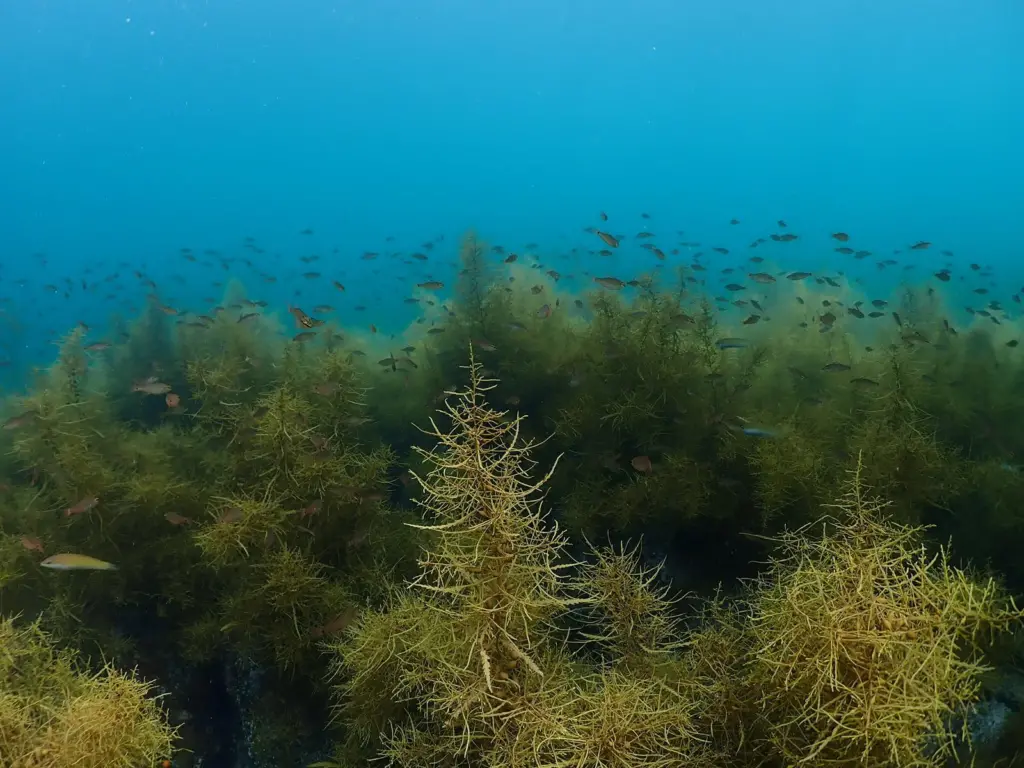
Wanting to achieve a sustainable balance between marine resources and commercial fishing, Kawabata and Kesamaru are working to recover and re-establish seaweed and seagrass beds. Having researched the functions of these ecosystems and understood their role as spawning areas and nursery grounds for fish, Kawabata realises the importance of both in ensuring stable catches for fishermen. The idea behind the work is to increase marine resources, and reduce the isoyake – sea desertification – phenomenon. On 5 March 2024, Kawabata and Kesamaru shared their insights on fisheries and protecting biodiversity at a seminar in Tokyo on the future of fisheries, organised by consultancy firm UMITO Partners Inc.
Kawabata’s work began in 2005 when the number of sea urchins that feed on seaweed was rising in Kagoshima, resulting in barren underwater areas with no fish. He and his team managed the density of the sea urchins, believing that less sea urchins per square meter would result in less problems from isoyake and more seaweed. But although the beds started to regenerate, the seaweed stopped growing between 2016 and 2018.
“We discovered that it was being eaten by fish,” said Kawabata. “Herbivorous species that feed on seaweed tend to lose their appetite when the sea temperature drops below 16 degrees or so. In some cases they won’t eat at all. However, the temperature is much higher now, so the fish have a more voracious appetite and even feed on newly-sprouted seedlings that appear in early autumn. Herbivorous fish also tend to be from southern regions with warmer temperatures. With the ocean getting warmer further north, the fish are moving there. In the past, their numbers could be controlled as there were more fishermen, but now there are less fishermen and the sea temperature is rising. It’s a serious problem.”
Kawabata’s work involves taking underwater photographs and videos of seagrass and seaweed beds, cultivating both while monitoring growth and environmental conditions, investigating the state of isoyake in his area, removing sea urchins from the ocean, and installing fine nets to deter herbivorous fish. Kesamaru, who has been carrying out his own conservation activities since 2000, says that his work is pivotal in ensuring a healthy ocean that can produce steady supplies of seafood. He has also set up a YouTube channel to raise awareness, and is working with an increasing number of local fishermen and other collaborators who understand the value of his activities.
Kawabata says that the fishing industry can benefit greatly from environmental restoration work.
“Species like abalone taste delicious when there is seaweed around,” he said. “Healthy beds also attract species such as squid, another popular food source. Restoring these ecosystems helps fish numbers recover, and fishermen can expect higher catch volumes. Seafood that comes from waters where restoration activities are carried out is also likely to attract attention as a new, valuable brand. Seafood caught by fishermen who are restoring marine ecosystems is likely to be seen as more valuable than seafood caught by those who don’t.”
“The future of Japan’s fisheries is not just about catching fish,” he continued. “The industry will need to manage ecosystems like seagrass and seaweed while catching fish. We need healthy marine ecosystems to have sustainable fisheries.”
Overcoming barriers
However, restoration efforts are not without challenges. Reaching a consensus among fishermen regarding conservation has been difficult, with varying opinions depending on age and a lack of understanding towards restoration work. Conveying in words how the marine environment is changing is also complicated, says Kesamaru.
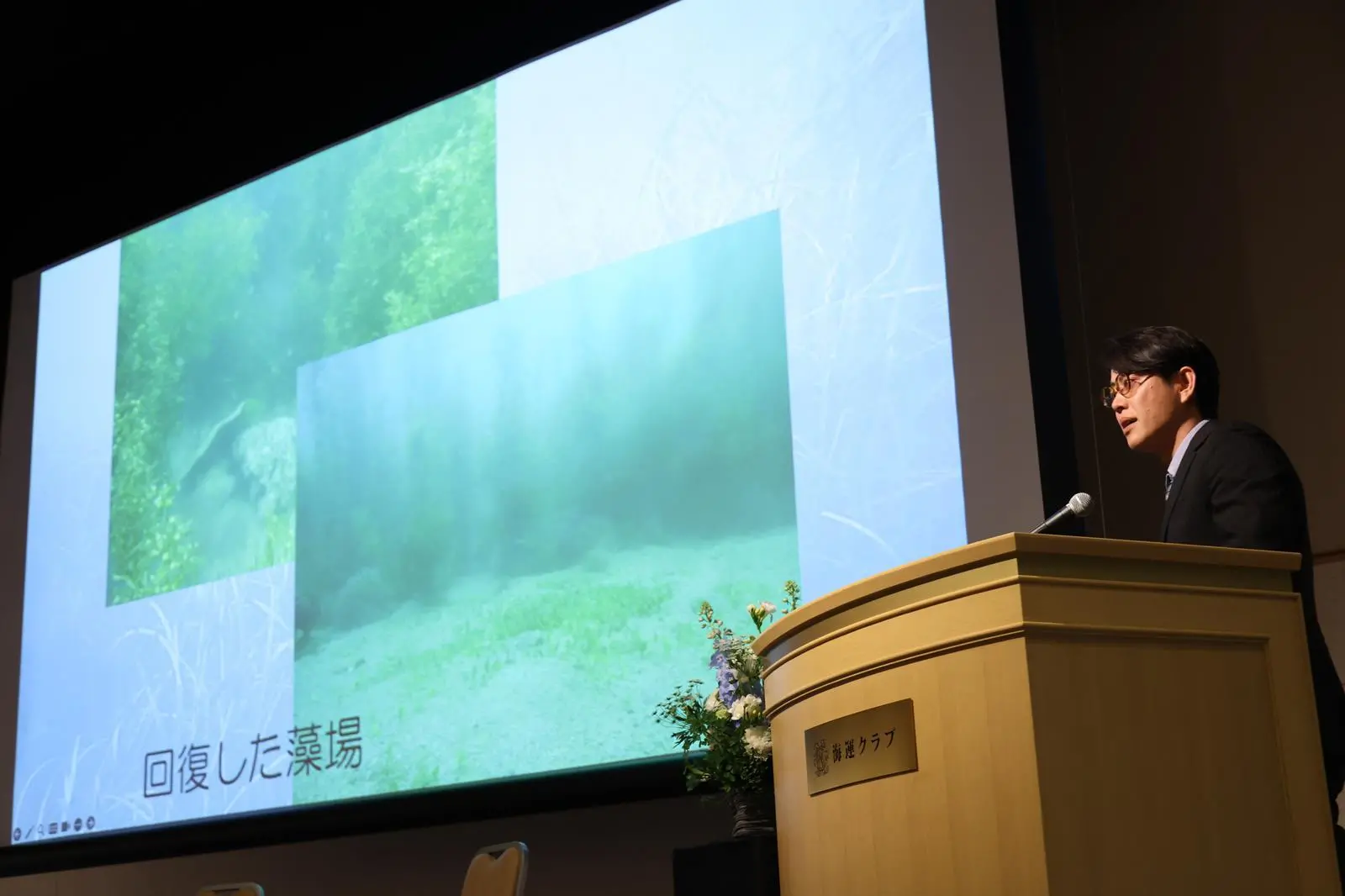
“I have witnessed changes in the ocean since around 2000,” he said. “But fishermen can’t see what is happening in the areas they fish in, because they remain on their boats. Through photographs or video footage, we want to show fishermen what the problem is, and make it clear that human intervention can improve marine ecosystems. I go by three key principles – reduce, increase and expand. Reduce harmful organisms, take steps to increase seagrass and seaweed, and make them more resistant to feeding damage, thereby creating a stronger, healthier ocean.”
“Restoration takes time, money and physical strength,” said Kawabata. “In Japan, around 6,000 fishermen quit their jobs each year, while fishermen are aging. They cannot restore ecosystems by themselves. They need help, but Japan has strict fishing rights, and those outside the industry cannot get involved even though they want to because they need permission. While talking to fisheries cooperatives, I do my utmost to bring fishermen and other stakeholders together, and include entities like local companies so that they can become part of our efforts. Other challenges include obtaining financial support and manpower, but this is where companies can hopefully play a part. With seaweed drawing attention as nature positive and capable of protecting biodiversity, I want people to understand that if we intervene, it will increase.”
More recently, Kawabata’s restoration work has been gaining added impetus as a future blue carbon project. While the deterioration of Japan’s coastal ecology has long been a concern, a government declaration in 2020 that Japan would reduce its greenhouse gas emissions to net zero by 2050 has boosted interest in conserving and restoring ecosystems like seagrass and seaweed beds, not only for safeguarding but also for their carbon benefits. Working with local companies, Kawabata is installing nets around seaweed beds to prevent feeding damage, and working with a scientific institution to verify the amount of carbon sequestered and stored by the seaweed. Once these figures are obtained, his work will be certified as a blue carbon project that sells carbon credits. Kawabata is keen to highlight how the full value of this work goes beyond carbon storage, and how, by buying credits, local companies can help other areas such as fisheries, amidst a strong push in Japan to meet nature-related sustainability goals.
Looking ahead
Ultimately, Kawabata and Kesamaru’s pioneering work underscores the benefits of seagrass and seaweed restoration for a greener and improved Japanese fishing industry. Kesamaru hopes that through his work, people will learn more about the seas around Japan and the rest of the world and realise the need for, and importance of, environmental restoration.
“We need to create a situation in which people who want to get involved in this type of work can do so immediately, without barriers,” he said. “This will enable our work to spread to other fishing communities in Japan and perhaps beyond. It’s also important not to give up. The marine environment is changing, but it still has potential. Everyone must work together, from scientists and researchers to fishermen and local communities.”
“We want to create a fishing industry that is environmentally friendly and attractive to young people,” said Kawabata. “My role is to create something with a new value and foundation. Environmental conservation is a great example because its value will increase as society recognises its necessity. Fishermen also need to increase the value of their catches, and conservation is one possible way. I want to see a rich, healthy marine environment from which everyone, including my own children, can enjoy delicious seafood.”