




Argentinian reconversion leading the way
Factory trawler Centurión del Atlántico – the largest in the South American country – has made a strong start after a complete refit.
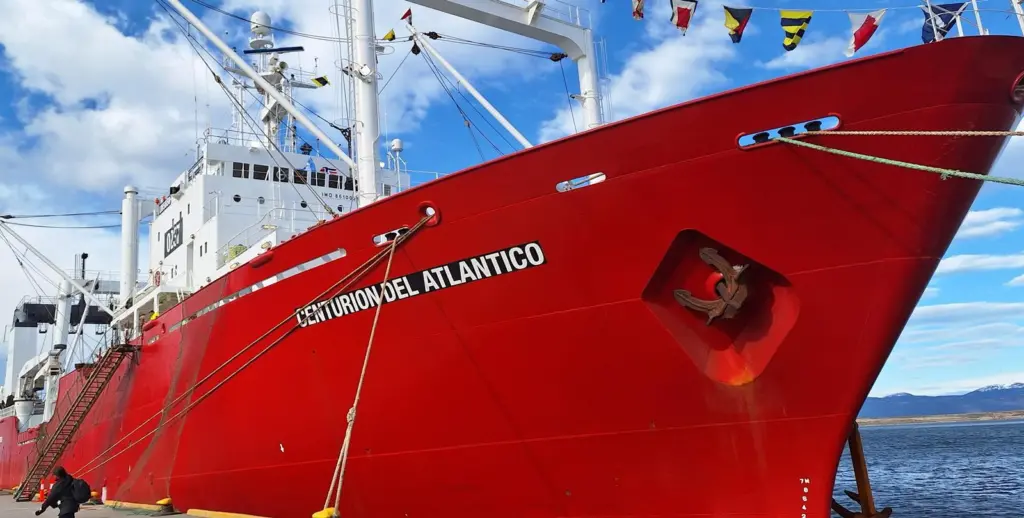
In September 2024, Estremar, a leading Argentine fisheries company, put its fully-renovated factory vessel Centurión del Atlántico into action. The 118-metre-long trawler is now the only fishing vessel in the South American country with hybrid propulsion. Its update was done in Norway, where it received many new features to enhance its operations’ sustainability and to reduce its carbon footprint.
Manufactured in 1986 in Japan, Centurión del Atlántico is “probably the largest one in operation in Argentina”, reckons Alan Mackern, Estremar’s former CEO and now a member of the company’s board. After a refit in 2007, Centurión remained in good shape for its service in the world’s southernmost port, Ushuaia. More than a decade later, the company decided it was time to take a step further and pursue a renovation oriented by efficiency and environmentally friendly technologies and systems.
“Due to its size, Argentine shipyards were not able to work on it. The shareholders are from Norway, so it was a natural path to send it to a Norwegian yard,” Mackern said.
Alternatives in Chile and Brazil were “disconsidered” by the board due to previous negative experiences.
The Norwegian Ship Design Company was commissioned in 2021 to develop the renovation project. Norway’s shipyard Westcon, located in the city of Florø, was the company selected to conduct the works. Centurión was taken to Scandinavia and the renovation began in July of 2023.
“The whole propulsion plant was changed, with the implementation of a genset and electric batteries,” explained Nicolas de Santis, the vessel’s machine engineer.
A large set of batteries is charged with energy produced by the Anglo Belgian Corporation 12DZC generating set connected to the engine. That system opened new, distinct modes of operation.
“In sailing mode, the batteries are always connected to the circuit. If a generator fails and is disconnected, the batteries are already connected, so they become active,” de Santis told WF. In a normal boat, when this happens the energy may go off until another generator gets active.
The previous two-stroke engine was replaced by an up-to-date four-stroke Anglo Belgian Corporation 8DL36, which requires less fuel and engine oil. The engine package was provided by Norway’s Frydenbø Industri. The engine’s power range attains up to 7,065 HP.
“We are now able to spend less fuel and to reach higher speeds,” de Santis said. The ship attains up to 17 knots and can operate on the sea for up to two months.
Modern processing
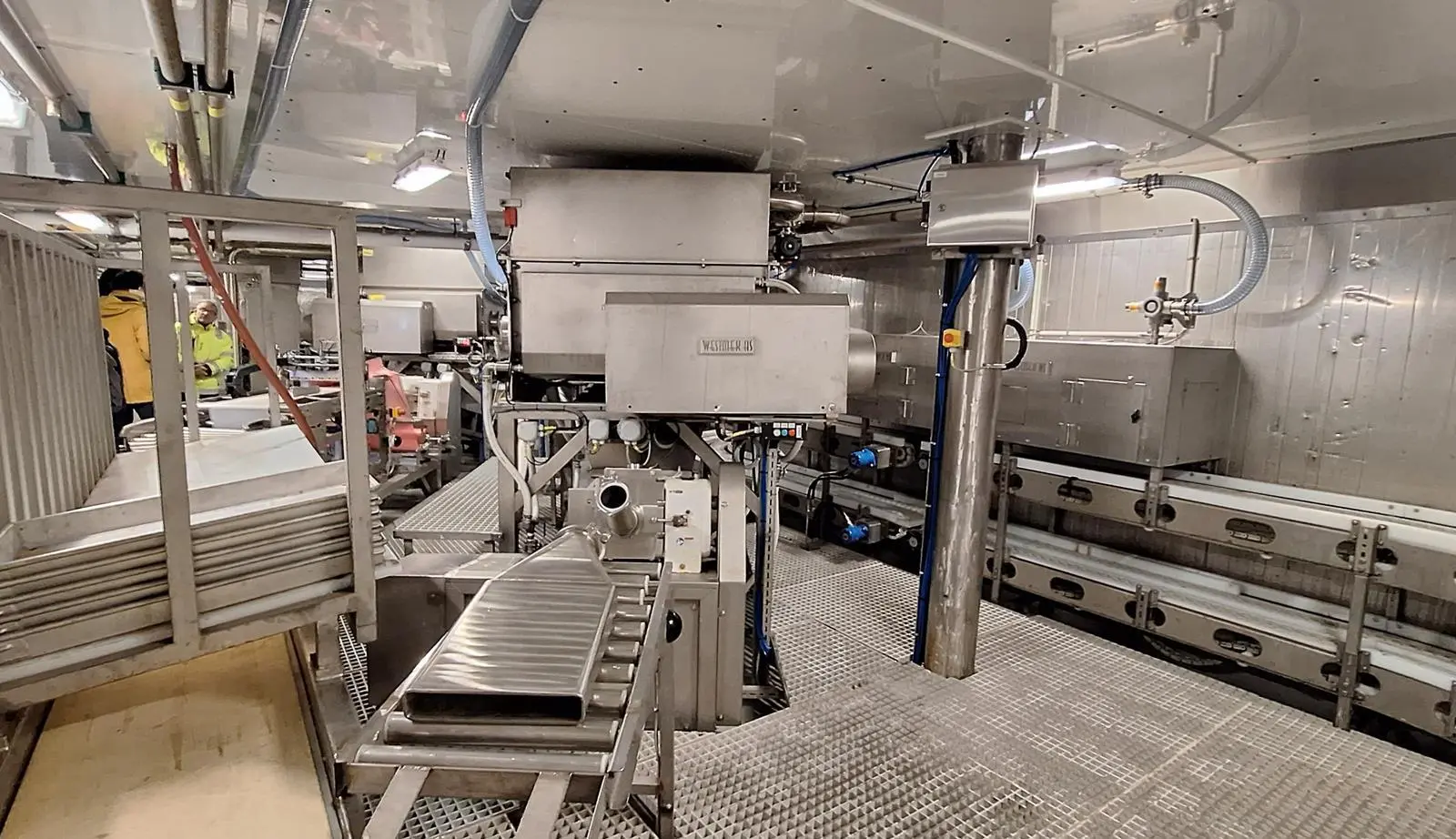
The large fish processing plant was equally modernised. Centurión produces surimi onboard. All impurities are removed from the fish and it’s washed with high volumes of fresh water and processed to become a white paste that’s used as an ingredient for several products.
In the renovation process, the vessel received a desalination plant that can produce 200 cubic metres of freshwater every day. According to Mackern, most ships in the Argentinian fleet can produce 10 times less fresh water each day.
Sergio Sarchetti, the ship’s Baader technician, explained that fish parts like the head and the internal organs are removed from the catch during processing. But now, that “garbage” is being used in the production of fishmeal and fish oil. Part of that oil is employed in the ship’s operations nowadays, something that also reduces the amount of energy spent.
Those changes seemed to be successful. Mackern noted the travel between Norway and Argentina after the renovation required 37% less fuel than the initial trip. “That’s not a definite number yet. We’re still investigating it. But we consider that any savings higher than 30% are already very significant,” he said.
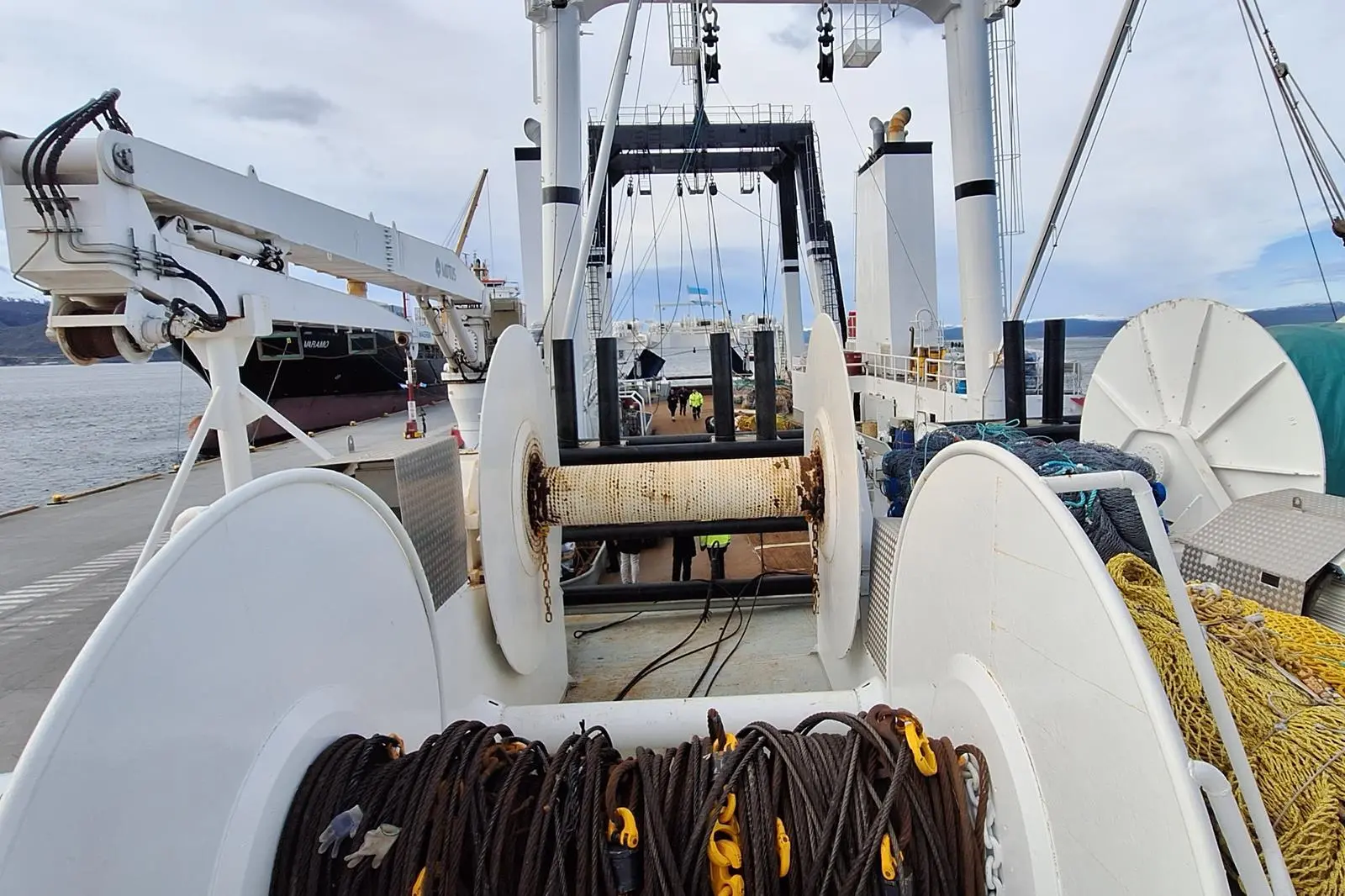
Centurión is equipped with fishing gears for different kinds of operation, explained Skipper Luciano Racioppi.
“It can perform midwater fishing, it can capture pelagic species, and it has trawling nets. Generators were connected to the deck winches, and they also produce energy for the batteries,” he said.
The machinery control was provided by Brunvoll. The auxiliary equipment was all modernised and now includes four echo sounders and 17 sensors.
‘A new Estremar’
Centurión del Atlántico can accommodate up to 90 crewmembers, who will work for up to 60 days before coming back to land. Fishing and processing are non-stopping activities during the expeditions, and the workers take turns. The cabins were modernised according to the Norwegian standards, which are superior to the Argentinian ones, affirmed Mackern. Crewmembers have at their disposal a large refectory, a gym and an infirmary.
It will mainly focus on species like Argentine hoki and southern blue whiting.
“In our third trip, we’ll capture black hake,” Racioppi added.
The work in Florø took 11 months. The crew was taken to Norway in order to be trained in the operation of the new technologies and systems implemented in Centurión. Before going back to Ushuaia, the vessel underwent several tests, including a sea trial.
The presentation of the ship to Argentine authorities, commercial partners, and the press on 30 August 2024, coincided with the 32nd anniversary of Estremar. During the event, Norway’s ambassador Halvor Sætre emphasised that “the refit project allowed the exchange of knowledge and training between folks of Argentina and Norway.”
“This ship’s reconversion is an example of how to do things well – combining technology with environmental protection and the ability to grow and develop business,” he said.
The occasion also marked the change in Estremar’s leadership. After 10 years successfully leading the company, Alan Mackern stepped down and joined the board, being replaced by Spanish-born new CEO Marcos Osuna. He previously worked for 25 years at Grupo Nueva Pescanova and managed operations in Spain, Argentina, Chile, Namibia and other international markets.
He said, this is “the beginning of a new Estremar […] with the reaffirmation of our commitment with innovation, sustainability, and the development of the Argentine fishing industry.”
The company, along with other Argentine partners, worked to adhere to principles and criteria of the Marine Stewardship Council (MSC) in the hoki fishery. In May of 2012, the fishery was certified as sustainable by MSC – the first in South America.
Since 1992, Estremar has been operating from the Ushuaia port and became a leading exporter of black hake and other pelagic species. Nowadays, Estremar’s products are exported to the world’s major markets.
Its position as one of the most important fishing companies in Argentina is expected to positively influence the whole industry in the pursuit of more sustainable practices, now that Centurión is playing the pioneering role of being the only ship with hybrid propulsion in the South American nation.
“Estremar has made a great investment and there’s much technological innovation all over the vessel. The surimi plant uses 100 percent of the fish caught, which is a good example for the sector. We believe that’s a good thing for our national sector,” Eduardo Boiero, who heads Argentina’s Chamber of Fishing Shipowners and Freezer Boats, told WF.
Meanwhile, Mackern maintains that Centurión could be a model for other fishing companies in Argentina.
“I believe that the greatest significance of this renovated boat is to demonstrate that a new technology, which is now getting into the country, can lead to cheaper and environmentally friendly operations,” he said, adding that he hopes the company’s competitors will be “jealous” about Estremar’s refit and will try to follow the same direction.
Related Articles
 FISHERIES
 FISHERIES
 FISHERIES