


Advances in fishing practices and technologies have improved the aquaculture industry overall, but many of those advances are still out of reach for fisheries that operate in power-challenged areas of the globe, report Trey Jarrard and Eric Domescik.
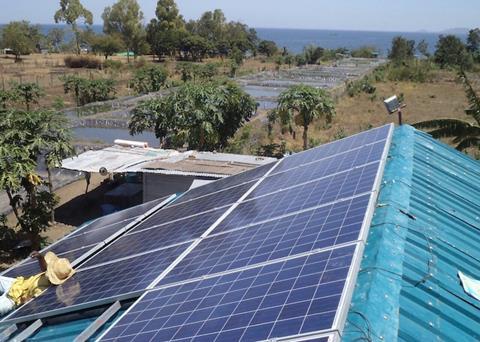
Lake View Fisheries Ltd on Mfangano Island in Lake Victoria in Kenya is an example of a fishery that faced challenges due to a lack of reliable, affordable power. Lake View Fisheries supplies an abundance of affordable Nile Tilapia (Oreochromis niloticus) thereby improving food security and contributing significantly to the development of the local economy of the Lake Victoria region, but a lack of reliable, affordable power presented numerous challenges in maintaining operation efficiencies and maximum production.
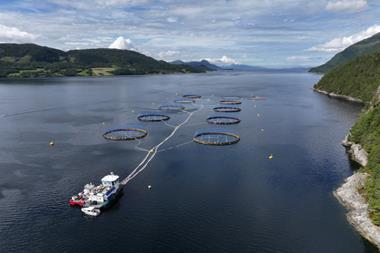
The fishery, which uses floating cage farms to raise tilapia, requires power to support aeration pumps, lake pumps and refrigeration. Improving operations and lowering costs is only part of the goal for the fishery, as if power is lost and with it aeration or refrigeration, the business faces the devastating loss of thousands of fish.
Founded in 2013, Lake View Fisheries aims to be a leading example of environmental and social stewardship within the Kenyan aquaculture industry. The fishery follows stringent quality measures to ensure that the company maintains a low environmental footprint with minimum negative impact.
Staying true to its mission to maintain a low environmental footprint, Lake View Fisheries began fuelling operations using a hybrid minigrid solar array to support its critical systems necessary for general operations. Lake View Fisheries engaged Renewvia Energy, a US-based solar developer that specialises in bringing power to individuals and businesses in power-challenged areas around the globe, to install the solar array to power the fishery. The solar microgrid features battery power with diesel back up.
From February 2017, 30% of the fisheries’ energy needs have been supplied by the solar array. At full scale 100% of the power the business requires will be from renewable sources. The current battery capacity can run critical systems for more than three hours before the property is forced to switch to diesel generation. In addition to providing critical redundancy, the solar array offsets approximately 25% of power needed to run general operations, saving thousands of dollars per year. Lake View Fisheries plans to more than double the system size as operations grow.