



A new selective breeding method is being developed by a Scottish research consortium that could enhance fish health and well-being by improving salmon resistance to sea lice.
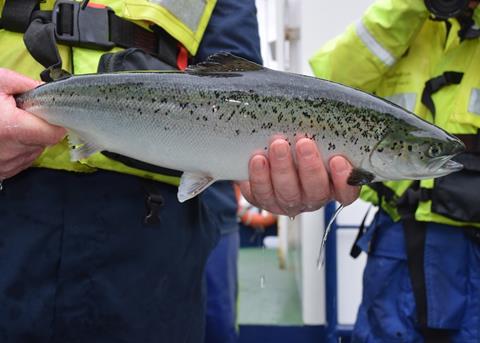
The project, led by Dr Smaragda Tsairidou and Professor Ross Houston at the University of Edinburgh’s Roslin Institute, is using genetic data to identify salmon with enhanced natural resistance to sea lice. The researchers worked in collaboration with Hendrix Genetics and the University of Stirling‘s Institute of Aquaculture as part of a project supported by the Scottish Aquaculture Innovation Centre (SAIC).
“Collaborative research projects are crucial for finding new methods for enhancing fish health and wellbeing, while also supporting the future sustainability of the industry,” said
Caroline Griffin, aquaculture innovation manager at SAIC. “Sea lice continues to be a prominent challenge for the sector worldwide and developing cost-effective, data-led techniques for future breeding could transform the ways in which we manage and treat sea lice on fish farms.”
Selective breeding using genomic tools can be expensive in traditional aquaculture settings. Using a scientific technique called genotype imputation, the researchers have developed a lower cost method that could make the process feasible for more breeders and producers.
The approach uses a smaller number of genetic markers, looking for variations at specific positions in the genes that indicate how it will respond to parasites and disease, allowing breeders to select parent fish with better resistance.