




Sustainable shrimp farming
Billund Aquaculture and Aquapurna are set to revolutionise welfare standards and sustainability in shrimp farming with an automated and tech-driven production model.
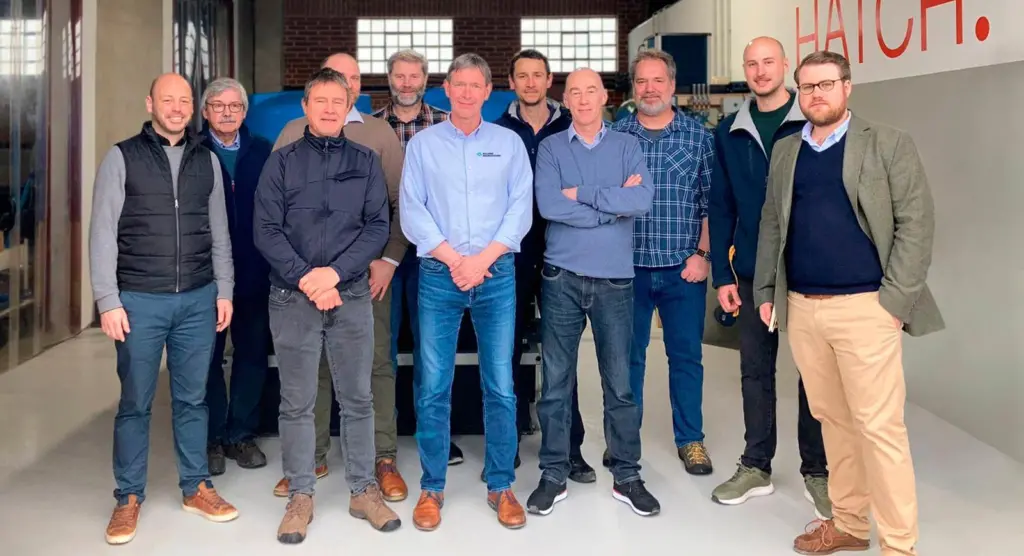
The two companies have been working on a joint venture to build the next generation of cost-effective and sustainable land-based shrimp farms. The aim is to improve existing practices as well as create a novel farming system to bring real change to the industry which has a carbon footprint ten times greater than that of cattle farming in South America.
“The overall problem is that shrimp farming is one of the most, if not the most, environmentally unfriendly way of producing seafood,” explained Aquapurna’s chief executive and co-founder, David Gebhard.
“This is why we have developed a production model that does not emit pollutants or use antibiotics. It leaves ecosystems untouched. Ultimately, it’s highly scalable and cost-effective, which puts us in pole position to transform an industry that’s long overdue for change,” he added.
Next steps
Aquapurna plans to scale up its existing hatchery, Lakshmi, where it is raising broodstock and producing shrimp nauplii, as well as build a large-scale Lighthouse Project with a state-of-the art RAS [recirculating aquaculture system] grow-out unit.
“The technology for land-based shrimp farming is not yet suitable for creating large scale facilities,” said Billund’s operations and business development manager, Bjarne Hald Olsen.
“However, we believe that Aquapurna’s expertise in shrimp farming, combined with our experience in developing RAS for different aquaculture species will set us on the right path to producing shrimp in a more sustainable way in a very short time.”
Related Articles
 AQUACULTURE
 AQUACULTURE
 AQUACULTURE