



Hydrogen for new longliner
Loran is one of the famous names in the Norwegian longline fleet, and its owners have never shied away from going in new directions. Now they are making plans to replace the current Loran, built in 1999, with something very new.
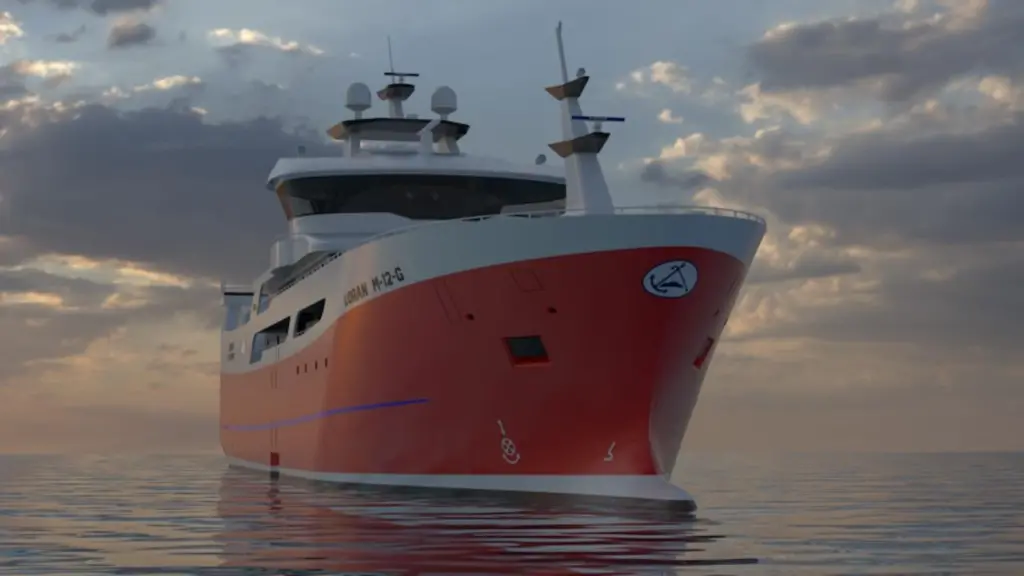
The plans drawn up by Ålesund naval architect Skipsteknisk are for a longliner capable of running with fossil fuel consumption reduced by 40%, as well as being prepared for complete zero-emissions operation.
At around 70 metres, the planned new Loran would be substantially larger than the current 45-metre vessel, as space is needed for accommodate a combination of diesel, battery and hydrogen energy systems.
The initial intention is for the new Loran to be powered by two 185kW fuel cells fed with hydrogen from containers on board, plus a 2000 kWh battery – although conventional diesel engines are still part of the package needed to keep Loran at sea for 4-6-week trips.
“By being the first with hydrogen, we hope that the new Loran will be one of the vessels that form the basis for a green shift in fishing. If we are to build a future-oriented and modern vessel today, we want to ensure that the newbuilding represents the most modern, efficient and environmentally-friendly technology that can be obtained,” said Loran’s general manager Ståle Otto Dyb.
The Skipsteknisk design work has been supported by Innovation Norway and focuses on energy efficiency, heat recovery and the possibility of a zero-emissions operation when running on hydrogen.
“The gas tanks are located behind the wheelhouse and this is currently envisaged as a pressure-based hydrogen system. If it turns out to be more convenient to use liquid hydrogen, or another fuel such as ammonia, then it will be possible to do so with minor adjustments,” said Inge Bertil Straume at Skipsteknisk.
For Enova, which is backing the project with financial support, the most important consideration is to demonstrate the use of hydrogen in an ocean-going fishing vessel.
“Even though the project will not give zero emissions, Enova still considers it a first important step on the road, to demonstrate the use of hydrogen and fuel cells in vessels,” said Enova CEO Nils Kristian Nakstad.
Related Articles
 VESSELS & SHIPYARDS
 VESSELS & SHIPYARDS
 NEW VESSELS