



A new £2.12m lumpsucker project has begun, co-funded by the Scottish Aquaculture Innovation Centre (SAIC).
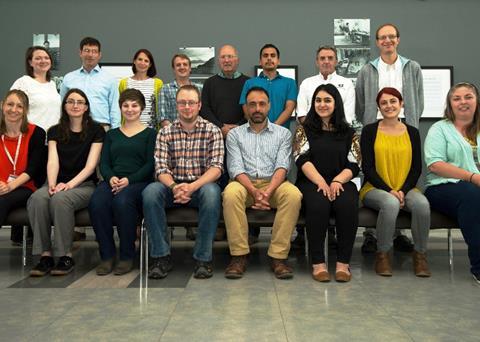
News of the project to control sea lice through non-medicinal approaches was announced in November last year. In the months since, the project agreement has been signed, a specialist team recruited, and four work packages outlined covering broodstock management, nutrition, cage deployment, and health and welfare. The project is a collaboration between industry partners Marine Harvest Scotland, the Scottish Salmon Company, Otterferry Seafish, BioMar, Pharmaq and the Institute of Aquaculture at University of Stirling.
Research and commercial activities have now begun in earnest.
Dave Cockerill, Head of Fish Health at Marine Harvest Scotland, explains: “Currently, the industry is reliant on wild-caught lumpsucker broodstock, from which farmed juvenile lumpsuckers are grown and used for delousing farmed salmon. However, if we are to achieve our ambition of significantly reducing the use of medicines by upscaling our use of cleaner fish, we need access to an increased, secure and sustainable supply of farmed broodstock and juveniles. At Marine Harvest Scotland alone we could be looking to deploy more than two million lumpsuckers each year by 2020.”
Spanning three years, the research project aims to tackle a range of commercial bottlenecks and objectives, supported by a much better understanding of lumpsucker biology and behaviour in captivity.
Hervé Migaud, Deputy Director of the Institute of Aquaculture, says, “While evidence from farms clearly demonstrates the effectiveness of lumpsuckers at consuming sea lice, research is required to improve the reliability of this innovative biological pest management strategy.
“The challenge for us, the project team, is to fast-track the domestication of a new marine species through the development and implementation of a suite of protocols to control breeding, nutrition, disease and deployment into salmon cages, while also ensuring good welfare. This is a great example of collaboration between academia and industry with experts from different research groups at the Institute joining forces to study the full lifecycle and key physiological traits.”