


Planning ahead for bioFADs
The Spanish fleet has been working on evaluating the feasibility of biodegradable fish aggregation devices (FADs) for some years, and the latest stage brings this research to Atlantic waters.
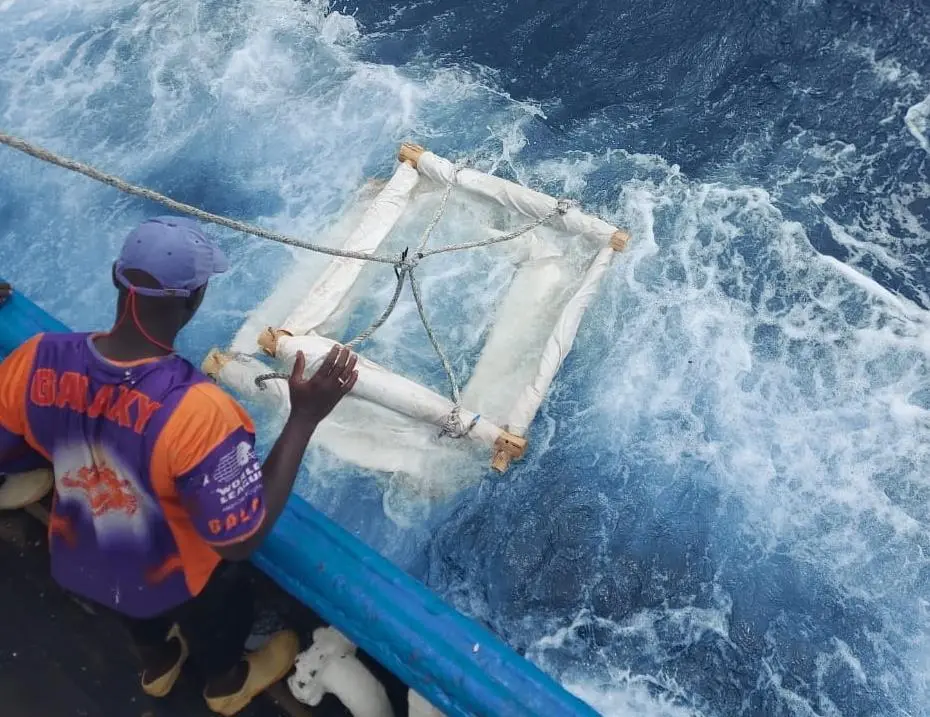
This follows research that has been in progress in the Indian Ocean since 2017 and in the Pacific since 2019, and the project now in operation in the Atlantic during 2022 aims to evaluate the feasibility of biodegradable FADs under real-life operating conditions and their contribution to reducing marine pollution.
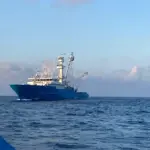
“Using FADs to help concentrate tropical tunas in one place is an ancient fishing technique that we want to help evolve to suit the new environment, where sustainability is a fundamental variable. That is why we are developing this new generation of FADs,” said Julio Morón, Managing Director of the Organisation of Associated Producers of Large Tuna Freezers (OPAGAC), which represents a fleet of 51 Spanish tuna purse seiners that between them land 380,000 tonnes annually, accounting for 8% of the world tuna catch.
The OPAGAC fleet operates in the Atlantic, Indian, and Pacific Oceans, under the jurisdictions of the Conservation of Atlantic Tunas (ICCAT), the Indian Ocean Tuna Commission (IOTC), the Inter-American Tropical Tuna Commission (IATTC), and the Western and Central Pacific Fisheries Commission (WCPFC).
Morón commented that the Spanish fleet is spearheading this research and development work, and expects that results of these trials will give the fleet the practical evidence it needs to roll out biodegradable FADs on a general basis in all oceans.
“Our fleet is looking for biodegradable alternatives to synthetic materials, so as to minimise the impact of FADs on the ecosystem, especially when they sink or become beached. To do this, the OPAGAC fleet and a number of organisations, including AZTI and the ISSF, are testing the durability and biodegradability of organic materials including wood, fabric, bamboo, and plant-based ropes.
“The project is also analysing biodegradable FADs’ ability to aggregate tuna and FAD drift patterns, which are fundamental for maintaining fishing while at the same time minimising interaction with vulnerable marine ecosystems.”
Morón explained that the goal is to design a type of FAD that contains the greatest possible quantity of biodegradable material, in a proportion that eliminates the risk of entanglement for associated animal species and does not hamper the device’s performance.
“They must also be durable enough, according to the variable needs of each fleet and fishing area, they must be made with materials that are easy to obtain and they must come at a reasonable cost,” he said.
He also pointed out that the deadline that some NGOs have set for adopting 100% biodegradable FADs is not feasible, given the limitations still to be dealt with from several points of view, such as material biodegradability, design effectiveness and economic feasibility. For now, the regional fisheries organisations in charge of regulating tuna fishing have issued recommendations and resolutions to promote research and the use of biodegradable materials to build FADs.
“The tuna fleet is framing this research effort as part of its ongoing work to improve the fishery, to guarantee more-sustainable fishing with less of an impact on the ecosystem, and other measures, such as crew training in techniques for handling and releasing non-target species,” Morón said.
Related Articles
 FISHING TECHNOLOGY
 NEW VESSELS
 FISHING TECHNOLOGY