


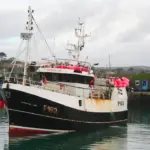



Tropical tuna purse seine fishing fleet expands
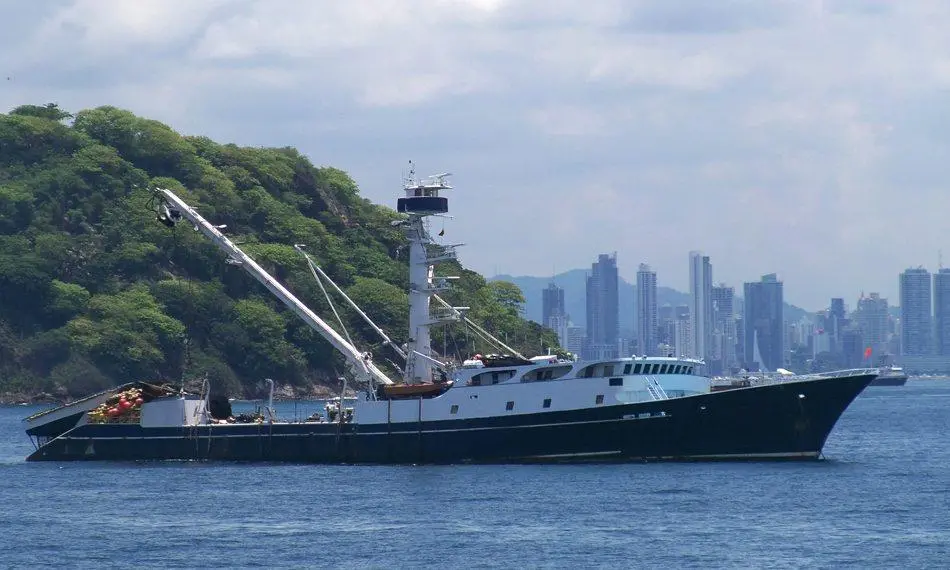
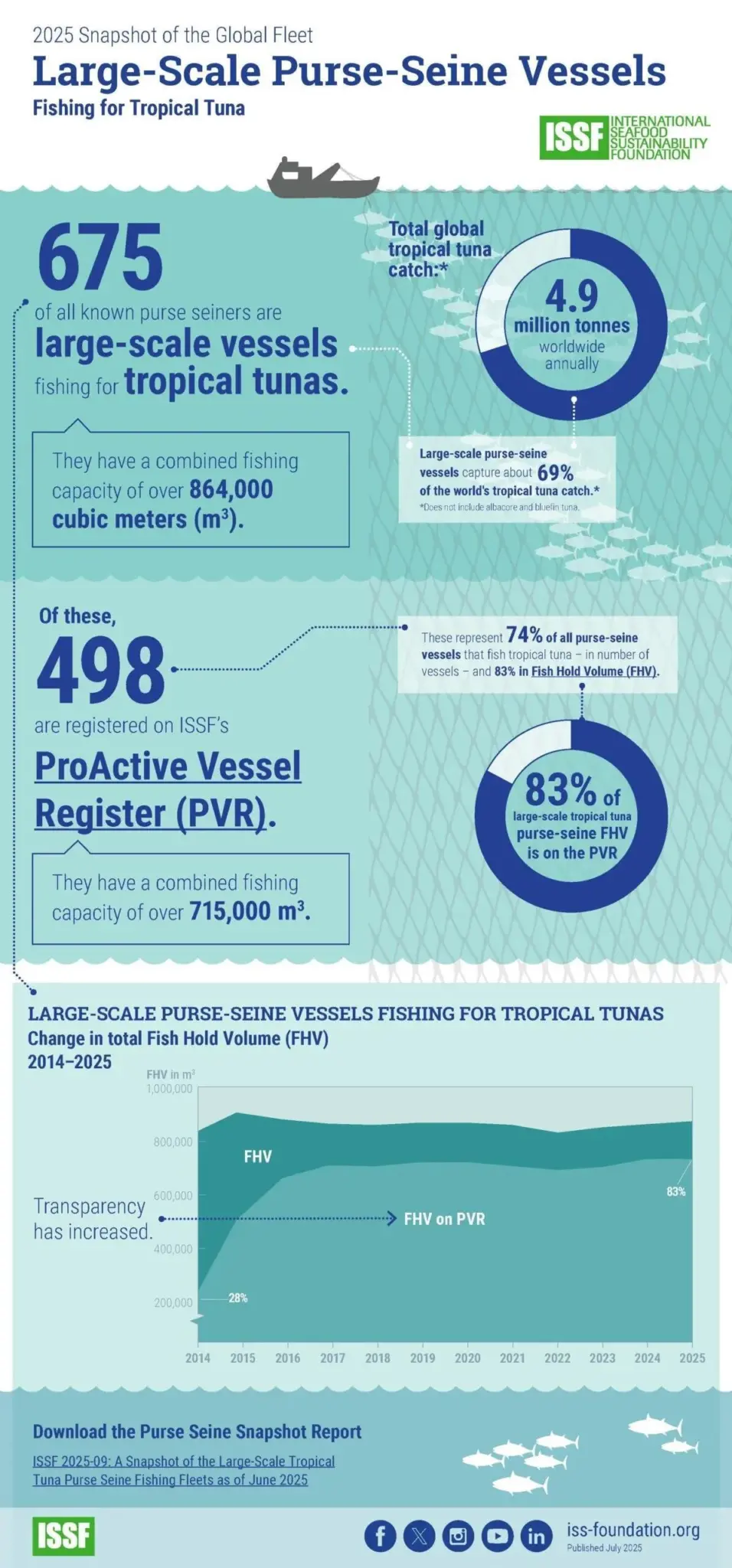
Some 675 large-scale purse-seine (LSPS) vessels were fishing for tropical tuna species as of June 2025 – an increase of 3.8% compared to last year – with a combined fish hold volume (FHV) of over 864,000 cubic metres, representing a less than 0.2% increase from last year in overall fishing capacity, finds the updated Snapshot of the Large-Scale Tropical Tuna Purse Seine Fishing Fleets report, compiled by the International Seafood Sustainability Foundation (ISSF).
ISSF also notes that 498 of the 675 LSPS vessels are listed on the ISSF ProActive Vessel Register (PVR), and PVR-registered LSPS vessels represent 74% of the total number and 83% of FHV. The PVR is a voluntary transparency tool highlighting vessel practices that support sustainable tuna fisheries.
“ISSF is the only organisation that aggregates and analyses global capacity data for these fleets year over year,” ISSF Vice President of Science Dr Victor Restrepo said. “Our snapshot series provides science-based insights to support RFMO and industry decision-making on sustainable tuna fishing capacity management — an issue central to long-term ocean health.”
LSPS vessels, defined as those with at least 335 cubic metres in FHV, account for the majority of the world’s tropical tuna catch. To update the report, ISSF compiles data from RFMO vessel registries and other sources, focusing on vessels targeting skipjack, yellowfin and bigeye tuna.
Other findings from the 2025 snapshot include:
- 47 LSPS vessels built after 2012 were added to RFMO authorised vessel lists since the 2024 report, including 11 newly built in 2024 and 2025. More than half are flagged to Indonesia and hover near the 335-cubic-metre threshold
- Nine LSPS vessels were removed from the fishery due to scrapping or sinking between 2024 and 2025
- The estimated total number of all tuna purse-seine vessels worldwide rose by 9%, from 1,939 in 2024 to 2,106 in 2025. The Western and Central Pacific Fisheries Commission (WCPFC) region continues to host the largest number of LSPS vessels (332)
- 12% of LSPS vessels are authorised to fish in more than one RFMO region
The new report also offers several recommendations for vessel owners and RFMOs, including:
- IMO number adoption among LSPS vessels has grown from 12% in 2011 to 99% today. ISSF urges further expansion to all vessel types and sizes
- Greater quality control in RFMO vessel registry submissions to address data gaps
- All RFMOs to maintain not only lists of authorised vessels but also records of vessels actively fishing each year
“Tracking tuna fishing capacity with rigor and consistency helps ensure that sustainability efforts keep pace with evolving fleet dynamics,” Restrepo said. “Publishing this data each year is critical to promoting accountability, enabling science-based decisions, and encouraging continuous improvement across the seafood supply chain.”
Related Articles
 SUSTAINABILITY
 FISHERIES
 FISHERIES