



Small-scale tuna fishery gains MSC label
A group of small-scale tuna fishers and tuna processor-exporters have been certified under the Marine Stewardship Council (MSC), in a historical first for the Philippines.
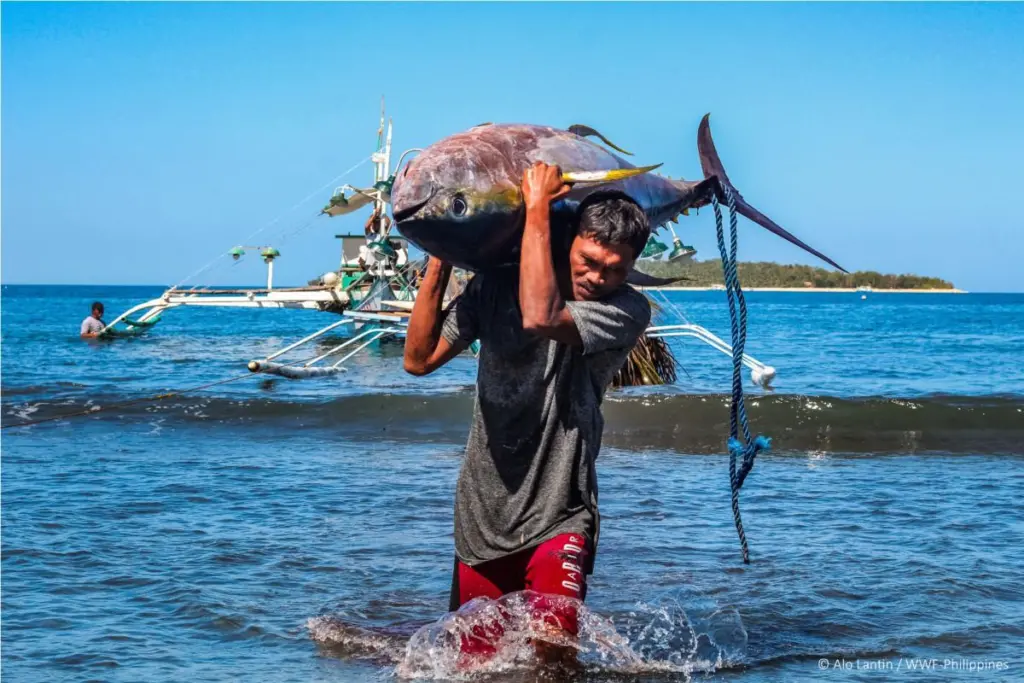
The Philippine Tuna Handline Partnership (PTHP) brings together 500 artisanal fishing boats fishing for yellowfin tuna using traditional handline fishing gear along the Occidental Mindoro Strait and Gulf of Lagonov. The partnership includes around 2000 fishermen in one of the Philippines’ most productive fishing areas. The PTHP was formally organised in 2019, and began the full MSC assessment process in March of 2020.
MSC certification is the latest development in a decades-long Fisheries Improvement Project (FIP) being run with handline tuna fishermen in Mindoro Strait and Lagonoy Gulf. The goal of the FIP is to improve the environmental sustainability of fisheries.
The PTHP is the first group in the Philippines to receive MSC certification.
“The MSC Certification is our first leap to a bigger and more sustainable future,” said Sammy Garcia, chairman of the Philippine Association of Tuna Processors.
“Three words can best describe our journey to MSC: unity, which was shared between every member of this organisation towards a common goal; transparency, which helped us realise that being fair is being sustainable; and empowerment, which enabled our fishers to dream and to set and achieve their own goals. Our fisher friends have realised that by working together, with the right traceability system and protocols in place, their livelihood and tradition continue on.”
While the PTHP has been certified by the MSC, the group still has a number of conditions to close for them to keep their certification. Conditions are requirements outlined by the MSC, and serve as a good guide in helping fisheries work towards sustainability.
“For around a decade of fisheries work we fishermen have grown together in order to face whatever obstacle that has come our way. With the help of government agencies and the partners who have stood alongside us, practices that once harmed the environment and our local communities have left our fisheries little by little over the many years,” said IFARMC of Mindoro Strait Chairman Bernard A. Mayo, Sr., a fisher leader who has been with the program since its inception in 2011.
For the PTHP, closing these conditions and meeting the MSC standard is a step in the right direction for the future of their fisheries, while further measures are needed to protect tuna fisheries throughout the region. The Philippines belongs to the Western Central Pacific region, which the MSC has flagged for not having sufficient measures in place to protect local fisheries.
The MSC has warned that, should region-wide harvest control rules and strategies not be put in place by December 2022, tuna fisheries in the Western Central Pacific could lose their MSC certification.
“This is a historic certification that marks a ten-year long journey of making improvements towards sustainability in this small-scale fishery,” commented MSC Regional Director Asia Pacific Patrick Caleo.
“The tremendous efforts made by the fishers to achieve MSC certification will help safeguard livelihoods, seafood supplies and healthy oceans for future generations. It is especially important in coastal communities which depend on the fishing industry for food and income. We hope to see other small scale and Filipino fisheries follow the handline tuna fishers’ lead by joining the global movement for seafood sustainability.”
Related Articles
 FISHERIES
 FISHERIES
 FISHERIES