




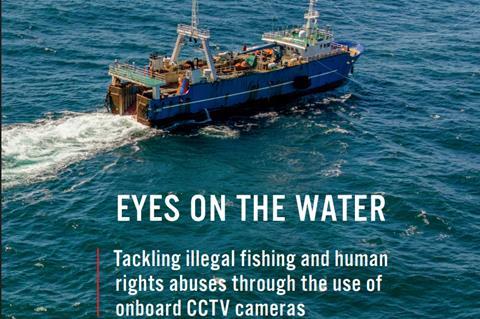
Vast areas of the world’s oceans remain effectively unmonitored, allowing illegal fishing and serious human rights abuses to persist beyond public scrutiny, according to a new report from the Environmental Justice Foundation (EJF).
The report calls for urgent, fleet-wide adoption of onboard CCTV, arguing that the technology could significantly improve transparency and accountability across global fisheries.
“The evidence from pilot studies shows that CCTV can be a powerful tool to bring abuses into the light,” said Steve Trent, chief executive and founder of EJF.
“It provides round-the-clock, verifiable eyes on the water, seeing where traditional monitoring goes dark. This makes it far harder for perpetrators to get away with crimes at sea. It’s time now to deploy CCTV across every fleet around the globe.”
The findings highlight strong links between illegal, unreported and unregulated fishing and violence, intimidation and forced labour. A chronic lack of independent oversight on fishing vessels, particularly in distant-water and high seas fisheries, is identified as a key enabler of these abuses.
READ MORE: UK seafood linked to slavery
While fisheries observers are often regarded as the gold standard for monitoring, they cover only a small fraction of fishing trips and face significant personal risk. At least 14 observers have gone missing or died in suspicious circumstances over the past decade. Other monitoring tools, such as vessel tracking systems and logbooks, are limited in scope and unable to capture activities occurring on or below deck.
Drawing on case studies from multiple regions, the report finds that onboard CCTV can deter illegal activity and abuse while providing independently verifiable evidence for enforcement.
In Taiwan, the near-fleet-wide rollout of CCTV across distant-water vessels has helped curb shark finning and the illegal killing of protected species. In Denmark, cameras installed on trawlers significantly reduced the illegal discarding of juvenile cod, while in Ghana, where two observers have disappeared since 2019, pilot projects demonstrate CCTV’s potential to improve safety and oversight.
However, EJF cautions that CCTV is not a standalone solution. Without strong legal frameworks, independent data access and safeguards for fishers’ rights, the technology could be misused, particularly in fleets where coercive onboard practices already exist.