

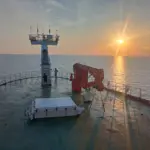




John Kerry: Industry must step up
To help restore ocean health, companies selling wild-caught seafood need to demonstrate a lot more accountability in their product procurement and ensure that they are sourcing from fishing operations that are behaving responsibly, according to John Kerry, US Special Presidential Envoy for Climate.

Speaking at the recent 9th annual World Ocean Summit on ambitions and actions to save the ocean, Kerry insisted it is critical that unsustainable fishing practices in the high seas are stopped.
“We must bring an end to the unbelievable overfishing of these fish stocks. Large vessels and national fleets are strip-mining the ocean – using netting and other practices that have been outlawed in EEZs, because there’s no enforcement on the high seas.
“Quite frankly, we’re rapidly depleting stocks of fish,” Kerry said. “The result is there’s nothing sustainable about what happens on the high seas today.”
With regards to boosting focus and investment in United Nations Sustainable Development Goal (SDG) 14, which focuses on life below water, Kerry said the UN has a key role to play and acknowledged that the UN Ocean Conference in Lisbon, Portugal, at the end of June will focus on scaling up ocean action for SDGs.
However, he again stressed it is even more important that the corporations involved in fisheries supply chains “step up and act responsibly”.
One way in which they can do this, he said, is to ensure there is much wider enforcement of the Agreement on Port States Measures (PSMA), the binding international agreement to specifically target illegal, unreported and unregulated (IUU) fishing adopted by the UN in 2009.
“The system was put in place to create accountability in the landings of fish as they come into port. It requires responsible fishing practices. But in too many parts of the world, we have fishing vessels that go out and just turn off their digital recorders that show where they are. There’s no enforcement of this. We have to be tougher in ports. There has to be accountability with reporting from the moment they set sail to the moment they return with their catch. We have to know where these vessels are and know how much they are catching.”
Kerry continued, “The enforcement mechanisms have got to be jacked up, and the corporations that sell these products – if they want to continue to have products to sell in the future – need to exhibit a great deal more responsibility.”
On addressing climate change, Kerry said, “You cannot solve the problems of the ocean – and there are many – without addressing climate head on, and you can’t solve the problem of climate without addressing the ocean head on. They are related; the ocean is the climate regulator of the Earth and it’s the producer of 51% of the oxygen that we breathe.
“But currently – because of pollution, and because of the massive inflow of carbon dioxide in the ocean – the acidity of the ocean is rising, and we are changing the chemistry of the ocean more than we have in literally hundreds of thousands of years. We have got to stop. We have got to begin respect the ocean and the connection of the two. That means we must reduce emissions.”
He told the summit that he hopes the 27th session of the Conference of the Parties (COP 27), taking place in Sharm El-Sheikh, Egypt, in November this year will lead to the execution of many new pro-climate strategies.
“Glasgow (COP 26, October and November 2021) elicited commitments, so this has to be the year of implementation,” Kerry said.
“In the case of countries that didn’t already step up and make commitments, they now have to step up at Sharm El-Sheikh. We have to raise the global ambition. If we don’t reduce emissions sufficiently, we will not reverse the chemistry and the deterioration of the ocean itself.
“We hope there will be enforcement and much larger commitments by countries that haven’t yet committed to reduce their emissions faster.”
Kerry warned that if those commitments are not forthcoming then as well as not having the platform to achieve ocean restoration, it will be impossible to meet the goal to prevent global warming from exceeding more than 1.5 degrees above pre-industrial levels.
Equally, if there is not a 45-50% reduction in global emissions between now and 2030, reaching net zero by 2050 will also be impossible, he said.
“Everything is compounded. All of the worst impacts predicted for climate, and all of the worst impacts predicted for the ocean simply aggregate, and we run the potential of reaching tipping points with respect to coral reefs, the Artic, the Antarctic, and with food-stocks for whales and predators up and down the food chain.”
Related Articles
 FISHERIES
 FISHERIES
 FISHERIES