




IOTC pressed to adopt FAD management best-practices
Ahead of the annual Indian Ocean Tuna Commission (IOTC) meeting, taking place in Bangkok 13-17 May 2024, the International Seafood Sustainability Foundation (ISSF) has called on the commission to improve the management of fish aggregating devices (FADs) to ensure more sustainable tuna fishing in the region.
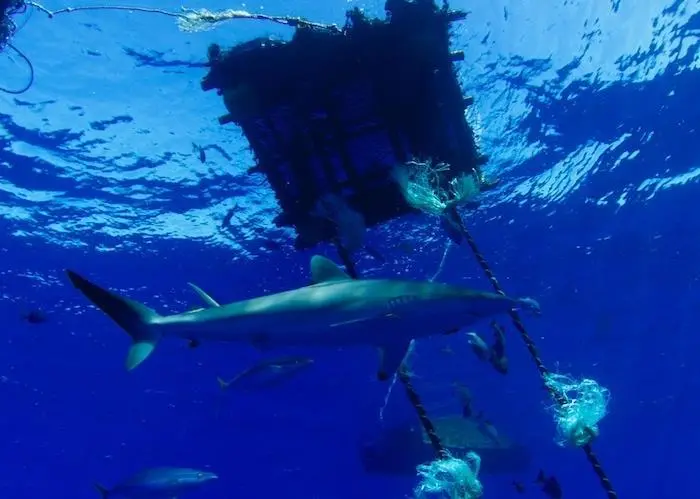
In this regard, ISSF is urging IOTC to adopt several FAD management best-practices, including:
- Adopting a timeline to transition to the use of biodegradable FADs
- Establishing an IOTC-wide FAD register for FAD monitoring
- Establishing science-based limits on the number of operational FADs consistent with management objectives for tropical tunas
- Establishing a FAD marking scheme
- Reporting of lost or abandoned FADs
In an article authored by ISSF’s VP Policy & Outreach Holly Koehler and Senior Scientist Dr Hilario Murua, the seafood coalition notes that last year’s IOTC saw “collaborative spirit” amongst members of the regional fisheries management organisation (RFMO), and insists that this approach must continue this year as fisheries managers tackle the ongoing challenge of establishing more robust FAD management in Indian Ocean tuna fisheries.
It’s highlighted in the article that purse seine sets on floating objects (mostly FADs) account for around 38% of the world’s tropical tuna catch, nearly 1.9 million tonnes. And in the Indian Ocean specifically, FAD sets account for nearly 35% of tropical tuna catches (37% of skipjack, 22% of yellowfin and 43% of bigeye).
According to ISSF, more comprehensive FAD management and monitoring by IOTC will lead to more sustainable management of the three Indian Ocean tropical tuna stocks – two of which are overfished and subject to overfishing – as well as mitigate other ecosystem impacts.
The article states the IOTC has been grappling with FAD management for several years and considering how best to strengthen its existing resolution on FADs.
“Unfortunately, a number of important FAD management improvements have not been adopted or have not been able to be implemented. These items therefore persist as part of our priority appeals to Indian Ocean fisheries managers, outlined in our 2024 position statement.”
It continues: “This year, the IOTC has several FAD management proposals from various members to consider, and the good news is that there are common elements across these proposals. If adopted, such elements would measurably improve how FADs are used and managed in the Indian Ocean, reducing the impacts of FADs on the ecosystem and increasing monitoring of these devices at sea.”
The FAD management enhancements proposed by ISSF to IOTC are also among those advocated by the foundation and its stakeholders across all tuna RFMOs.
The letter acknowledges there are aspects of the FAD management discussion that are “especially complex”, and that in certain instances, positions amongst IOTC members may diverge. Nevertheless, ISSF is urging IOTC members to recognise the need to make progress now.
“It is well past time for united action for more effective management of FADs in Indian Ocean tuna fisheries. It is our hope that progress on these areas of common interest will provide a solid foundation for future cooperation and agreement among all IOTC parties on other important conservation and management challenges,” it states.
Related Articles
 SUSTAINABILITY
 FISHERIES
 FISHERIES